Hexokinase (type II)
Yeast Hexokinase PII is one of the two isoenzymes present in Saccharomyces cerevisiae which are able to catalyse the phosphorylation of glucose to glucose-6-phosphate. This is the first step in glycolysis, so is of vital importance as it creates an intermediate which can be passed into many other pathways such as glycogen synthesis and the pentose phosphate pathway. 80% sequence identity is observed between the isoenzymes, and both show significant structural identity to the mammalian form of the enzyme, allowing them to be placed together in the same homologous family.
Reference Protein and Structure
- Sequence
-
P04807
 (2.7.1.1)
 (Sequence Homologues)
(PDB Homologues)
(Sequence Homologues)
(PDB Homologues)
- Biological species
-
Saccharomyces cerevisiae S288c (Baker's yeast)
- PDB
-
1ig8
- Crystal Structure of Yeast Hexokinase PII with the correct amino acid sequence
(2.2 Å)



- Catalytic CATH Domains
-
3.30.420.40
 3.40.367.20
(see all for 1ig8)
3.40.367.20
(see all for 1ig8)
Enzyme Reaction (EC:2.7.1.1)




Enzyme Mechanism
Introduction
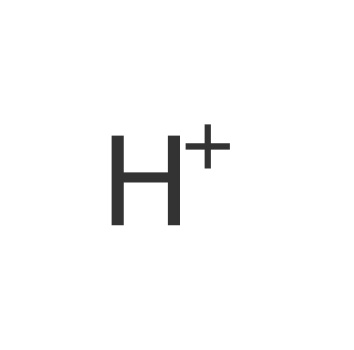
The reaction proceeds via an SN2 mechanism with the 6C OH of the glucose acting as a nucleophile, due to deprotonation by Asp 211, to attack the gamma phosphate of ATP. In doing so the position of glucose in the binding site changes to bring it within optimum hydrogen bonding distance of Ser 158, thus stabilising the reaction's transition state. The pentavalent phosphate is stabilised by electrostatic interactions with Lys 173's positively charged side chain.
Catalytic Residues Roles
| UniProt | PDB* (1ig8) | ||
| Ser158 | Ser158A | Stabilises transition state by binding to the 3OH of glucose when it is making a nucleophilic attack on the gamma phosphate | electrostatic stabiliser |
| Arg173 | Arg173A | Contacts the gamma phosphate of ATP thus is able to stabilise the pentavalent phosphate transition state through electrostatic interactions. | electrostatic stabiliser |
| Asp211 | Asp211A | Deprotonates glucose's 6OH group to allow it to act as a nucleophile and attack the gamma phosphate of ATP leading to an SN2 reaction. | proton shuttle (general acid/base) |
Chemical Components
References
- Kuser PR et al. (2000), J Biol Chem, 275, 20814-20821. The High Resolution Crystal Structure of Yeast Hexokinase PII with the Correct Primary Sequence Provides New Insights into Its Mechanism of Action. DOI:10.1074/jbc.m910412199. PMID:10749890.
- Arora KK et al. (1991), J Biol Chem, 266, 5359-5362. Glucose phosphorylation. Site-directed mutations which impair the catalytic function of hexokinase. PMID:2005085.

Catalytic Residues Roles
| Residue | Roles |
|---|---|
| Asp211A | proton shuttle (general acid/base) |
| Ser158A | electrostatic stabiliser |
| Arg173A | electrostatic stabiliser |