3,4-dihydroxy-2-butanone-4-phosphate synthase
L-3,4-Dihydroxy-2-butanone-4-phosphate synthase catalyses the conversion of ribulose 5-phosphate to L-3,4-dihydroxy-2-butanone-4-phosphate (DHBP) and formate in riboflavin biosynthesis. The proposed mechanism shares features with many enzymes, including the sugar isomerases.
Reference Protein and Structure
- Sequence
-
Q60364
 (4.1.99.12)
 (Sequence Homologues)
(PDB Homologues)
(Sequence Homologues)
(PDB Homologues)
- Biological species
-
Methanocaldococcus jannaschii DSM 2661 (Archaea)
- PDB
-
1snn
- 3,4-dihydroxy-2-butanone 4-phosphate synthase from Methanococcus jannaschii
(1.55 Å)



- Catalytic CATH Domains
-
3.90.870.10
 (see all for 1snn)
- Cofactors
- Magnesium(2+) (1)
Enzyme Reaction (EC:4.1.99.12)




Enzyme Mechanism
Introduction
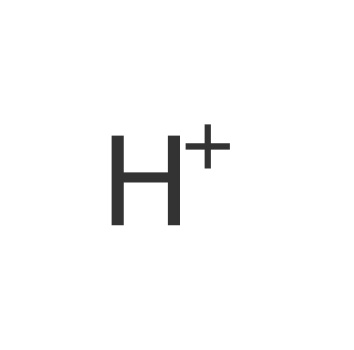
A His-Asn dyad is central to the proposed mechanism of L-3,4-Dihydroxy-2-butanone-4-phosphate synthase. An initial enolisation step is mediated by Glu 185 acting as a general base to abstract the C3 proton in concert with the donation of a proton to the C2 carbonyl oxygen by His 147. Stabilisation of the enolate occurs via His 147, Asn 106 and Tyr 95. Dehydration is assisted by Cys 55 acting as a general acid. The enol is ketonised by an acid-base process with the C2 hydroxyl deprotonated by His 147 and a proton donated to C1 by Glu 185. A skeleton rearrangement is initiated by deprotonation of the C4 hydroxyl by Asp 30. Hydration by a magnesium-associated water follows with proton donation from His 147 yields the enolate intermediate, which binds to one magnesium only so that Glu 185 can deprotonate the C2 hydroxyl and the final product is generated by protonation by a magnesium-activated water.
Catalytic Residues Roles
| UniProt | PDB* (1snn) | ||
| Asn106 | Asn106B | Activates His 147, and also stabilises the enolate. | electrostatic stabiliser |
| Tyr95 | Tyr95A | Stabilises the enolate. | electrostatic stabiliser |
| Asp30 | Asp30A | Initiates skeleton rearrangement by deprotonating the C4 hydroxyl of the substrate. | proton shuttle (general acid/base) |
| Cys55 | Cys55A | Acts as a general acid to facilitate dehydration. | proton shuttle (general acid/base) |
| Glu185 | Glu185A | Acts as a general acid/base in initialising enolisation by first abstracting a proton from C3 and later protonating C1, then deprotonating the C2 hydroxyl. | proton shuttle (general acid/base) |
| His147 | Ser147B | Acts as a general acid/base, and stabilises the enolate. | proton shuttle (general acid/base), electrostatic stabiliser |
Chemical Components
References
- Liao DI et al. (2002), Biochemistry, 41, 1795-1806. Structural Definition of the Active Site and Catalytic Mechanism of 3,4-Dihydroxy-2-butanone-4-phosphate Synthase‡. DOI:10.1021/bi015652u. PMID:11827524.
- Steinbacher S et al. (2003), J Biol Chem, 278, 42256-42265. Structure of 3,4-Dihydroxy-2-butanone 4-Phosphate Synthase from Methanococcus jannaschii in Complex with Divalent Metal Ions and the Substrate Ribulose 5-Phosphate: IMPLICATIONS FOR THE CATALYTIC MECHANISM. DOI:10.1074/jbc.m307301200. PMID:12904291.
- Fischer M et al. (2002), J Biol Chem, 277, 41410-41416. Biosynthesis of Riboflavin in Archaea Studies on the Mechanism of 3,4-Dihydroxy-2-butanone-4-phosphate Synthase of Methanococcus jannaschii. DOI:10.1074/jbc.m206863200. PMID:12200440.

Catalytic Residues Roles
| Residue | Roles |
|---|---|
| Glu185A | proton shuttle (general acid/base) |
| Asn106B | electrostatic stabiliser |
| Tyr95A | electrostatic stabiliser |
| Asp30A | proton shuttle (general acid/base) |
| Cys55A | proton shuttle (general acid/base) |
| Ser147B | electrostatic stabiliser |
| Ser147B | proton shuttle (general acid/base) |