Neprilysin
Neutral endopeptidase, or neprelysin, is a Zinc protease located in the membrane of mammalian tissue and responsible for the hydrolysis of peptides such as Insulin at the cell surface. As a result it plays a key role in many of the processes involved in cell signalling. Although it displays little sequence or structural homology to other known Zinc dependent proteases such as the bacterial protein thermolysin, it's active site can be successfully aligned to the active site of thermolysin, thus convergent evolution is believed to account for the similarity in mechanism between the two that is observed.
Reference Protein and Structure
- Sequence
-
P08473
 (3.4.24.11)
 (Sequence Homologues)
(PDB Homologues)
(Sequence Homologues)
(PDB Homologues)
- Biological species
-
Homo sapiens (Human)
- PDB
-
1r1j
- STRUCTURAL ANALYSIS OF NEPRILYSIN WITH VARIOUS SPECIFIC AND POTENT INHIBITORS
(2.35 Å)



- Catalytic CATH Domains
-
3.40.390.10
 (see all for 1r1j)
- Cofactors
- Zinc(2+) (1)
Enzyme Reaction (EC:3.4.24.11)


Enzyme Mechanism
Introduction
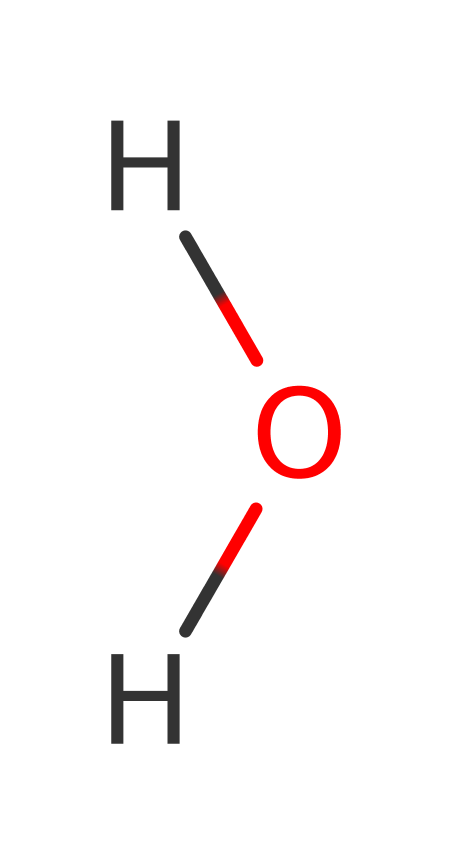
The Zinc ion and the catalytic residue Glu 584 act together to activate a water molecule for nucleophilic attack on the peptide substrate. This forms an oxyanion intermediate, stabilised by His 711 in a hydrogen bond network involving Asp 650 and Arg 717. Subsequent collapse of the intermediate results in cleavage of the peptide bond and release of the products.
Catalytic Residues Roles
| UniProt | PDB* (1r1j) | ||
| Glu585 | Glu584(531)A | Acts as a general base to activate water for nucleophilic attack of peptide bond | proton shuttle (general acid/base) |
| His588, Glu647, His584 | His587(534)A, Glu646(593)A, His583(530)A | Form Zinc binding site of enzyme | metal ligand |
| Asp651 | Asp650(597)A | Forms Hydrogen bond network to raise the pKa of His 711, thus allowing it to exist in the protonated form at physiological pH so it can stabilise the tetrahedral intermediate. | electrostatic stabiliser |
| His712 | His711(658)A | Forms hydrogen bond to the oxyanion thus stabilising the tetrahedral intermediate in the reaction. | electrostatic stabiliser |
| Arg718 | Arg717(664)A | Hydrogen bonds to His 711 to raise its pKa so that it remains protonated at physiological pH. | electrostatic stabiliser |
Chemical Components
References
- Devault A et al. (1988), FEBS Lett, 231, 54-58. Exploration of the catalytic site of endopeptidase 24.11 by site-directed mutagenesis Histidine residues 583 and 587 are essential for catalysis. DOI:10.1016/0014-5793(88)80701-4. PMID:3162886.
- Oefner C et al. (2000), J Mol Biol, 296, 341-349. Structure of human neutral endopeptidase (Neprilysin) complexed with phosphoramidon. DOI:10.1006/jmbi.1999.3492. PMID:10669592.
- Marie-Claire C et al. (1997), Biochemistry, 36, 13938-13945. Evidence by Site-Directed Mutagenesis That Arginine 203 of Thermolysin and Arginine 717 of Neprilysin (Neutral Endopeptidase) Play Equivalent Critical Roles in Substrate Hydrolysis and Inhibitor Binding. DOI:10.1021/bi9712495. PMID:9374873.
- Le Moual H et al. (1994), Eur J Biochem, 221, 475-480. Asp650 is crucial for catalytic activity of neutral endopeptidase 24-11. DOI:10.1111/j.1432-1033.1994.tb18760.x. PMID:8168535.
- Dion N et al. (1993), FEBS Lett, 318, 301-304. Kinetic evidence that His-711 of neutral endopeptidase 24.11 is involved in stabilization of the transition state. DOI:10.1016/0014-5793(93)80533-z. PMID:8440386.
- Devault A et al. (1988), J Biol Chem, 263, 4033-4040. Expression of neutral endopeptidase (enkephalinase) in heterologous COS-1 cells. Characterization of the recombinant enzyme and evidence for a glutamic acid residue at the active site. PMID:2894375.

Catalytic Residues Roles
| Residue | Roles |
|---|---|
| Arg717(664)A | electrostatic stabiliser |
| His711(658)A | electrostatic stabiliser |
| Asp650(597)A | electrostatic stabiliser |
| His583(530)A | metal ligand |
| His587(534)A | metal ligand |
| Glu646(593)A | metal ligand |
| Glu584(531)A | proton shuttle (general acid/base) |