Dipeptidase E
Aspartyl peptidase has unique substrate specificity for Asp-Xaa dipeptides and Asp-Gly-Gly tripeptide. Not classified in any known peptidase family. Convergent evolution accounts for catalytic triad His157, Ser120, Glu192. Found in bacteria and recently found to be present in isolated eukaryotes. This protein is a member of the MEROPS peptidase family S51 (dipeptidase E, clan PC).
Reference Protein and Structure
- Sequence
-
P36936
 (3.4.13.21)
 (Sequence Homologues)
(PDB Homologues)
(Sequence Homologues)
(PDB Homologues)
- Biological species
-
Salmonella enterica subsp. enterica serovar Typhimurium str. LT2 (Bacteria)
- PDB
-
1fy2
- Aspartyl Dipeptidase
(1.2 Å)



- Catalytic CATH Domains
-
3.40.50.880
 (see all for 1fy2)
Enzyme Reaction (EC:3.4.13.21)
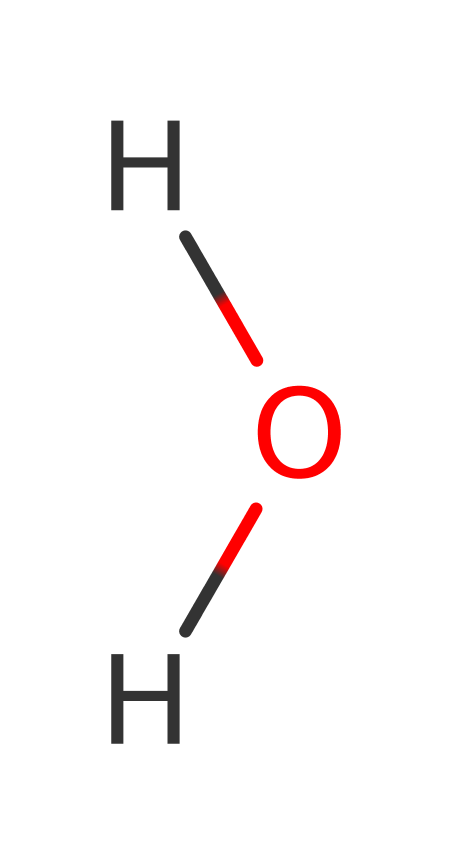

+

→

+


Alternative enzyme names: PepE gene product (Salmonella typhimurium), Aspartyl dipeptidase, Peptidase E,
Enzyme Mechanism
Introduction
Nucleophilic attack by activated Ser120 on peptide bond. Protonation of leaving group by His157. Transition state stabilisation by oxyanion hole (Ala121 and Gly88 main chain amides); hydrolysis of acyl enzyme intermediate by His157 activated water molecule.
Catalytic Residues Roles
| UniProt | PDB* (1fy2) | ||
| Glu192 | Glu192A | Positions His 157 correctly for acid-base catalysis. | electrostatic stabiliser |
| Ser120 | Ser120A | Nucleophilic attack upon peptide bond forms covalent intermediate. This intermediate is broken up by a nucleophilic attack from water. | covalent catalysis |
| Gly88 (main-N), Ala121 (main-N) | Gly88A (main-N), Ala121A (main-N) | Stabilise the transition state via oxyanion hole | electrostatic stabiliser |
| His157 | His157A | Deprotonates Ser 120 to allow the nucleophilic attack. Protonates the leaving group. Activates water for nucleophilic attack. | proton shuttle (general acid/base) |
*PDB label guide - RESx(y)B(C) - RES: Residue Name; x: Residue ID in PDB file;
y: Residue ID in PDB sequence if different from PDB file; B: PDB Chain;
C: Biological Assembly Chain if different from PDB. If label is "Not Found" it means this residue is not found in the reference PDB.
Chemical Components
References
- Håkansson K et al. (2000), Proc Natl Acad Sci U S A, 97, 14097-14102. The structure of aspartyl dipeptidase reveals a unique fold with a Ser-His-Glu catalytic triad. DOI:10.1073/pnas.260376797. PMID:11106384.
- Lassy RA et al. (2000), J Bacteriol, 182, 2536-2543. Peptidase E, a Peptidase Specific for N-Terminal Aspartic Dipeptides, Is a Serine Hydrolase. DOI:10.1128/jb.182.9.2536-2543.2000. PMID:10762256.

Catalytic Residues Roles
| Residue | Roles |
|---|---|
| Glu192A | electrostatic stabiliser |
| Ala121A (main-N) | electrostatic stabiliser |
| Gly88A (main-N) | electrostatic stabiliser |
| His157A | proton shuttle (general acid/base) |
| Ser120A | covalent catalysis |