Hydroxylamine oxidase
Hydroxylamine oxioreductase catalyses the conversion of hydroxylamines to nitrite. This is the second step in the respiratory system of nitrifying chemoautotrophic bacteria. Ammonia mono-oxygenase produces hydroxylamine which is reduced by hydroxylamine oxioreductase to product electrons which feed into an electron transport chain to produce energy. The enzyme employs 24 haem groups across three sub units which interact in a uniquely complicated electron transport chain.
Reference Protein and Structure
- Sequence
-
Q50925
 (1.7.2.6)
 (Sequence Homologues)
(PDB Homologues)
(Sequence Homologues)
(PDB Homologues)
- Biological species
-
Nitrosomonas europaea ATCC 19718 (Bacteria)
- PDB
-
1fgj
- X-RAY STRUCTURE OF HYDROXYLAMINE OXIDOREDUCTASE
(2.8 Å)



- Catalytic CATH Domains
-
1.10.780.10
 1.20.850.10
(see all for 1fgj)
1.20.850.10
(see all for 1fgj)
- Cofactors
- Ferroheme c(2-) (1)
Enzyme Reaction (EC:1.7.2.6)
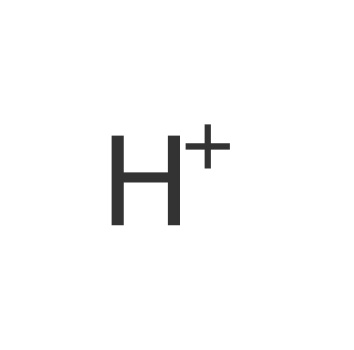


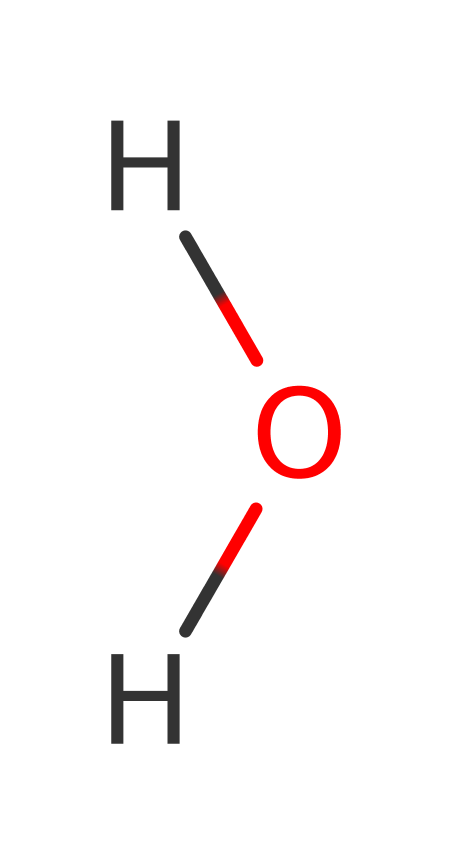


Enzyme Mechanism
Introduction
The reaction centre of hydroxylamine oxioreductase is an unusual haem group, cross linked to Tyr467 of a separate sub unit through a covalent bond. This linking meso-substituted haem group, P460 extracts two electrons from the substrate and transfers them to cytochrome c through the six surrounding c type haem groups. His233 is the axial ligand to Fe in P460 while the proximal site is free for hydroxylamine binding. The residues Asp267, His268 and Tyr334 protrude towards the catalytic haem group in the upper portion of the catalytic pocket and are thought to aid the extraction of electrons from hydroxylamine.
Catalytic Residues Roles
| UniProt | PDB* (1fgj) | ||
| His257 | His233A | The residue occupies the axial ligand position in the P460 haem ring and is thought to play an important role in determining the energy of the catalytic site resting state. | electrostatic stabiliser |
| Asp291 | Asp267A | In a computational study, bidentate hydrogen bonds where found to exist between Asp267 and a water molecule occupying the sixth coordination site of the P460 haem, supporting the presence of a six coordinate high spin resting state. When the substrate is bound, Asp267 critically constrains the substrate orientation, increasing its reactivity. | steric role |
| His292 | His268A | The residue is thought to activate the P460 haem centre towards electron extraction. | steric role |
| Tyr358 | Tyr334A | The reside is thought to destabilise the reaction pathway intermediates through structural distortion of the haem group, ensuring the reaction doesn't reach an energy 'dead end' and that the reaction products are formed efficiently. | steric role |
| Tyr491 | Tyr467A(AB) | The residue forms an essential cross link between subunits through its covalent bond with the P460 haem group. This sub unit folding ensures the haem groups remain in a hydrophobic environment where stable electron transfer can occur. The residue is also thought to influence the reactivity of the haem ring towards electron acceptance. | covalently attached, activator |
Chemical Components
References
- Fernández ML et al. (2008), J Inorg Biochem, 102, 1523-1530. Theoretical insight into the hydroxylamine oxidoreductase mechanism. DOI:10.1016/j.jinorgbio.2008.01.032. PMID:18336913.
- Attia AA et al. (2014), J Phys Chem B, 118, 12140-12145. Computational investigation of the initial two-electron, two-proton steps in the reaction mechanism of hydroxylamine oxidoreductase. DOI:10.1021/jp507023a. PMID:25277374.
- Igarashi N et al. (1997), Nat Struct Biol, 4, 276-284. The 2.8 A structure of hydroxylamine oxidoreductase from a nitrifying chemoautotrophic bacterium, Nitrosomonas europaea. PMID:9095195.

Catalytic Residues Roles
| Residue | Roles |
|---|---|
| His233A | electrostatic stabiliser |
| Asp267A | steric role |
| Tyr334A | steric role |
| His268A | steric role |
| Tyr467A(AB) | covalently attached, activator |