Adenosylmethionine decarboxylase (eukaryotic)
S-Adenosylmethionine decarboxylase (AdoMetDC) is a critical regulatory enzyme in the polyamine synthetic pathway, and has been the subject of biochemical studies spanning several decades. AdoMetDC is a target for drug design against cancer, parasitic infection, and a variety of hyperproliferative disorders and has several intriguing biochemical features such as an unusual self-cleavage reaction, a covalently bound reactive pyruvoyl group, allosteric activation, and high in vivo degradation rates.
AdoMetDC catalyses the removal of the carboxylate group from S-adenosylmethionine (AdoMet) to form (5-deoxy-5-adenosyl)(3-aminopropyl) methylsulfonium salt (dcAdoMet), which is committed to act as the n-propylamine group donor for the synthesis of the polyamines spermidine and spermine from the diamine putrescine. These polyamines have been shown to be involved in the initiation and maintenance of proliferative states, and are crucial for cell growth and differentiation. AdoMetDC is a control point within the polyamine pathway, and its activity is highly regulated during the cell cycle via multiple mechanisms. Deregulation of this pathway has been associated with several types of cancers. The unusual catalytic mechanism of AdoMetDC involves a covalently bound pyruvoyl group instead of the cofactor pyridoxal-5-phosphate (PLP). This pyruvoyl group is generated in a post-translation modification internal serinolysis reaction.
Reference Protein and Structure
- Sequence
-
P17707
 (4.1.1.50)
 (Sequence Homologues)
(PDB Homologues)
(Sequence Homologues)
(PDB Homologues)
- Biological species
-
Homo sapiens (Human)
- PDB
-
1jen
- HUMAN S-ADENOSYLMETHIONINE DECARBOXYLASE
(2.25 Å)



- Catalytic CATH Domains
-
3.30.360.50
 3.60.90.10
(see all for 1jen)
3.60.90.10
(see all for 1jen)
Enzyme Reaction (EC:4.1.1.50)




Enzyme Mechanism
Introduction
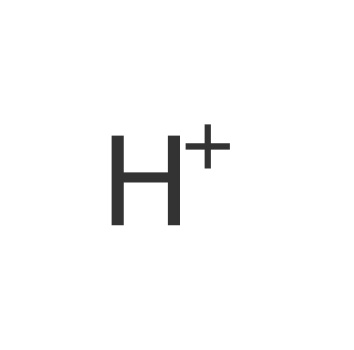
The pyruvoyl moiety functions as an electron sink for the catalytic decarboxylation reaction in a manner similar to that of the cofactor PLP. The substrate AdoMet binds to the enzyme through a Schiff base to the active site pyruvoyl group. The decarboxylation reaction proceeds with the pair of electrons from the leaving group (CO2) delocalised into the pyruvoyl group. An acidic residue, likely Cys82, protonates the C-alpha carbon of the substrate to generate the imine intermediate. The imine is further hydrolysed to release the product dcAdoMet.
Catalytic Residues Roles
| UniProt | PDB* (1jen) | ||
| Ser68 (ptm) | Pyr68(1)A (ptm) | Binds to substrate to form Schiff base linkage and acts as the electron sink throughout the reaction. | covalently attached, electron shuttle |
| Cys82 | Cys82(15)A(B) | Acts as a general acid to protonate C-alpha carbon to generate the imine intermediate in order to form the product , not the competing transamination reaction. | proton shuttle (general acid/base) |
Chemical Components
References
- Ekstrom JL et al. (1999), Structure, 7, 583-595. The crystal structure of human S-adenosylmethionine decarboxylase at 2.25 Å resolution reveals a novel fold. DOI:10.1016/s0969-2126(99)80074-4. PMID:10378277.
- Bale S et al. (2010), Amino Acids, 38, 451-460. Structural biology of S-adenosylmethionine decarboxylase. DOI:10.1007/s00726-009-0404-y. PMID:19997761.
- Pegg AE (2009), Essays Biochem, 46, 25-45. S-Adenosylmethionine decarboxylase. DOI:10.1042/BSE0460003. PMID:20095968.
- Xiong H et al. (1999), Biochemistry, 38, 2462-2470. Role of Cysteine-82 in the Catalytic Mechanism of HumanS-Adenosylmethionine Decarboxylase†. DOI:10.1021/bi9825201. PMID:10029540.

Catalytic Residues Roles
| Residue | Roles |
|---|---|
| Cys82(15)A(B) | proton shuttle (general acid/base) |
| Pyr68(1)A (ptm) | covalently attached, electron shuttle |
Chemical Components
Catalytic Residues Roles
| Residue | Roles |
|---|
Chemical Components
Catalytic Residues Roles
| Residue | Roles |
|---|
Chemical Components
Catalytic Residues Roles
| Residue | Roles |
|---|
Chemical Components
Catalytic Residues Roles
| Residue | Roles |
|---|
Chemical Components
Catalytic Residues Roles
| Residue | Roles |
|---|
Chemical Components
Catalytic Residues Roles
| Residue | Roles |
|---|
Chemical Components
Catalytic Residues Roles
| Residue | Roles |
|---|
Chemical Components
Catalytic Residues Roles
| Residue | Roles |
|---|
Chemical Components
Catalytic Residues Roles
| Residue | Roles |
|---|
Chemical Components
Catalytic Residues Roles
| Residue | Roles |
|---|
Chemical Components
Catalytic Residues Roles
| Residue | Roles |
|---|
Chemical Components
Catalytic Residues Roles
| Residue | Roles |
|---|
Chemical Components
Catalytic Residues Roles
| Residue | Roles |
|---|