Catalase (manganese dependent)
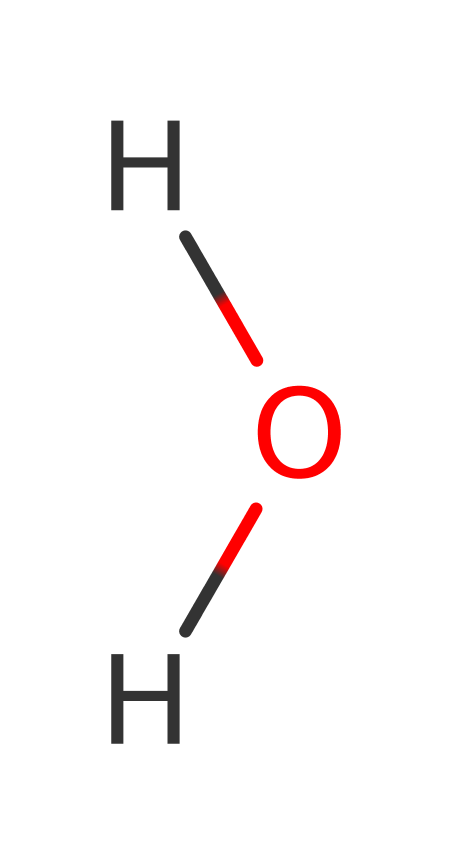
The catalases are important antioxidant defence enzymes found in a broad range of microorganisms in microaerophilic environments. Manganese catalase, isolated from Lactobacillus plantarum, is a nonheme catalase containing a binuclear manganese cluster, and is responsible for catalysing the disproportionation of hydrogen peroxide into water and dioxygen. The enzyme is a hexamer of identical subunits organised around a catalytic core of close-packed four-helix bundle domains.
Manganese catalase catalyses the disproportionation of toxic hydrogen peroxide into dioxygen and water. The overall reaction consists of two distinct half reactions involving alternate reduction and oxidation of the peroxide substrate. An m(1,3)-bridging glutamate anchors the two ions in the binuclear cluster, and each Mn is further coordinated by one histidine and one glutamate bound to opposite sides of the cluster. The Mn core is completed by two solvent derived oxygen bridges, which are structurally distinct.
Reference Protein and Structure
- Sequence
-
P60355
 (1.11.1.6)
 (Sequence Homologues)
(PDB Homologues)
(Sequence Homologues)
(PDB Homologues)
- Biological species
-
Lactobacillus plantarum (Bacteria)
- PDB
-
1o9i
- CRYSTAL STRUCTURE OF THE Y42F MUTANT OF MANGANESE CATALASE FROM LACTOBACILLUS PLANTARUM AT 1.33A RESOLUTION
(1.33 Å)



- Catalytic CATH Domains
-
1.20.1260.10
 (see all for 1o9i)
- Cofactors
- Manganese(3+) (2)
Enzyme Reaction (EC:1.11.1.6)




Enzyme Mechanism
Introduction
The hydrogen peroxide substrate becomes bound to the oxidised [3,3] state of the Mn cluster via a terminal oxygen, replacing the nonbridging solvent (W3) on the Mn1 subsite. The [3,3] cluster has a diamagnetic ground state, associated with the bis-m-bridged dimanganese core structure. The bridging ligands act as proton acceptor sites in this reaction and support electronic coupling between the two Mn ions. Two-electron reduction of the terminally bound peroxide by the dinuclear Mn (III) complex results in the release of the dioxygen product. This step is facilitated by the two oxygen bridges (W1 and W2) that electronically couple the Mn ions. Glu 178 is involved in transferring the peroxidic protons to active site bases during turnover. These bases are likely to be the solvent molecules themselves, tightly coupling proton transfer to metal-centred redox. The cluster, now in a [2,2] reduced state has labile bridging groups, which allow substantial substitutional insertion of peroxide into a bridging position of the reduced complex in forming an m(1,1) hydroperoxy intermediate. Therefore, the peroxide replaces the relatively weakly bound, doubly protonated (aquo) bridge. The resulting m(1,1) bridging mode favours heterolytic peroxide cleavage due to polarization of the O-O bond, and is activated towards reoxidation of the dimanganese core. The O-O bond may be further activated by vic to gem isomerisation of the peroxide protons with the Glu 178 shuttle catalysing the proton rearrangement, protonating the nonbridging oxygen of the bound substrate. Loss of water regenerates the [3,3] state of the cluster.
Catalytic Residues Roles
| UniProt | PDB* (1o9i) | ||
| His69, Glu35, His181, Glu148, Glu66 | His69A, Glu35A, His181A, Glu148A, Glu66A | Glu35 and His69 are coordinated to one Mn(III) in the cluster, while Glu148 and His181 are coordinated to the other Mn(III). Glu66 forms a bridge between the two metal ions. | metal ligand |
| Glu178 | Glu178A | Glu 178 acts as a proton shuttle in both the reduction and oxidation half reactions. In the oxidation step, Glu 178 is positioned to shuttle protons from a terminally bound peroxide to the trans-Glu bridge. In the reductive half reaction, Glu 178 protonates a bridging peroxide, activating it towards O-O bond cleavage. | proton shuttle (general acid/base), proton acceptor, proton donor |
Chemical Components
coordination to a metal ion, proton transfer, electron transfer, redox reaction, overall product formed, native state of enzyme regenerated, bimolecular homolytic elimination, heterolysisReferences
- Whittaker MM et al. (1999), Biochemistry, 38, 9126-9136. The Oxidized (3,3) State of Manganese Catalase. Comparison of Enzymes fromThermus thermophilusandLactobacillus plantarum†. DOI:10.1021/bi990499d. PMID:10413487.
- Whittaker MM et al. (2003), Eur J Biochem, 270, 1102-1116. Outer sphere mutagenesis of Lactobacillus plantarum manganese catalase disrupts the cluster core. Mechanistic implications. DOI:10.1046/j.1432-1033.2003.03459.x. PMID:12631270.
- Barynin VV et al. (2001), Structure, 9, 725-738. Crystal structure of manganese catalase from Lactobacillus plantarum. DOI:10.2210/pdb1jku/pdb. PMID:11587647.

Step 1. The substrate peroxide binds to the oxidised (3,3) cluster and a proton is transferred, possibly using Glu178 as a proton shuttle.
Download: Image, Marvin FileCatalytic Residues Roles
| Residue | Roles |
|---|---|
| Glu178A | proton shuttle (general acid/base) |
| Glu35A | metal ligand |
| Glu66A | metal ligand |
| His69A | metal ligand |
| Glu148A | metal ligand |
| His181A | metal ligand |
Chemical Components
coordination to a metal ion, proton transfer
Step 2. There is a two-electron oxidation of the terminally bound peroxide by the dinuclear Mn (III) complex. Glu178 may again be involved in transferring the proton away from the peroxide oxygen to the active site bases. This forms oxygen and water which are released from the active site, and a reduced (2,2) dinuclear Mn cluster.
Download: Image, Marvin FileCatalytic Residues Roles
| Residue | Roles |
|---|---|
| Glu35A | metal ligand |
| Glu66A | metal ligand |
| His69A | metal ligand |
| Glu148A | metal ligand |
| His181A | metal ligand |
| Glu178A | proton shuttle (general acid/base) |
Chemical Components
electron transfer, proton transfer, redox reaction, overall product formed
Step 3. The Mn-Mn solvent bridges are relatively labile and a second peroxide coordinates into the metal cluster, displacing the relatively weakly bound, doubly protonated aquo bridge. This results in a symmetric (1,1) hydroperoxy intermediate. Glu178 may be involved in proton transfer from the peroxide.
Download: Image, Marvin FileCatalytic Residues Roles
| Residue | Roles |
|---|---|
| Glu35A | metal ligand |
| Glu66A | metal ligand |
| His69A | metal ligand |
| Glu148A | metal ligand |
| His181A | metal ligand |
| Glu178A | proton acceptor |
Chemical Components
coordination to a metal ion, proton transfer
Step 4. Glu178 protonates the peroxide bridge, polarising the O-O bond and activating it towards heterolytic cleavage. There is loss of a water molecule and the Mn cluster is reoxidised by two electron tranfser to regenerate the active site.
Download: Image, Marvin FileCatalytic Residues Roles
| Residue | Roles |
|---|---|
| Glu178A | proton shuttle (general acid/base) |
| Glu35A | metal ligand |
| Glu66A | metal ligand |
| His69A | metal ligand |
| Glu148A | metal ligand |
| His181A | metal ligand |
| Glu178A | proton donor |