Glutamine synthetase (type I)
Glutamine synthetase catalyses the condensation reaction of ammonium and glutamate to form glutamine, using ATP. This is observed in the early stages of infection by Mycobacterium tuberculosis as an extracellular component in the synthesis of poly(L-glutamine-L-glutamate) chains requires for cell wall formation. Therefore this enzyme is an important drug target for halting tuberculosis infection.
Reference Protein and Structure
- Sequence
-
P9WN39
 (6.3.1.2)
 (Sequence Homologues)
(PDB Homologues)
(Sequence Homologues)
(PDB Homologues)
- Biological species
-
Mycobacterium tuberculosis H37Rv (Bacteria)
- PDB
-
2bvc
- Crystal structure of Mycobacterium tuberculosis glutamine synthetase in complex with a transition state mimic
(2.1 Å)



- Catalytic CATH Domains
-
3.10.20.70
 3.30.590.10
(see all for 2bvc)
3.30.590.10
(see all for 2bvc)
- Cofactors
- Magnesium(2+) (3)
Enzyme Reaction (EC:6.3.1.2)


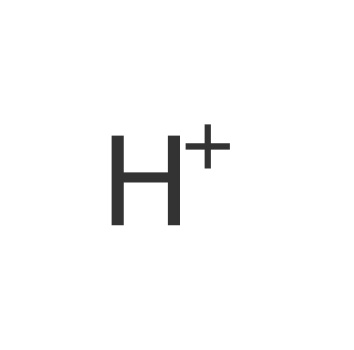


Enzyme Mechanism
Introduction
The reaction mechanism can be described as a series of loop and side-chain movements. ATP binds within the top of the bifunnel, its terminal phosphate group binding adjacent to an Mn ion. The binding of ATP results in loop movements. Glutamate enters the cavity and binds with its carboxylate group binding adjacent to a Mn ion or a Mg ion as these are interchangeable and do not affect the reaction mechanism and here the reaction is with Mg. Ammonium also enters the active site and is deprotonated by the side chain of Asp-50 to produce ammonia. The gamma-phosphate of ATP is transferred to the carboxylate of glutamate, thereby forming the intermediate. The two positively charged metal ions and Arg-339 and Arg-368 participate in phosphoryl transfer by polarizing the gamma-phosphate group of ATP making the phosphorus more positive. Ammonia attacks the N-carbon of the glutamyl phosphate intermediate, thereby releasing the phosphate group. The phosphate can deprotonate glutamine and the flap opens and glutamine is released.
Catalytic Residues Roles
| UniProt | PDB* (2bvc) | ||
| Asp54 | Asp54(62)F | Depronates the ammonium substrate ion. Increases the affinity for ammonium binding. | activator, proton acceptor |
| Glu227, Glu133, Glu366, His276, Glu135, Glu219 | Glu227(235)A, Glu133(141)A, Glu366(374)A, His276(284)A, Glu135(143)A, Glu219(227)A | bind metal cofactor | metal ligand |
| Arg368, Arg347 | Arg368(376)A, Arg347(355)A | Polarises the gamma-phosphate group of ATP making the phosphorus more positive. | electrostatic stabiliser |
Chemical Components
proton transfer, overall reactant used, intermediate formation, bimolecular nucleophilic addition, overall product formed, bimolecular nucleophilic substitution, rate-determining step, native state of enzyme is not regeneratedReferences
- Moreira C et al. (2016), Chemistry, 22, 9218-9225. Reaction Mechanism of Mycobacterium Tuberculosis Glutamine Synthetase Using Quantum Mechanics/Molecular Mechanics Calculations. DOI:10.1002/chem.201600305. PMID:27225077.
- Moreira C et al. (2017), J Phys Chem B, 121, 6313-6320. Clarifying the Catalytic Mechanism of Human Glutamine Synthetase: A QM/MM Study. DOI:10.1021/acs.jpcb.7b02543. PMID:28587465.
- Krajewski WW et al. (2005), Proc Natl Acad Sci U S A, 102, 10499-10504. Structure of Mycobacterium tuberculosis glutamine synthetase in complex with a transition-state mimic provides functional insights. DOI:10.1073/pnas.0502248102. PMID:16027359.
- Gill HS et al. (2002), Biochemistry, 41, 9863-9872. Multicopy Crystallographic Refinement of a Relaxed Glutamine Synthetase fromMycobacterium tuberculosisHighlights Flexible Loops in the Enzymatic Mechanism and Its Regulation†. DOI:10.1021/bi020254s. PMID:12146952.
- Eisenberg D et al. (2000), Biochim Biophys Acta, 1477, 122-145. Structure–function relationships of glutamine synthetases. DOI:10.1016/s0167-4838(99)00270-8. PMID:10708854.
- Liaw SH et al. (1994), Biochemistry, 33, 675-681. Structural model for the reaction mechanism of glutamine synthetase, based on five crystal structures of enzyme-substrate complexes. DOI:10.1021/bi00169a007. PMID:7904828.
- Alibhai M et al. (1994), Biochemistry, 33, 682-686. Kinetic and mutagenic studies of the role of the active site residues Asp-50 and Glu-327 of Escherichia coli glutamine synthetase. DOI:10.1021/bi00169a008. PMID:7904829.

Step 1. Asp50 deprotonates the ammonium ion to produce ammonia. This activates ammonia.
Download: Image, Marvin FileCatalytic Residues Roles
| Residue | Roles |
|---|---|
| Arg347(355)A | electrostatic stabiliser |
| Arg368(376)A | electrostatic stabiliser |
| Glu133(141)A | metal ligand |
| Glu135(143)A | metal ligand |
| Glu219(227)A | metal ligand |
| Glu227(235)A | metal ligand |
| His276(284)A | metal ligand |
| Glu366(374)A | metal ligand |
| Asp54(62)F | activator, proton acceptor |
Chemical Components
proton transfer, overall reactant used
Step 2. Substrate nucleophilically attacks Phosphorus on ATP resulting in the γ-phosphate being transferred to glutamate. This activates glutamate by increasing its electerophilicity.
Download: Image, Marvin FileCatalytic Residues Roles
| Residue | Roles |
|---|---|
| Glu133(141)A | metal ligand |
| Glu135(143)A | metal ligand |
| Glu219(227)A | metal ligand |
| Glu227(235)A | metal ligand |
| His276(284)A | metal ligand |
| Arg347(355)A | electrostatic stabiliser |
| Glu366(374)A | metal ligand |
| Arg368(376)A | electrostatic stabiliser |
Chemical Components
intermediate formation, overall reactant used, ingold: bimolecular nucleophilic addition, overall product formed
Step 3. Ammonia nucleophilically attacks the δ‐carbon of γ‐glutamyl phosphate.
Download: Image, Marvin FileCatalytic Residues Roles
| Residue | Roles |
|---|---|
| Glu133(141)A | metal ligand |
| Glu135(143)A | metal ligand |
| Glu219(227)A | metal ligand |
| Glu227(235)A | metal ligand |
| His276(284)A | metal ligand |
| Arg347(355)A | electrostatic stabiliser |
| Glu366(374)A | metal ligand |
| Arg368(376)A | electrostatic stabiliser |
Chemical Components
ingold: bimolecular nucleophilic substitution, rate-determining step
Step 4. Phosphate deprotonates Glutamine. The enzyme is not regenerated in this last step since Asp50 is still protonated. This proton will probably be released into the solution to return the enzyme to its original state.
Download: Image, Marvin FileCatalytic Residues Roles
| Residue | Roles |
|---|---|
| Glu133(141)A | metal ligand |
| Glu135(143)A | metal ligand |
| Glu219(227)A | metal ligand |
| Glu227(235)A | metal ligand |
| His276(284)A | metal ligand |
| Arg347(355)A | electrostatic stabiliser |
| Glu366(374)A | metal ligand |
| Arg368(376)A | electrostatic stabiliser |
 Download: