Protein-synthesizing GTPase (elongation factor Tu)
Elongation factor Tu hydrolyses GTP to give GDP and Pi, thus providing the free energy that the ribosome needs to incorporate amino acids into the growing polypeptide. As such, it shows homology to other GTP binding proteins such as the oncogene ras, but may show a different mechanism of GTP hydrolysis. Many antibiotics are able to inhibit EFTu, making study of its mechanism particularly useful in view of the possibility of synthesising new antibiotics.
Reference Protein and Structure
- Sequences
-
P0CE47

Q7M0J8
 (Sequence Homologues)
(PDB Homologues)
(Sequence Homologues)
(PDB Homologues)
- Biological species
-
Escherichia coli K-12 (Bacteria)
- PDB
-
5jbq
- EF-TU (ESCHERICHIA COLI) IN COMPLEX WITH THIOMURACIN ANALOG
(2.006 Å)



- Catalytic CATH Domains
-
3.40.50.300
 (see all for 5jbq)
- Cofactors
- Magnesium(2+) (1)
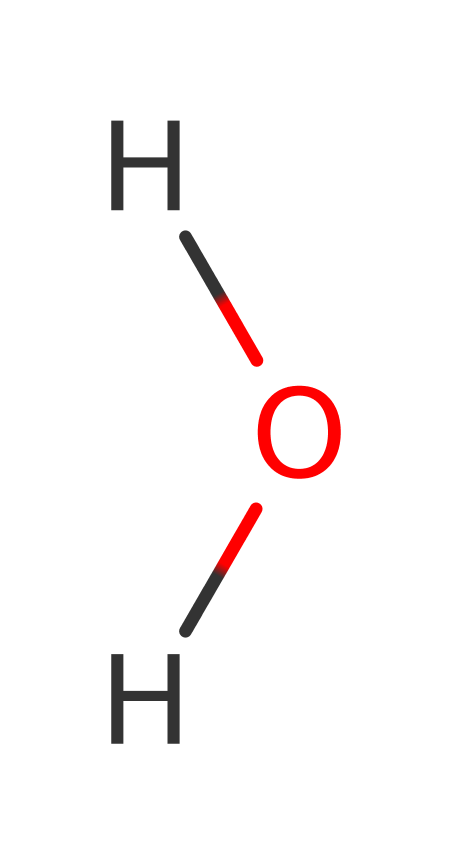
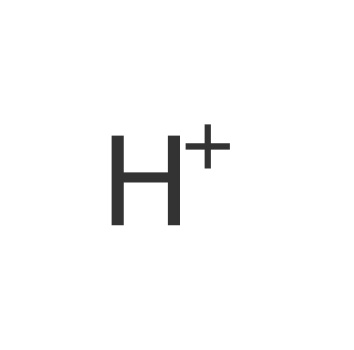
Enzyme Reaction (EC:3.6.5.3)





Enzyme Mechanism
Introduction
The reaction of the GTPase of EF-Tu follows a concerted early proton transfer to the γ-phosphate, resulting in subsequent nucleophilic attack on the γ-phosphate monoanion by hydroxide. His 85 is shown to be doubly protonated and is involved in the stabilization of the negative charge development along with the back bone NH of Gly 84 which together form an oxyanion hole. This effect also requires the effect of Asp 22 which replies the negative charge of the phosphate toward His 85. Lys 25 lastly stabilises the leaving group phosphate's negative charge.
Catalytic Residues Roles
| UniProt | PDB* (5jbq) | ||
| Asp22 | Asp21(22)A | Repels the phosphate's negative charge to the stabilising positive Histidine. | electrostatic stabiliser |
| Thr26 | Thr25(26)A | Forms the Mg2+ binding site | metal ligand |
| Gly84 (main-N), His85 | Gly83(84)A (main-N), His84(85)A | Forms the oxyanion hole and stabilises the negative charge of the transition state through hydrogen bonding. | electrostatic stabiliser |
| Lys25 | Lys24(25)A | Stabilises the phosphate leaving group's negative charge. | electrostatic stabiliser |
Chemical Components
proton transfer, bimolecular nucleophilic addition, intermediate formation, overall reactant used, unimolecular elimination by the conjugate base, intermediate collapse, overall product formedReferences
- Geggier P et al. (2010), J Mol Biol, 399, 576-595. Conformational Sampling of Aminoacyl-tRNA during Selection on the Bacterial Ribosome. DOI:10.1016/j.jmb.2010.04.038. PMID:20434456.
- Åqvist J et al. (2015), Biochemistry, 54, 546-556. The conformation of a catalytic loop is central to GTPase activity on the ribosome. DOI:10.1021/bi501373g. PMID:25515218.
- Wallin G et al. (2013), Nat Commun, 4, 1733-. Energetics of activation of GTP hydrolysis on the ribosome. DOI:10.1038/ncomms2741. PMID:23591900.
- Aleksandrov A et al. (2013), RNA, 19, 1218-1225. Mechanism of activation of elongation factor Tu by ribosome: catalytic histidine activates GTP by protonation. DOI:10.1261/rna.040097.113. PMID:23864225.
- B RP et al. (2013), Proc Natl Acad Sci U S A, 110, 20509-20514. Quantitative exploration of the molecular origin of the activation of GTPase. DOI:10.1073/pnas.1319854110. PMID:24282301.

Step 1. The water protonates the gamma phosphate and the hydroxide formed then nucleophilically attacks the phosphate.
Download: Image, Marvin FileCatalytic Residues Roles
| Residue | Roles |
|---|---|
| Gly83(84)A (main-N) | electrostatic stabiliser |
| Asp21(22)A | electrostatic stabiliser |
| Lys24(25)A | electrostatic stabiliser |
| His84(85)A | electrostatic stabiliser |
| Thr25(26)A | metal ligand |
Chemical Components
proton transfer, ingold: bimolecular nucleophilic addition, intermediate formation, overall reactant used
Step 2. The pentacoordinate transition state collapse resulting in the cleavage of the phosphodiester bond.
Download: Image, Marvin FileCatalytic Residues Roles
| Residue | Roles |
|---|---|
| Gly83(84)A (main-N) | electrostatic stabiliser |
| Asp21(22)A | electrostatic stabiliser |
| Lys24(25)A | electrostatic stabiliser |
| His84(85)A | electrostatic stabiliser |
| Thr25(26)A | metal ligand |
 Download: