H+-transporting two-sector ATPase (V-type)
The homing endonuclease from S. cerevisiae, PI-SceI is able to catalyse the specific cleavage of double stranded DNA in order to allow the incorporation of a mobile intron into the allele. This enables non-mendelian propagation of certain introns without harming the target allele, as the introns are spliced out before functional mRNA is produced. It belongs to a large family of endonucleases all with the sequence LADLIDADG, and contains two active sites to allow simultaneous cleavage of both strands of DNA. The homing endonucleases in general are highly specific, and PI-SceI thus recognises a 31 base pair DNA sequence as its substrate, the longest specific sequence for a DNA binding protein yet discovered. This entry covers the active site which cleaves the top strand, running 5' to 3'.
Reference Protein and Structure
- Sequence
-
P17255
 (3.1.-.-, 7.1.2.2)
 (Sequence Homologues)
(PDB Homologues)
(Sequence Homologues)
(PDB Homologues)
- Biological species
-
Saccharomyces cerevisiae S288c (Baker's yeast)
- PDB
-
1lws
- Crystal structure of the intein homing endonuclease PI-SceI bound to its recognition sequence
(3.5 Å)



- Catalytic CATH Domains
-
2.170.16.10
 3.10.28.10
(see all for 1lws)
3.10.28.10
(see all for 1lws)
- Cofactors
- Calcium(2+) (2)
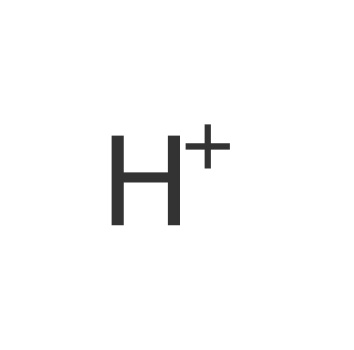
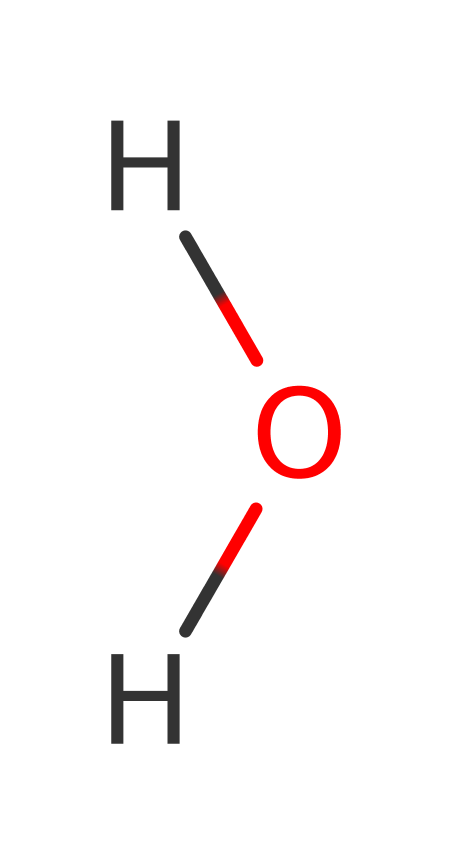
Enzyme Reaction (EC:7.1.2.2)



Enzyme Mechanism
Introduction
Protein splicing begins with an acyl rearrangement at the N-terminal junction where Cys 1 attacks the carbonyl carbon of the preceding residue forming a thioester intermediate. The nucleophilicity of the cysteine residue is increased by polarisation by Asn 76, which acts as a general base catalyst, and the transition state is stabilised by the backbone nitrogen of Gly 433. His 79 protonates the amide nitrogen of Cys 1 to promote breakdown of the tetrahedral intermediate to a thioester. Cys 455, activated by a zinc ion, nucleophilically attacks the same carbonyl carbon as Cys 1 causing release of Cys 1. Cyclisation of Asn 454 follows, with nucleophilic attack by the nitrogen activated by the carbonyl oxygen of Ile 434 on the carbonyl carbon, with the transition state stabilised by the zinc ion. On cleavage of the peptide bond His 453, activated by Zn, can act as a proton donor to Cys 455. Stabilisation is also provided by Asn 76 and Thr 78.
Catalytic Residues Roles
| UniProt | PDB* (1lws) | ||
| Gly716 (main-N) | Gly433A(C) (main-N) | Stabilises the transition state in attack of Cys 1 on the preceding residue. | electrostatic stabiliser |
| Asn737 | Asn454A(C) | Nucleophilic attack involved in cyclisation. | covalent catalysis |
| Ile717 (main-C) | Ile434A(C) (main-C) | Activates nitrogen of Asn 454 for cyclisation. | activator |
| Lys686 | Lys403A(C) | Protonates the leaving group, facilitating collapse of the pentavalent phosphate transition state. | proton shuttle (general acid/base) |
| Cys284 | Cys1A(C) | Attacks the carbonyl carbon of the preceding residue nucleophilically. This is later cleaved by the action of Cys455 (not in the representative crystal structure) | covalent catalysis |
| His362 | His79A(C) | Protonates Cys 1 to facilitate bond cleavage. | proton shuttle (general acid/base) |
| Thr361, Asn359 | Thr78A(C), Asn76A(C) | Involved in stabilisation. | electrostatic stabiliser |
| Lys584 | Lys301A(C) | Protonates the leaving group to enable collapse of the pentavalent phosphate transition state liberating the product. | proton shuttle (general acid/base) |
Chemical Components
References
- Poland BW et al. (2000), J Biol Chem, 275, 16408-16413. Structural Insights into the Protein Splicing Mechanism of PI-SceI. DOI:10.1074/jbc.275.22.16408. PMID:10828056.
- Moure CM et al. (2002), Nat Struct Biol, 9, 764-770. Crystal structure of the intein homing endonuclease PI-SceI bound to its recognition sequence. DOI:10.1038/nsb840. PMID:12219083.
- Schöttler S et al. (2000), Biochemistry, 39, 15895-15900. Identification of Asp218 and Asp326 as the Principal Mg2+Binding Ligands of the Homing Endonuclease PI-SceI†,‡. DOI:10.1021/bi001775n. PMID:11123916.
- Christ F et al. (1999), EMBO J, 18, 6908-6916. The monomeric homing endonuclease PI-SceI has two catalytic centres for cleavage of the two strands of its DNA substrate. DOI:10.1093/emboj/18.24.6908. PMID:10601013.
- Chong S et al. (1996), J Biol Chem, 271, 22159-22168. Protein Splicing Involving the Saccharomyces cerevisiae VMA Intein. THE STEPS IN THE SPLICING PATHWAY, SIDE REACTIONS LEADING TO PROTEIN CLEAVAGE, AND ESTABLISHMENT OF AN IN VITRO SPLICING SYSTEM. DOI:10.1074/jbc.271.36.22159. PMID:8703028.
- Xu MQ et al. (1994), EMBO J, 13, 5517-5522. Protein splicing: an analysis of the branched intermediate and its resolution by succinimide formation. PMID:7988548.

Catalytic Residues Roles
| Residue | Roles |
|---|---|
| Lys403A(C) | proton shuttle (general acid/base) |
| Lys301A(C) | proton shuttle (general acid/base) |
| Asn76A(C) | electrostatic stabiliser |
| Thr78A(C) | electrostatic stabiliser |
| Ile434A(C) (main-C) | activator |
| Asn454A(C) | covalent catalysis |
| Cys1A(C) | covalent catalysis |
| His79A(C) | proton shuttle (general acid/base) |
| Gly433A(C) (main-N) | electrostatic stabiliser |