Alcohol dehydrogenase (class II)
This entry represents the rodent class-II subfamily of the zinc-containing alcohol dehydrogenase family (ADH2). Most of the proteins in this subfamily are from mammals. They are involved in the reduction of benzoquinones [PMID:10514444].
Rodent ADH2s are inefficient in alcohol oxidation with roughly three orders of magnitude lower activity than the "classical" ADHs. They show a preference for aromatic alcohols (such as benzyl alcohols).
Reference Protein and Structure
- Sequence
-
Q9QYY9
 (1.1.1.105)
 (Sequence Homologues)
(PDB Homologues)
(Sequence Homologues)
(PDB Homologues)
- Biological species
-
Mus musculus (house mouse)
- PDB
-
1e3i
- Mouse class II alcohol dehydrogenase complex with NADH and inhibitor
(2.08 Å)



- Catalytic CATH Domains
-
3.90.180.10
 (see all for 1e3i)
- Cofactors
- Zinc(2+) (2)
Enzyme Reaction (EC:1.1.1.1)




Enzyme Mechanism
Introduction
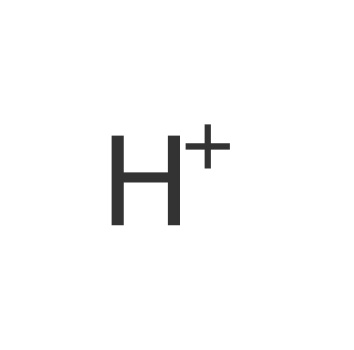
Mouse ADH2 follows an ordered bi-bi mechanism, and hydride transfer is rate-limiting for oxidation of benzyl alcohols. The general mechanism is thought to proceed in the same manner as for other zinc-dependent ADHs: the substrate binds to a zinc ion at the active site, which allows deprotonation of the OH group by Thr48 or Ser182 and probably active site water in a proton relay system, because the zinc ion stabilises the oxyanion thus reducing the pKa of the OH to around 8.4. This allows hydride transfer from C2 to the NAD+ with the oxygen lone pair overlapping with the sigma* orbital of C2 to create the double bond that characterises the product.
Catalytic Residues Roles
| UniProt | PDB* (1e3i) | ||
| Thr49 | Thr48A | Exact role unclear, thought to act as a general acid/base. | proton shuttle (general acid/base) |
| Pro48 | Pro47A | Causes a strained binding of the coenzyme, which prevents a sufficiently close approach of the coenzyme to the substrate for efficient hydrogen transfer. | steric role |
| Ser183 | Ser182A | Thought to acts as a general acid/base. | proton shuttle (general acid/base) |
| Cys47, His68, Cys179 | Cys46A, His67A, Cys178A | Forms part of the zinc binding site. | metal ligand |
Chemical Components
References
- Strömberg P et al. (2004), Biochemistry, 43, 1323-1328. Enzymatic Mechanism of Low-Activity Mouse Alcohol Dehydrogenase 2†. DOI:10.1021/bi0354482. PMID:14756569.
- Svensson S et al. (2000), J Mol Biol, 302, 441-453. Crystal structures of mouse class II alcohol dehydrogenase reveal determinants of substrate specificity and catalytic efficiency. DOI:10.1006/jmbi.2000.4039. PMID:10970744.
- Svensson S et al. (1999), J Biol Chem, 274, 29712-29719. A novel subtype of class II alcohol dehydrogenase in rodents. Unique Pro(47) and Ser(182) modulates hydride transfer in the mouse enzyme. PMID:10514444.

Catalytic Residues Roles
| Residue | Roles |
|---|---|
| Cys46A | metal ligand |
| His67A | metal ligand |
| Cys178A | metal ligand |
| Pro47A | steric role |
| Thr48A | proton shuttle (general acid/base) |
| Ser182A | proton shuttle (general acid/base) |