NADP nitrous oxide-forming nitric oxide reductase
Cytochrome P450 nitric oxide reductase (P450nor) is involved in a dissimilatory reduction of nitrite. Acts as a nitric oxide reductase. Is able to reduce nitrate and nitrite to a gaseous form of N2O when oxygen supply is limited or discontinued. May function as a detoxification mechanism.
This protein is found in denitrifying organisms such as Fusarium oxysporum. It is a member of the cytochrome P450 superfamily, which are heme-thiolate enzymes. There are two isoforms of P450nor in F. oxysporum, one of which uses NADH as cofactor exclusively, while the other uses NADH or NADPH.
P450nor catalyses the NAD(P)H-dependent reduction of two molecules of the free radical, nitric oxide (NO), to nitrous oxide (N2O). The reaction is unusual because it involves direct electron transfer, in the form of a hydride, from NAD(P)H to a redox protein (heme) that contains only a one-electron redox centre.
P450nor appears to have an important role in protecting the fungus from NO inhibition of mitochondria and other cellular damage that may result from the reaction of NO with other molecules such as oxygen or superoxide to form biologically hazardous compounds.
Reference Protein and Structure
- Sequence
-
P23295
 (1.7.1.14)
 (Sequence Homologues)
(PDB Homologues)
(Sequence Homologues)
(PDB Homologues)
- Biological species
-
Fusarium oxysporum (Fungus)
- PDB
-
1xqd
- Crystal structure of P450NOR complexed with 3-pyridinealdehyde adenine dinucleotide
(1.8 Å)



- Catalytic CATH Domains
-
1.10.630.10
 (see all for 1xqd)
- Cofactors
- Heme b (1)
Enzyme Reaction (EC:1.7.1.14)


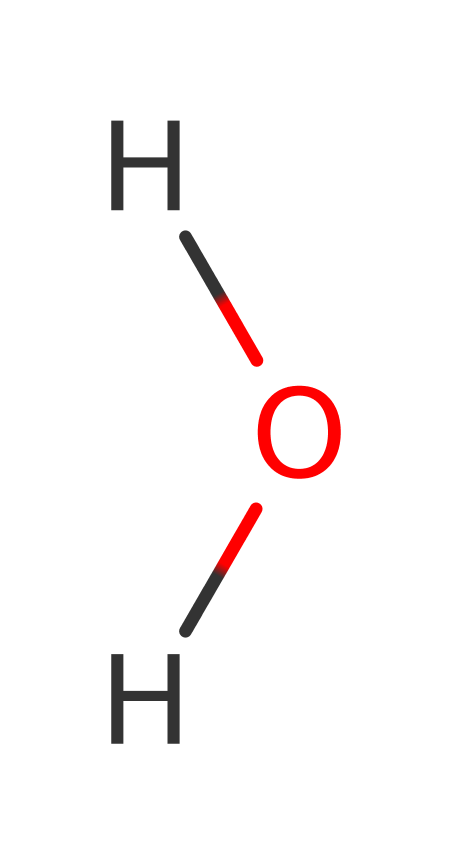

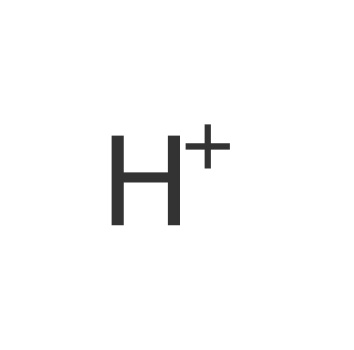


Enzyme Mechanism
Introduction
A molecule of NO binds to the resting state enzyme, where the heme iron is in its ferric (Fe3+) state, to form an [Fe3+ NO] complex.
This is reduced to form the intermediate thought to be [Fe3+ NO 2H+]. Reduction occurs by hydride transfer from NAD(P)H, and the addition of a proton, derived from the bulk solvent and probably transferred via a hydrogen bonding network involving [Solvent Water -- Asp393 -- Water -- Ser286 -- Water] to the heme.
NAD(P)+ is rapidly released from the active site, and the intermediate reacts with another molecule of NO to regenerate the enzyme and form N2O and water.
Catalytic Residues Roles
| UniProt | PDB* (1xqd) | ||
| Thr243 | Thr243A | Interacts with the carboxyl of nicotinic acid ring to fix it stereochemically. This interaction of Thr243 together with the propionate of haem moving upward restricts the conformation of the nicotinic acid ring so that the pro-R side of C4-hydrogens faces the haem, which is consistent with the pro-R hydrogen-specific hydride transfer. | steric role |
| Cys352 | Cys352A | Is the axial ligand to the heme prosthetic group. | activator, metal ligand |
| Asp393, Ser286 | Asp393A, Ser286A | Involved in forming a delivery pathway of a proton from the bulk solvent to the heme iron to yield the reaction intermediate. | proton shuttle (general acid/base) |
Chemical Components
References
- Riplinger C et al. (2014), Chemistry, 20, 1602-1614. New Insights into the Nature of Observable Reaction Intermediates in Cytochrome P450 NO Reductase by Using a Combination of Spectroscopy and Quantum Mechanics/Molecular Mechanics Calculations. DOI:10.1002/chem.201302443. PMID:24453075.
- McQuarters AB et al. (2014), Curr Opin Chem Biol, 19, 82-89. Model complexes of key intermediates in fungal cytochrome P450 nitric oxide reductase (P450nor). DOI:10.1016/j.cbpa.2014.01.017. PMID:24658055.
- Shoun H et al. (2012), Philos Trans R Soc Lond B Biol Sci, 367, 1186-1194. Fungal denitrification and nitric oxide reductase cytochrome P450nor. DOI:10.1098/rstb.2011.0335. PMID:22451104.
- Riplinger C et al. (2011), Chemphyschem, 12, 3192-3203. The Reaction Mechanism of Cytochrome P450 NO Reductase: A Detailed Quantum Mechanics/Molecular Mechanics Study. DOI:10.1002/cphc.201100523. PMID:22095732.
- Lehnert N et al. (2006), J Comput Chem, 27, 1338-1351. Electronic structure of iron(II)-porphyrin nitroxyl complexes: Molecular mechanism of fungal nitric oxide reductase (P450nor). DOI:10.1002/jcc.20400. PMID:16788909.
- Oshima R et al. (2004), J Mol Biol, 342, 207-217. Structural Evidence for Direct Hydride Transfer from NADH to Cytochrome P450nor. DOI:10.1016/j.jmb.2004.07.009. PMID:15313618.
- Shimizu H et al. (2000), J Biol Chem, 275, 4816-4826. Proton Delivery in NO Reduction by Fungal Nitric-oxide Reductase. CRYOGENIC CRYSTALLOGRAPHY, SPECTROSCOPY, AND KINETICS OF FERRIC-NO COMPLEXES OF WILD-TYPE AND MUTANT ENZYMES. DOI:10.1074/jbc.275.7.4816. PMID:10671516.
- Shiro Y et al. (1995), J Biol Chem, 270, 1617-1623. Spectroscopic and kinetic studies on reaction of cytochrome P450nor with nitric oxide. Implication for its nitric oxide reduction mechanism. PMID:7829493.

Catalytic Residues Roles
| Residue | Roles |
|---|---|
| Cys352A | metal ligand, activator |
| Asp393A | proton shuttle (general acid/base) |
| Ser286A | proton shuttle (general acid/base) |
| Thr243A | steric role |