Haloalkane dehalogenase (subfamily 2)
The Haloalkane dehalogenase LinB, found in bacteria, catalyses the convertion of a broad range of natural and synthetic halogenated compounds (e.g., alkanes, alkenes, cycloalkanes, alcohols, epoxides, carboxylic acids, esters, ethers, amides, and nitriles) by replacing the halogen atom (chloro, bromo, or iodo) with a hydroxyl group. It is of special interest in its ability to degrade the toxic compound 1,2,3,4,5,6-hexachlorocyclohexane. Thus study of the enzyme is important in understanding how bacteria are able to degrade xenobiotics and how pollutants can be detoxified using microorganisms. The enzyme is part of the alpha-beta hydrolase family and shows sequence and structural homology with a wide variety of haloalkane dehalogenases with different specificities.
Reference Protein and Structure
- Sequence
-
D4Z2G1
 (3.8.1.5)
 (Sequence Homologues)
(PDB Homologues)
(Sequence Homologues)
(PDB Homologues)
- Biological species
-
Sphingobium japonicum UT26S (Bacteria)
- PDB
-
1cv2
- Hydrolytic haloalkane dehalogenase linb from sphingomonas paucimobilis UT26 AT 1.6 A resolution
(1.58 Å)



- Catalytic CATH Domains
-
3.40.50.1820
 (see all for 1cv2)
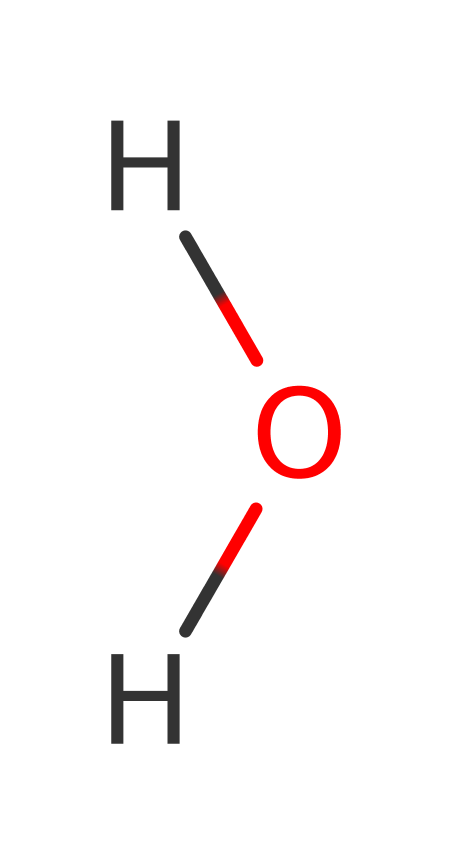
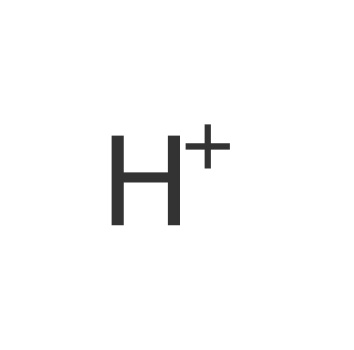
Enzyme Reaction (EC:3.8.1.5)




Enzyme Mechanism
Introduction
The haloalkane dehalogenases catalyze a replacement reaction in which a primary or secondary halogen of a small molecule substrate is replaced with a hydroxyl group with the associated release of inorganic halide and a proton. The catalytic cycle of these enzymes consists of following steps:
- substrate binding into a relatively hydrophobic pocket,
- nucleophilic substitution reaction of an aspartic acid residue on the carbon atom to which the halogen is bound, leading to formation of a halide ion and an alkyl-enzyme intermediate,
- a second nucleophilic substitution reaction (hydrolysis, by a histidine activated water) leading to the formation of an alcohol and a proton, and
- products (an alcohol, a halide, and a proton) release.
Catalytic Residues Roles
| UniProt | PDB* (1cv2) | ||
| Glu132 | Glu132A | Acts to modify the pKa of His 272 so that it remains in the correct protonation state for its role in catalysis. | activator, electrostatic stabiliser |
| His272 | His272A | Acts as general acid base to deprotonate water, thus activating water so its lone pair can attack the covalent enzyme intermediate. | activator, proton shuttle (general acid/base), electrostatic stabiliser |
| Asp108 | Asp108A | Acts as nucleophile on the electrophilic carbon atom to form a covalent enzyme intermediate which is hydrolysed to give the product. | covalent catalysis |
| Asn38, Trp109 | Asn38A, Trp109A | Involved in stabilisation of the halogen, transition-states and product. | electrostatic stabiliser |
Chemical Components
References
- Streltsov VA et al. (2003), Biochemistry, 42, 10104-10112. Haloalkane Dehalogenase LinB fromSphingomonas paucimobilisUT26: X-ray Crystallographic Studies of Dehalogenation of Brominated Substrates†,‡. DOI:10.1021/bi027280a. PMID:12939138.
- Gross J et al. (2016), Chembiochem, 17, 1437-1441. Regio- and Enantioselective Sequential Dehalogenation ofrac-1,3-Dibromobutane by Haloalkane Dehalogenase LinB. DOI:10.1002/cbic.201600227. PMID:27223496.
- Hladilkova J et al. (2013), J Phys Chem B, 117, 14329-14335. Release of Halide Ions from the Buried Active Site of the Haloalkane Dehalogenase LinB Revealed by Stopped-Flow Fluorescence Analysis and Free Energy Calculations. DOI:10.1021/jp409040u. PMID:24151979.
- Heeb NV et al. (2012), Environ Sci Technol, 46, 6566-6574. Biotransformation of Hexabromocyclododecanes (HBCDs) with LinB—An HCH-Converting Bacterial Enzyme. DOI:10.1021/es2046487. PMID:22578084.
- Otyepka M et al. (2008), Proteins, 70, 707-717. Second step of hydrolytic dehalogenation in haloalkane dehalogenase investigated by QM/MM methods. DOI:10.1002/prot.21523. PMID:17729274.
- Kmunícek J et al. (2005), Biochemistry, 44, 3390-3401. Quantitative Analysis of Substrate Specificity of Haloalkane Dehalogenase LinB fromSphingomonas paucimobilisUT26†. DOI:10.1021/bi047912o. PMID:15736949.
- Oakley AJ et al. (2004), Biochemistry, 43, 870-878. Crystal Structure of Haloalkane Dehalogenase LinB fromSphingomonas paucimobilisUT26 at 0.95 Å Resolution: Dynamics of Catalytic Residues†,‡. DOI:10.1021/bi034748g. PMID:14744129.
- Marek J et al. (2000), Biochemistry, 39, 14082-14086. Crystal Structure of the Haloalkane Dehalogenase fromSphingomonas paucimobilisUT26†,‡. DOI:10.1021/bi001539c.
- Marek J et al. (2000), Biochemistry, 56, 14082-14086. Crystal structure of the haloalkane dehalogenase fromSphingomonas paucimobilisUT26. DOI:10.1107/s0108767300025332. PMID:11087355.

Catalytic Residues Roles
| Residue | Roles |
|---|---|
| Trp109A | electrostatic stabiliser |
| Asn38A | electrostatic stabiliser |
| Glu132A | electrostatic stabiliser, activator |
| His272A | electrostatic stabiliser, proton shuttle (general acid/base), activator |
| Asp108A | covalent catalysis |