Thioglucosidase
Myronase is the enzyme responsible for the hydrolysis of a variety of plant anionic-1-thio-beta-glucosides, called glucosinolates. Sinapsis alba myrosinase is a 499 amino acid S-glucosidase which hydrolyses an S-glycosidic bond, and is closely related to the O-glucosidases. Upon hydrolysis, configuration at the anomeric centre is retained. Myrosinases are thought to be involved in defence systems developed by plants
The protein fold into a (beta/alpha)8 barrel structure, forming a dimer which is stabilised by a Zn ion, and is heavily glycosylated. It is a member of the glycoside hydrolase family 1 (GH1).
Reference Protein and Structure
- Sequence
-
P29736
 (3.2.1.147)
 (Sequence Homologues)
(PDB Homologues)
(Sequence Homologues)
(PDB Homologues)
- Biological species
-
Sinapis alba (white mustard)
- PDB
-
1myr
- MYROSINASE FROM SINAPIS ALBA
(1.64 Å)



- Catalytic CATH Domains
-
3.20.20.80
 (see all for 1myr)
- Cofactors
- L-ascorbate (1)


Enzyme Mechanism
Introduction
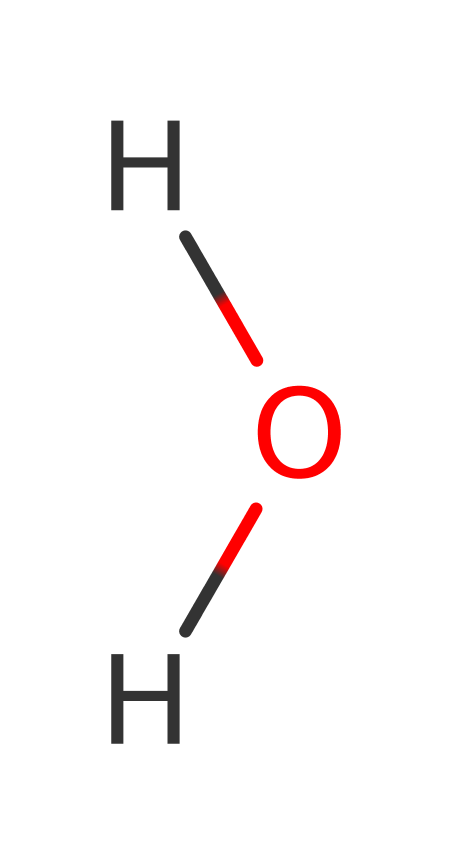
The catalytic mechanism is a two-step process: (a) The glycosylation step- formation of the gycosyl-enzyme complex with aglycon departure. (b) Deglycosylation - hydrolysis of the glycosyl-enzyme complex by a nucleophilic water molecule. The mechanism proceeds as follows:
- The substrate binds to the enzyme in the hydrophobic pocket by glucosinolate hydrophobic side chains, and with two arginine residues positioned appropriately for interaction with the substrate sulphate group. This is via nucleophilic attack of Glu 409 on the substrate anomeric carbon, with aglycon departure. Ser 190 defines Glu 409 position and stabilises the glycosyl-enzyme complex by hydrogen bonding to the substrate sulphate group. Gln 187 activates a water molecule to assist acglycon departure, rather than acting as an acidic residue itself.
- The sugar ring is bound to the enzyme via an alpha-glycosidic linkage to the Glu 409 residue, the catalytic nucleophile.
- Upon formation of the glycosyl-enzyme complex, the salt bridge between Glu 409 and Arg 95 is disrupted, and the side chain of Glu 409 aletrs its conformation.
- A water molecule hydrogen bonds to the Arg 95, whose charge becomes buried.
- Formation of the glycosyl-enzyme complex is also accompanied by the change in position of Tyr 330, whose hydroxyl group points towards the sugar ring O.
- hydrolysis of the glycosyl-enzyme intermediate by water. During the earlier nucleophilic attack, the water molecule moves closer to the C1 of the gly-enzyme complex by hydrogen bonding to the Oe1 of Gln 187. The Gln 187 position is defined by hydrogen bonds between Ser 190 gamma-O and Ne2 of Gln 187, and also between N-delta -2 of Asn 328 with Oe1 of Gln 187. This ensures precise positioning of the nucleophilic water molecule that is required for hydrolysis. If ascorbate is present, then this can activate the nucleophilic water via proton abstraction.
Catalytic Residues Roles
| UniProt | PDB* (1myr) | ||
| Arg95 | Arg95A | Arg 95 forms a salt bridge the the catalytic Glu 409, which is disrupted on formation of the gly-enzyme complex. This is stabilised by hydrogen bonding of Arg 95 to a neighbouring water molecule, so that the charge of the residue is buried | electrostatic stabiliser |
| Gln187 | Gln187A | Gln 187 is involved in hydrogen bonding to the nucleophilic water, which attacks the scissile bond in the deglycosylation step. This ensures specific positioning of the water molecule for nuclephilic attack. | modifies pKa, electrostatic stabiliser, steric role |
| Ser190 | Ser190A | Ser 190 hydrogen bonds to the Ne2 of Gln 187 through its gamma-O, which indirectly ensures the required positioning of the nucleophilic water molecule | electrostatic stabiliser, steric role |
| Asn328 | Asn328A | Asn 328 hydrogen bonds to the Oe1 of Gln 187 through its N-delta-2, which indirectly ensures the required positioning of the nucleophilic water molecule. | electrostatic stabiliser, steric role |
| Tyr330 | Tyr330A | Tyr 330 stabilises the transition state by changing position so that its hydroxyl group points towards the sugar ring O. | transition state stabiliser |
| Glu409 | Glu409A | Glu 409 is the catalytic nucleophile and attacks the anomeric carbon of the sugar substrate to form the gly-enzyme complex. Specific positioning of Glu 409 is required and this is achieved by the disruption of the salt bridge between Glu 409 and Arg 95, so that the Glu 409 can change its conformation favourably | covalently attached, electrostatic stabiliser |
Chemical Components
References
- Burmeister WP et al. (2000), J Biol Chem, 275, 39385-39393. High Resolution X-ray Crystallography Shows That Ascorbate Is a Cofactor for Myrosinase and Substitutes for the Function of the Catalytic Base. DOI:10.1074/jbc.m006796200. PMID:10978344.
- Natarajan S et al. (2015), Genes (Basel), 6, 1315-1329. Molecular Modeling of Myrosinase from Brassica oleracea: A Structural Investigation of Sinigrin Interaction. DOI:10.3390/genes6041315. PMID:26703735.
- Kumar R et al. (2011), J Mol Graph Model, 29, 740-746. Protein modeling and active site binding mode interactions of myrosinase–sinigrin in Brassica juncea—An in silico approach. DOI:10.1016/j.jmgm.2010.12.004. PMID:21236711.
- Andersson D et al. (2009), Phytochemistry, 70, 1345-1354. Myrosinases from root and leaves of Arabidopsis thaliana have different catalytic properties. DOI:10.1016/j.phytochem.2009.07.036. PMID:19703694.
- Husebye H et al. (2005), Insect Biochem Mol Biol, 35, 1311-1320. Crystal structure at 1.1Å resolution of an insect myrosinase from Brevicoryne brassicae shows its close relationship to β-glucosidases. DOI:10.1016/j.ibmb.2005.07.004. PMID:16291087.
- Bourderioux A et al. (2005), Org Biomol Chem, 3, 1872-. The glucosinolate–myrosinase system. New insights into enzyme–substrate interactions by use of simplified inhibitors. DOI:10.1039/b502990b. PMID:15889170.
- Zechel DL et al. (2001), Curr Opin Chem Biol, 5, 643-649. Dissection of nucleophilic and acid–base catalysis in glycosidases. DOI:10.1016/s1367-5931(01)00260-5.
- Burmeister WP et al. (1997), Structure, 5, 663-676. The crystal structures of Sinapis alba myrosinase and a covalent glycosyl–enzyme intermediate provide insights into the substrate recognition and active-site machinery of an S-glycosidase. DOI:10.1016/s0969-2126(97)00221-9. PMID:9195886.
- Iori R et al. (1996), FEBS Lett, 385, 87-90. The myrosinase-glucosinolate interaction mechanism studied using some synthetic competitive inhibitors. DOI:10.1016/0014-5793(96)00335-3.
- Cottaz S et al. (1996), Biochemistry, 35, 15256-15259. Mechanism-Based Inhibition and Stereochemistry of Glucosinolate Hydrolysis by Myrosinase†. DOI:10.1021/bi9622480. PMID:8952475.
- Nastruzzi C et al. (1996), J Agric Food Chem, 44, 1014-1021. In VitroCytotoxic Activity of Some Glucosinolate-Derived Products Generated by Myrosinase Hydrolysis. DOI:10.1021/jf9503523.

Catalytic Residues Roles
| Residue | Roles |
|---|---|
| Gln187A | electrostatic stabiliser |
| Asn328A | electrostatic stabiliser |
| Arg95A | electrostatic stabiliser |
| Glu409A | covalently attached, electrostatic stabiliser |
| Ser190A | electrostatic stabiliser, steric role |
| Gln187A | modifies pKa |
| Asn328A | steric role |
| Tyr330A | transition state stabiliser |
| Gln187A | steric role |