Cellulose 1,4-beta-cellobiosidase (non-reducing end)
This enzyme belongs to Glycosidase family-6, more specifically the exoglucanase family, which requires polymer-chain ends for catalytic activity. It has an inverting mechanism (equatorial to axial conformation) and catalyses the hydrolysis of (1-->4)-beta-D-glucosidic linkages in cellulose and cellotetraose, releasing cellobiose from the non-reducing ends of the chains.
Reference Protein and Structure
- Sequence
-
P07987
 (3.2.1.91)
 (Sequence Homologues)
(PDB Homologues)
(Sequence Homologues)
(PDB Homologues)
- Biological species
-
Trichoderma reesei (Fungus)
- PDB
-
1qk2
- WILD TYPE CEL6A WITH A NON-HYDROLYSABLE CELLOTETRAOSE
(2.0 Å)



- Catalytic CATH Domains
-
3.20.20.40
 (see all for 1qk2)
Enzyme Reaction (EC:3.2.1.91)


+
→


Alternative enzyme names: 1,4-beta-glucan cellobiosidase, Beta-1,4-glucan cellobiohydrolase, Beta-1,4-glucan cellobiosylhydrolase, C1 cellulase, CBH 1, Avicelase, Cellobiohydrolase, Cellobiohydrolase I, Cellobiosidase, Exo-beta-1,4-glucan cellobiohydrolase, Exo-cellobiohydrolase, Exoglucanase, Exocellobiohydrolase, 1,4-beta-cellobiohydrolase, Exo-1,4-beta-D-glucanase,
Enzyme Mechanism
Introduction
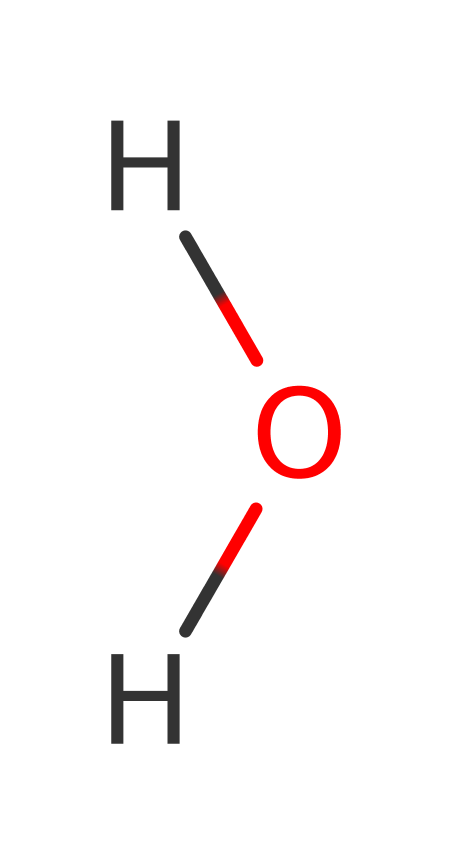
Asp175 abstracts a proton from the nucleophilic water in a Grotthus-type mechanism (i.e. via another water molecule). The nucleophilic hydroxide group then attacks the anomeric carbon to eliminate the leaving group, with concomitant abstraction of a proton from Asp221.
Catalytic Residues Roles
| UniProt | PDB* (1qk2) | ||
| Tyr193 | Tyr169(85)B | Influences the glycosyl ring at site B, possibly by formation of a direct hydrogen bond, which leads to a conformation that may correspond to a ring distortion. Second, the pH behaviour of the Y169F mutant supports the hypothesis that Y169 also contributes to the network of interactions ensuring the protonation of the acid catalyst, D221. May also help to position the nucleophilic water molecule. | modifies pKa, steric role |
| Arg198 | Arg174(90)B | Helps keep the nucleophilic water molecule appropriately positioned. It also facilitates the transfer of the proton to the water molecule by shifting the pKa of Asp221, since its positive charge stabilizes the carboxyl group, which is only 3.92 A away, after the proton is lost. | electrostatic stabiliser |
| Asp199 | Asp175(91)B | The electrostatic interaction of D175 with the ring oxygen in the −1 site at the transition state provides significant stabilisation of the charged transition state. It also modulates the pKa of D221 and may act as a proton acceptor through a water chain. | modifies pKa, proton shuttle (general acid/base), transition state stabiliser |
| Asp245 | Asp221(137)B | Acts as the general acid/base. It accomplishes proton donation to the scissile bond by transferring the proton to the water molecule that bridges between Asp221 and the glycosidic oxygen. | proton shuttle (general acid/base) |
| Asp425 | Asp401(317)B | Function unclear up to 2002. In 2002 Koivula et al. suggest that the residue is unlikely to be the catalytic base: "Mutating the residue equivalent to D401 in other family 6 enzymes introduces a charge imbalance that may destabilize an oxycarbenium-ion-like transition state." In their computational studies and crystal structures Asp401 is 6 A from the proposed nucleophilic water. | electrostatic stabiliser |
| Ser205 | Ser181(97)B | Involved in the proton network that activates the nucleophilic water. | electrostatic stabiliser |
*PDB label guide - RESx(y)B(C) - RES: Residue Name; x: Residue ID in PDB file;
y: Residue ID in PDB sequence if different from PDB file; B: PDB Chain;
C: Biological Assembly Chain if different from PDB. If label is "Not Found" it means this residue is not found in the reference PDB.
Chemical Components
References
- Mayes HB et al. (2016), Chem Sci, 7, 5955-5968. Who's on base? Revealing the catalytic mechanism of inverting family 6 glycoside hydrolases. DOI:10.1039/c6sc00571c.
- Cockburn DW et al. (2010), Biochemistry, 49, 2042-2050. Modulating the pH−Activity Profile of Cellulase by Substitution: Replacing the General Base Catalyst Aspartate with Cysteinesulfinate in Cellulase A fromCellulomonas fimi. DOI:10.1021/bi1000596. PMID:20136145.
- Vuong TV et al. (2009), FEBS J, 276, 3837-3845. The absence of an identifiable single catalytic base residue inThermobifida fuscaexocellulase Cel6B. DOI:10.1111/j.1742-4658.2009.07097.x. PMID:19523117.
- Larsson AM et al. (2005), Biochemistry, 44, 12915-12922. Crystal Structure ofThermobifida fuscaEndoglucanase Cel6A in Complex with Substrate and Inhibitor: The Role of Tyrosine Y73 in Substrate Ring Distortion†,‡. DOI:10.1021/bi0506730. PMID:16185060.
- André G et al. (2003), Protein Eng, 16, 125-134. Computational and experimental studies of the catalytic mechanism of Thermobifida fusca cellulase Cel6A (E2). DOI:10.1093/proeng/gzg017. PMID:12676981.
- Koivula A et al. (2002), J Am Chem Soc, 124, 10015-10024. The Active Site of Cellobiohydrolase Cel6A fromTrichoderma reesei: The Roles of Aspartic Acids D221 and D175. DOI:10.1021/ja012659q. PMID:12188666.
- Koivula A et al. (1996), Protein Eng, 9, 691-699. The active site of Trichoderma reesei cellobiohydrolase II: the role of tyrosine 169. DOI:10.1093/protein/9.8.691. PMID:8875646.
- Damude HG et al. (1995), Biochemistry, 34, 2220-2224. Site-directed mutation of the putative catalytic residues of endoglucanase CenA from Cellulomonas fimi. PMID:7857933.
- Davies G et al. (1995), Structure, 3, 853-859. Structures and mechanisms of glycosyl hydrolases. DOI:10.1016/s0969-2126(01)00220-9. PMID:8535779.

Catalytic Residues Roles
| Residue | Roles |
|---|---|
| Asp401(317)B | electrostatic stabiliser |
| Tyr169(85)B | modifies pKa, steric role |
| Asp221(137)B | proton shuttle (general acid/base) |
| Asp175(91)B | transition state stabiliser, modifies pKa, proton shuttle (general acid/base) |
| Ser181(97)B | electrostatic stabiliser |
| Arg174(90)B | electrostatic stabiliser |