Carbamoyl-phosphate synthase (glutamine-hydrolysing)
Carbamoyl phosphate synthetase (CPS) catalyses the formation of carbamoyl phosphate, an intermediate in the biosynthesis of pyrimidine nucleotides and arginine, from glutamine, bicarbonate, and two molecules of MgATP. The enzyme from Escherichia coli has three separate active sites, which are connected by a molecular tunnel that is almost 100 Angstroms in length and is a heterodimeric protein that is composed of two subunits of molecular weight ~40 and ~118 kD.
In the proposed reaction mechanism, ATP phosphorylates bicarbonate to form carboxy phosphate, and glutamine is hydrolysed to glutamate and ammonia. The ammonia then reacts with the carboxy phosphate intermediate to form carbamate. In the final step, a second molecule of ATP phosphorylates carbamate to produce the ultimate product, carbamoyl phosphate. Overall, three unstable intermediates (ammonia, carboxy phosphate, and carbamate) and carbamoyl phosphate are formed in a series of four separate reactions.
The hydrolysis of glutamine occurs within the small subunit via a thioester intermediate. Meanwhile, the carboxyphosphate is produced from the phosphorylation of hydrogencarbonate by ATP at a site contained within the N-terminal half of the large subunit. This phosphorylation reaction is thought to trigger the reaction cascade. The ammonia migrates through the interior of the protein, where it reacts with carboxyphosphate to produce the carbamate intermediate. The carbamate intermediate is then transported through the interior of the protein to a second site within the C-terminal half of the large subunit, where it is phosphorylated by another ATP to yield the final product, carbamoyl phosphate.
Reference Protein and Structure
- Sequences
-
P00968
 (6.3.5.5)
P0A6F1 (6.3.5.5)
 (Sequence Homologues)
(PDB Homologues)
(Sequence Homologues)
(PDB Homologues)
- Biological species
-
Escherichia coli K-12 (Bacteria)
- PDB
-
1bxr
- STRUCTURE OF CARBAMOYL PHOSPHATE SYNTHETASE COMPLEXED WITH THE ATP ANALOG AMPPNP
(2.1 Å)



- Catalytic CATH Domains
-
3.40.50.880
 3.30.470.20
(see all for 1bxr)
3.30.470.20
(see all for 1bxr)
- Cofactors
- Magnesium(2+) (4)
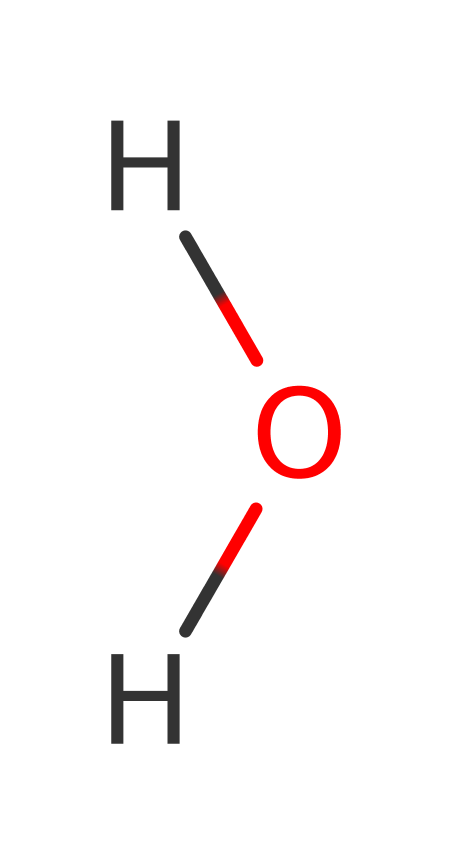
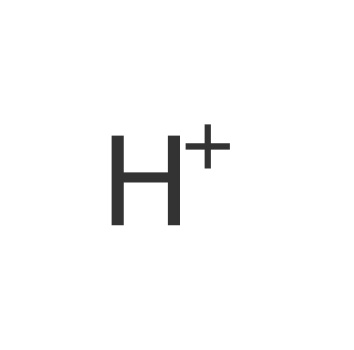
Enzyme Reaction (EC:6.3.5.5)





Enzyme Mechanism
Introduction
Carbamoyl phosphate synthetase (CPS) is a multi-chain, multi-domain protein that catalyses three distinct reactions in three active sites and contains one intermolecular tunnel, and one intramolecular tunnel to transport the reactive intermediates between the various active sites.
The synthetase domain within the N-terminal half of the large subunit is responsible for the phosphorylation of carboxy phosphate and the subsequent nucleophilic attack by ammonia during the formation of carbamate. The phosphorylation of bicarbonate serves as the initial trigger for the rest of the reaction cascade.
The hydrolysis of glutamine (to form the ammonia intermediate) occurs within the small subunit and it has demonstrated that the amide bond is cleaved via the formation of a covalent thioester intermediate with an active site cysteine residue. This ammonia is then transferred to another active site via an intermolecular tunnel.
Finally, the ATP bound at the synthetase domain within the C-terminal half of the large subunit is responsible for the phosphorylation of carbamate and the final formation of carbamoyl phosphate. Finally, kinetic investigations have shown that the ligands bound to the allosteric domain (ornithine and UMP) alter the catalytic properties of CPS primarily by modulating the affinity of the ATP that phosphorylates carbamate.
Although the specific conformational changes that might accompany this process are not fully elucidated, it is assumed that the synchronization mechanisms are allosterically driven.
CPS can catalyze not only its full-forward reaction (reference reaction) but also any of various partial reactions, depending upon the availability of substrates. For example, in the absence of nucleotides, glutamine hydrolysis (reaction 2) occurs within the amidotransferase domain of the small subunit. In the absence of an ammonia source, bicarbonate-dependent ATP hydrolysis (reaction 3) can be monitored independently within the carboxy phosphate domain of the large subunit. Finally, when supplied with the products ADP and carbamoyl phosphate, a reversal of the last step in the mechanism occurs as an ATP synthesis reaction.
Catalytic Residues Roles
| UniProt | PDB* (1bxr) | ||
| His243 | His243C | Activates the ammonia molecule. Probably also acts as a general acid/base. | proton shuttle (general acid/base) |
| His353 | His353D | Acts as a general acid/base in the glutaminase reaction. | proton shuttle (general acid/base) |
| Lys202, Glu355 | Lys202C, Glu355D | Forms part of the triad Lys-Glu-His that is responsible for ensuing the correct orientation and protonation state of the general acid/base histidine (His353). | electrostatic stabiliser |
| Cys269, His353, Lys202, Glu355 | Cys269D, His353D, Lys202C, Glu355D | Forms the active site of the glutaminase reaction. | covalent catalysis, proton shuttle (general acid/base) |
| Glu215, Glu761 | Glu215C, Glu761C | Helps position the ATP in the correct orientation. | steric role |
| Glu299, Gln285, Gln829, Asn843 | Glu299C, Gln285C, Gln829C, Asn843C | Forms part of the metal binding sites. | metal ligand |
| Glu841, Gln829, Glu761, Asn843, Arg715, Gly721 (main-N), Gly722 (main-N), Arg848 | Glu841C, Gln829C, Glu761C, Asn843C, Arg715C, Gly721C (main-N), Gly722C (main-N), Arg848C | Forms the active site of the final half-reaction. | metal ligand |
| Asn301, Glu299, Gln285, Arg129, Arg169, Glu215, Arg303 | Asn301C, Glu299C, Gln285C, Arg129C, Arg169C, Glu215C, Arg303C | Forms part of the initial phosphorylation active site. | metal ligand |
| Asn283, Arg129, Arg169, Arg715, Gly721 (main-N), Gly722 (main-N), Arg848, Arg303 | Asn283C, Arg129C, Arg169C, Arg715C, Gly721C (main-N), Gly722C (main-N), Arg848C, Arg303C | Helps to stabilise the negatively charged intermediates and transition states. | electrostatic stabiliser |
Chemical Components
References
- Hart EJ et al. (2008), Protein Sci, 17, 1120-1128. Mutation analysis of carbamoyl phosphate synthetase: Does the structurally conserved glutamine amidotransferase triad act as a functional dyad? DOI:10.1110/ps.073428008. PMID:18458150.
- Holden HM et al. (1999), Cell Mol Life Sci, 56, 507-522. Carbamoyl phosphate synthetase: an amazing biochemical odyssey from substrate to product. DOI:10.1007/s000180050448.
- Lund L et al. (2010), J Am Chem Soc, 132, 3870-3878. Carbamate Transport in Carbamoyl Phosphate Synthetase: A Theoretical and Experimental Investigation. DOI:10.1021/ja910441v. PMID:20187643.
- Fan Y et al. (2009), J Am Chem Soc, 131, 10211-10219. A Combined Theoretical and Experimental Study of the Ammonia Tunnel in Carbamoyl Phosphate Synthetase. DOI:10.1021/ja902557r. PMID:19569682.
- Johnson JL et al. (2007), Biochemistry, 46, 387-397. Resolving the Fluorescence Response ofEscherichia coliCarbamoyl Phosphate Synthetase: Mapping Intra- and Intersubunit Conformational Changes†. DOI:10.1021/bi061642n. PMID:17209549.
- Kothe M et al. (2005), Protein Sci, 14, 37-44. Direct demonstration of carbamoyl phosphate formation on the C-terminal domain of carbamoyl phosphate synthetase. DOI:10.1110/ps.041041305. PMID:15576558.
- Kim J et al. (2002), Biochemistry, 41, 12575-12581. Structural Defects within the Carbamate Tunnel of Carbamoyl Phosphate Synthetase†. DOI:10.1021/bi020421o.
- Kim J et al. (2001), Biochemistry, 40, 11030-11036. Allosteric Control of the Oligomerization of Carbamoyl Phosphate Synthetase fromEscherichia coli†. DOI:10.1021/bi011121u.
- Miles BW et al. (2000), Biochemistry, 39, 5051-5056. Synchronization of the Three Reaction Centers within Carbamoyl Phosphate Synthetase†. DOI:10.1021/bi992772h.
- Thoden JB et al. (1999), Acta Crystallogr D Biol Crystallogr, 55, 8-24. The structure of carbamoyl phosphate synthetase determined to 2.1 Å resolution. DOI:10.1107/s0907444998006234. PMID:10089390.
- Thoden JB et al. (1999), Biochemistry, 38, 2347-2357. Carbamoyl Phosphate Synthetase: Closure of the B-Domain as a Result of Nucleotide Binding†,‡. DOI:10.1021/bi982517h. PMID:10029528.
- Thoden JB et al. (1999), Biochemistry, 38, 16158-16166. The Small Subunit of Carbamoyl Phosphate Synthetase: Snapshots along the Reaction Pathway†. DOI:10.1021/bi991741j.
- Thoden JB et al. (1999), J Biol Chem, 274, 22502-22507. The Binding of Inosine Monophosphate to Escherichia coli Carbamoyl Phosphate Synthetase. DOI:10.1074/jbc.274.32.22502.
- Hewagama A et al. (1999), J Biol Chem, 274, 28240-28245. Functional Linkage between the Glutaminase and Synthetase Domains of Carbamoyl-phosphate Synthetase: ROLE OF SERINE 44 IN CARBAMOYL-PHOSPHATE SYNTHETASE-ASPARTATE CARBAMOYLTRANSFERASE-DIHYDROOROTASE (CAD). DOI:10.1074/jbc.274.40.28240.
- Mullins LS et al. (1999), J Am Chem Soc, 121, 3803-3804. Channeling of Ammonia through the Intermolecular Tunnel Contained within Carbamoyl Phosphate Synthetase. DOI:10.1021/ja990063l.
- Huang X et al. (1999), Biochemistry, 38, 15909-15914. Deconstruction of the Catalytic Array within the Amidotransferase Subunit of Carbamoyl Phosphate Synthetase†. DOI:10.1021/bi991805q.
- Raushel FM et al. (1999), Biochemistry, 38, 7891-7899. The Amidotransferase Family of Enzymes: Molecular Machines for the Production and Delivery of Ammonia†. DOI:10.1021/bi990871p. PMID:10387030.
- Raushel FM et al. (1998), Curr Opin Chem Biol, 2, 624-632. Carbamoyl phosphate synthetase: a crooked path from substrates to products. DOI:10.1016/s1367-5931(98)80094-x.
- Thoden JB et al. (1998), Biochemistry, 37, 8825-8831. Carbamoyl Phosphate Synthetase: Caught in the Act of Glutamine Hydrolysis†,‡. DOI:10.1021/bi9807761. PMID:9636022.
- Stapleton MA et al. (1996), Biochemistry, 35, 14352-14361. Role of Conserved Residues within the Carboxy Phosphate Domain of Carbamoyl Phosphate Synthetase†. DOI:10.1021/bi961183y. PMID:8916922.

Catalytic Residues Roles
| Residue | Roles |
|---|---|
| Cys269D | covalent catalysis |
| His353D | proton shuttle (general acid/base) |
| Glu355D | steric role |
| Lys202C | electrostatic stabiliser |
| Gln285C | metal ligand |
| Glu299C | metal ligand |
| Asn301C | metal ligand |
| Arg129C | electrostatic stabiliser |
| Glu215C | steric role |
| Arg169C | electrostatic stabiliser |
| Arg303C | electrostatic stabiliser |
| Asn283C | electrostatic stabiliser |
| His243C | proton shuttle (general acid/base) |
| Cys269D | proton shuttle (general acid/base) |
| Gly721C (main-N) | electrostatic stabiliser |
| Glu761C | steric role |
| Gln829C | metal ligand |
| Arg715C | electrostatic stabiliser |
| Gly722C (main-N) | electrostatic stabiliser |
| Asn843C | metal ligand |
| Arg848C | electrostatic stabiliser |
| Glu841C | metal ligand |