Endo-1,4-beta-xylanase (glycosyl hydrolase 11 family)
These enzymes all belong to glycosyl hydrolase 11 (cellulase G) family (GH11). They are typically small (~20 kDa) with a conserved jelly-roll fold, that catalyse the hydrolysis of beta-1,4-xylan linkages using general acid/base catalysis with retention of the anomeric configuration via a covalent glycosyl-enzyme intermediate.
Xylan is a major plant cell wall hemicellulose made up of 1,4-beta-linked and 1,3-beta-linked D-xylopyranose residues. These enzymes catalyse the endohydrolysis of the main- chain 1,4-beta-glycosidic bonds connecting the xylose subunits yielding various xylooligosaccharides and xylose.
These enzymes are excellent targets for protein engineering experiments as xylanolytic activity is useful in biotechnological applications such as the bleaching of hardwood kraft pulp for paper manufacture as use of this protein is effective in reducing the amount of environmentally toxic chlorine and chlorine-containing chemicals used. It is also used in the processing of feed for livestock.
Reference Protein and Structure
- Sequence
-
P09850
 (3.2.1.8)
 (Sequence Homologues)
(PDB Homologues)
(Sequence Homologues)
(PDB Homologues)
- Biological species
-
Bacillus circulans (Bacteria)
- PDB
-
1bvv
- SUGAR RING DISTORTION IN THE GLYCOSYL-ENZYME INTERMEDIATE OF A FAMILY G/11 XYLANASE
(1.8 Å)



- Catalytic CATH Domains
-
2.60.120.180
 (see all for 1bvv)
Enzyme Reaction (EC:3.2.1.8)




Enzyme Mechanism
Introduction
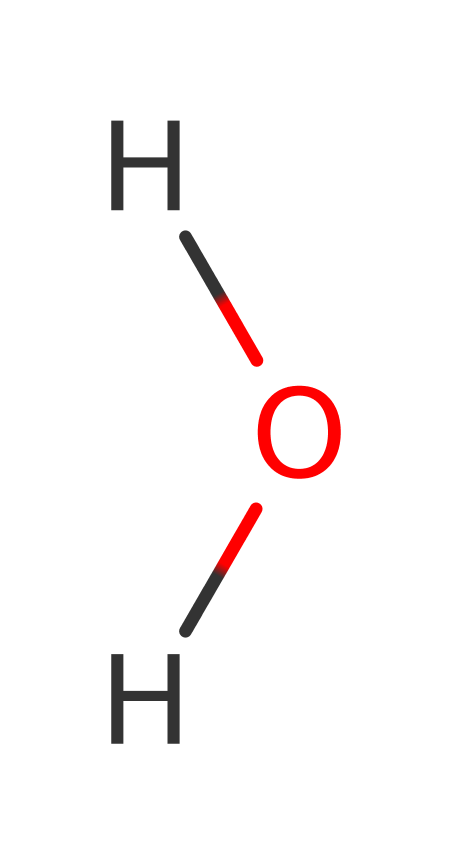
Hydrolysis proceeds through a glycosyl-enzyme intermediate that is formed and hydrolysed via transition states with substantial oxocarbenium ion character. More specifically: Glu172 acts as a general acid to protonate the leaving oxygen atom, leading to a oxocarbenium-like transtion state from xylan substrate, activating the substrate for nucleophilic attack by Glu78. This forms a glycosyl-enzyme intermediate. Glu172 acts as a general base to activate the water molecule, which makes a nucleophilic attack on the C1 atom of the intermediate. Again, the reaction proceeds through an oxocarbenium-like transition state to complete.
The enzyme forces the substrate sugar into a 2,5B (or Boat) conformation, which places C5, O5, C1 and C2 in a planar arrangement, for the intermediate. A conformation that is stabilised by Tyr69. This fulfils the stereochemical requirements for the oxocarbenium ion-like transition state of the retaining mechanism.
Catalytic Residues Roles
| UniProt | PDB* (1bvv) | ||
| Tyr97 | Tyr69A | Stabilises the boat conformation (in preference to the 4C1 chair conformation) with a relative free energy difference of about 20 kJ per mol, by donating a hydrogen bond to the endocyclic oxygen of the proximal xylose ring. | electrostatic destabiliser |
| Glu200 | Glu172A | Initially used as a general acid protonating the leaving residue, later used as a general base to activate the catalytic water molecule. | proton shuttle (general acid/base) |
| Tyr108 | Tyr80A | Activates the general acid/base glutamate (Glu172). | modifies pKa |
| Glu106 | Glu78A | Acts as the catalytic nucleophile. Nucleophilic attack of C1 forming the glycosyl-enzyme intermediate. | covalent catalysis, proton shuttle (general acid/base) |
| Asn63 | Asn35A | Hydrogen bonds to Glu172, modulating its pKa. This position is either an Asn or Asp in GH11. For high pH optimum, aspartic acid residue is used at the position, whilst an aspargine residue is adopted for lower pH optimum. | modifies pKa |
Chemical Components
References
- Wan Q et al. (2015), Proc Natl Acad Sci U S A, 112, 12384-12389. Direct determination of protonation states and visualization of hydrogen bonding in a glycoside hydrolase with neutron crystallography. DOI:10.1073/pnas.1504986112. PMID:26392527.
- Wan Q et al. (2014), Acta Crystallogr D Biol Crystallogr, 70, 11-23. X-ray crystallographic studies of family 11 xylanase Michaelis and product complexes: implications for the catalytic mechanism. DOI:10.1107/s1399004713023626. PMID:24419374.
- Soliman ME et al. (2009), Org Biomol Chem, 7, 460-468. Computational mutagenesis reveals the role of active-site tyrosine in stabilising a boat conformation for the substrate: QM/MM molecular dynamics studies of wild-type and mutant xylanases. DOI:10.1039/b814695k. PMID:19156310.
- Jänis J et al. (2007), Anal Biochem, 365, 165-173. Determination of steady-state kinetic parameters for a xylanase-catalyzed hydrolysis of neutral underivatized xylooligosaccharides by mass spectrometry. DOI:10.1016/j.ab.2007.03.034. PMID:17475200.
- Poon DK et al. (2003), Carbohydr Res, 338, 415-421. Characterizing the pH-dependent stability and catalytic mechanism of the family 11 xylanase from the alkalophilic Bacillus agaradhaerens. DOI:10.1016/s0008-6215(02)00486-x. PMID:12559743.
- Sabini E et al. (2001), Acta Crystallogr D Biol Crystallogr, 57, 1344-1347. Oligosaccharide binding to family 11 xylanases: both covalent intermediate and mutant product complexes display2,5Bconformations at the active centre. DOI:10.1107/s0907444901010873. PMID:11526340.
- Joshi MD et al. (2000), J Mol Biol, 299, 255-279. Hydrogen bonding and catalysis: a novel explanation for how a single amino acid substitution can change the ph optimum of a glycosidase. DOI:10.1006/jmbi.2000.3722. PMID:10860737.
- Sidhu G et al. (1999), Biochemistry, 38, 5346-5354. Sugar Ring Distortion in the Glycosyl-Enzyme Intermediate of a Family G/11 Xylanase†,‡. DOI:10.1021/bi982946f. PMID:10220321.
- Sabini E et al. (1999), Chem Biol, 6, 483-492. Catalysis and specificity in enzymatic glycoside hydrolysis: a 2,5B conformation for the glycosyl-enzyme intermediate revealed by the structure of the Bacillus agaradhaerens family 11 xylanase. DOI:10.1016/s1074-5521(99)80066-0. PMID:10381409.
- Törrönen A et al. (1997), J Biotechnol, 57, 137-149. Structural and functional properties of low molecular weight endo-1,4-beta-xylanases. PMID:9335170.
- Krengel U et al. (1996), J Mol Biol, 263, 70-78. Three-dimensional Structure of Endo-1,4-β-xylanase I fromAspergillus niger: Molecular Basis for its Low pH Optimum. DOI:10.1006/jmbi.1996.0556. PMID:8890913.
- Davies G et al. (1995), Structure, 3, 853-859. Structures and mechanisms of glycosyl hydrolases. DOI:10.1016/s0969-2126(01)00220-9. PMID:8535779.
- Törrönen A et al. (1995), Biochemistry, 34, 847-856. Structural comparison of two major endo-1,4-xylanases from Trichoderma reesei. PMID:7827044.
- Wakarchuk WW et al. (1994), Protein Sci, 3, 467-475. Mutational and crystallographic analyses of the active site residues of the bacillus circulans xylanase. DOI:10.1002/pro.5560030312. PMID:8019418.
- Törrönen A et al. (1994), EMBO J, 13, 2493-2501. Three-dimensional structure of endo-1,4-beta-xylanase II from Trichoderma reesei: two conformational states in the active site. PMID:8013449.

Catalytic Residues Roles
| Residue | Roles |
|---|---|
| Tyr69A | electrostatic destabiliser |
| Glu78A | covalent catalysis, proton shuttle (general acid/base) |
| Glu172A | proton shuttle (general acid/base) |
| Tyr80A | modifies pKa |
| Asn35A | modifies pKa |