Ribonuclease T2
This represents a new class of ribonucleases having only very little sequence identity to existing classes. It is known to be base non-specific.
Reference Protein and Structure
- Sequence
-
P08056
 (4.6.1.19)
 (Sequence Homologues)
(PDB Homologues)
(Sequence Homologues)
(PDB Homologues)
- Biological species
-
Rhizopus niveus (Fungus)
- PDB
-
1bol
- THE CRYSTAL STRUCTURE OF RIBONUCLEASE RH FROM RHIZOPUS NIVEUS AT 2.0 A RESOLUTION
(2.0 Å)



- Catalytic CATH Domains
-
3.90.730.10
 (see all for 1bol)
Enzyme Reaction (EC:4.6.1.19)


+
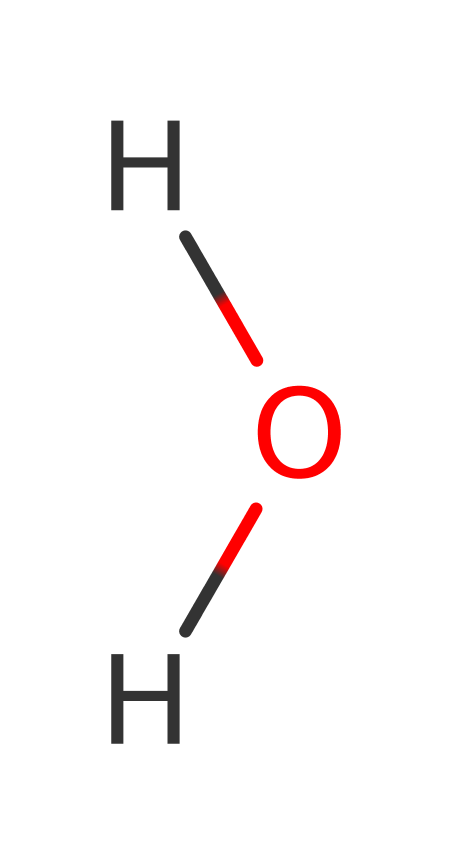
+
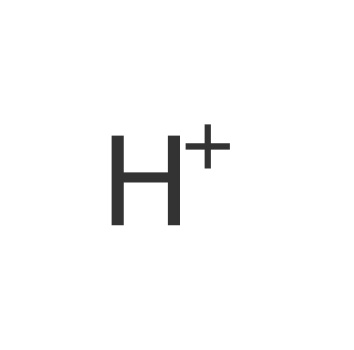
→

+


Alternative enzyme names: Escherichia coli ribonuclease I' ribonuclease PP2, Escherichia coli ribonuclease II, RNAase CL, RNase (non-base specific), RNase II, RNase M, RNase Ms, RNase T(2), Acid RNase, Acid ribonuclease, Base-non-specific ribonuclease, Non-base specific ribonuclease, Nonbase-specific RNase, Nonspecific RNase, Ribonnuclease (non-base specific), Ribonuclease (non-base specific), Ribonuclease II, Ribonuclease M, Ribonuclease N(2), Ribonuclease PP3, Ribonuclease U(4), Ribonucleate 3'-oligonucleotide hydrolase, Ribonucleate nucleotido-2'-transferase (cyclizing), Ribonuclease T2,
Enzyme Mechanism
Introduction
In the first step, one histidine acts as an acid (His46) with the other acting as a base (His109), generating a 2′–3′ cyclic phosphate intermediate. These histidines reverse roles in acid-base catalysis in the second step (hydrolysis) to produce oligo- or mononucleotides with a terminal 3′-phosphate.
Catalytic Residues Roles
| UniProt | PDB* (1bol) | ||
| Lys124 | Lys108A | Expected to form a salt bridge with the phosphate group of the substrate and possibly to stabilise the intermediate in the transition state. | electrostatic stabiliser |
| Trp65 | Trp49A | Helps position the catalytic His109, and also involved in substrate recognition and stabilisation. | modifies pKa, steric role, electrostatic stabiliser |
| His62 | His46A | Acts as a general acid/base. Donates a proton to the leaving base hydroxyl group. Abstracts a proton from the reactant water in the final step. | proton shuttle (general acid/base) |
| Glu121 | Glu105A | Activates His46 to act as the general acid in the first step. Also helps position Trp49. | modifies pKa |
| His125 | His109A | Acts as a general acid/base. Plays a role in withdrawing the 2'-OH proton in the first step of the reaction mechanism. | proton shuttle (general acid/base) |
| Tyr73 | Tyr57A | Activates the catalytic histidine. | electrostatic stabiliser |
*PDB label guide - RESx(y)B(C) - RES: Residue Name; x: Residue ID in PDB file;
y: Residue ID in PDB sequence if different from PDB file; B: PDB Chain;
C: Biological Assembly Chain if different from PDB. If label is "Not Found" it means this residue is not found in the reference PDB.
Chemical Components
References
- Luhtala N et al. (2010), Trends Biochem Sci, 35, 253-259. T2 Family ribonucleases: ancient enzymes with diverse roles. DOI:10.1016/j.tibs.2010.02.002. PMID:20189811.
- Thorn A et al. (2012), Nucleic Acids Res, 40, 8733-8742. Structure and activity of the only human RNase T2. DOI:10.1093/nar/gks614. PMID:22735700.
- Rodriguez SM et al. (2008), Protein Sci, 17, 681-690. Nonspecific base recognition mediated by water bridges and hydrophobic stacking in ribonuclease I fromEscherichia coli. DOI:10.1110/ps.073420708. PMID:18305191.
- Shiraki K et al. (2002), Eur J Biochem, 269, 4152-4158. Electrostatic role of aromatic ring stacking in the pH-sensitive modulation of a chymotrypsin-type serine protease, Achromobacter protease I. PMID:12180992.
- Kurihara H et al. (1996), J Mol Biol, 255, 310-320. The crystal structure of ribonuclease Rh from Rhizopus niveus at 2.0 Å resolution. DOI:10.1006/jmbi.1996.0025. PMID:8551522.

Catalytic Residues Roles
| Residue | Roles |
|---|---|
| His46A | proton shuttle (general acid/base) |
| His109A | proton shuttle (general acid/base) |
| Trp49A | modifies pKa, steric role, electrostatic stabiliser |
| Tyr57A | electrostatic stabiliser |
| Glu105A | modifies pKa |
| Lys108A | electrostatic stabiliser |