Ribonuclease T1
Ribonuclease T1 is an extracellular enzyme from Aspergillus oryzae that catalyses the hydrolysis of RNA at guanylyl residues yielding new guanosine 3'-phosphate and 5'-OH ends. It enhances the rate of GpC cleavage by about 10^11-fold. This stable, low molecular weight, monomeric endonuclease is the leading representative of a family of related fungal/bacterial proteins that share sequence and three-dimensional structural similarities.
Reference Protein and Structure
- Sequence
-
P00651
 (4.6.1.24)
 (Sequence Homologues)
(PDB Homologues)
(Sequence Homologues)
(PDB Homologues)
- Biological species
-
Aspergillus oryzae RIB40 (Fungus)
- PDB
-
1b2m
- THREE-DIMENSIONAL STRUCTURE OF RIBONULCEASE T1 COMPLEXED WITH AN ISOSTERIC PHOSPHONATE ANALOGUE OF GPU: ALTERNATE SUBSTRATE BINDING MODES AND CATALYSIS.
(2.0 Å)



- Catalytic CATH Domains
-
3.10.450.30
 (see all for 1b2m)
Enzyme Reaction (EC:3.1.27.3)



Enzyme Mechanism
Introduction
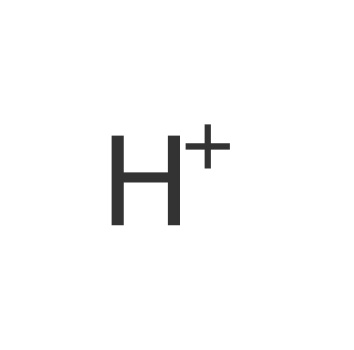
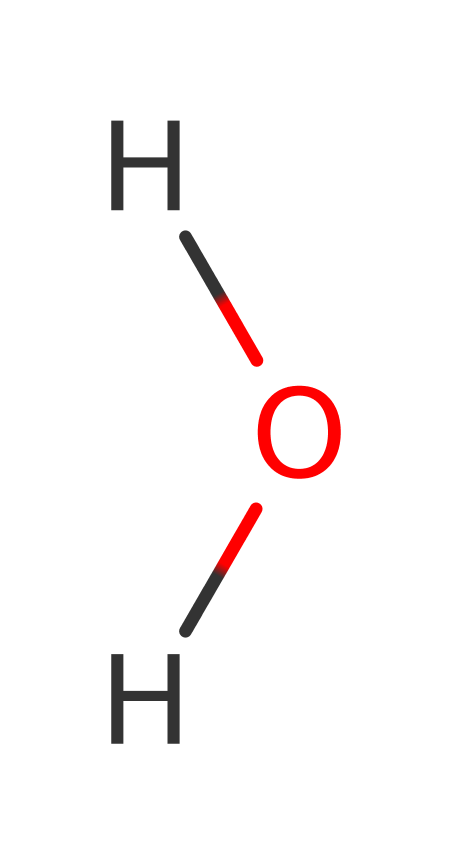
The reaction occurs in a two-step process with cleavage of the RNA chain by transesterification of a 5'-phosphoester bond to form a guanosine 2',3'-cyclic phosphate terminus in the first step, followed by hydrolysis of the cyclic phosphate to form a guanosine 3'-phosphate in a second, independent step.
Catalytic Residues Roles
| UniProt | PDB* (1b2m) | ||
| His118 | His92A(D) | General acid, donates proton to 5' leaving group. | proton shuttle (general acid/base) |
| Phe126, Arg103, Tyr64 | Phe100A(D), Arg77A(D), Tyr38A(D) | Stabilisation of trigonal bipyramidal phosphorane transition state. | electrostatic stabiliser |
| His66 | His40A(D) | Role is not entirely clear, may be a general base. | proton shuttle (general acid/base) |
| Glu84 | Glu58A(D) | General base. | proton shuttle (general acid/base) |
Chemical Components
References
- Loverix S et al. (2000), Chem Biol, 7, 651-658. Mechanism of RNase T1: concerted triester-like phosphoryl transfer via a catalytic three-centered hydrogen bond. DOI:10.1016/s1074-5521(00)00005-3. PMID:11048955.
- Bombarda E et al. (2010), J Phys Chem B, 114, 1994-2003. pH-Dependent pKaValues in Proteins—A Theoretical Analysis of Protonation Energies with Practical Consequences for Enzymatic Reactions. DOI:10.1021/jp908926w. PMID:20088566.
- Arni RK et al. (1999), Biochemistry, 38, 2452-2461. Three-Dimensional Structure of Ribonuclease T1Complexed with an Isosteric Phosphonate Substrate Analogue of GpU: Alternate Substrate Binding Modes and Catalysis†,‡. DOI:10.1021/bi982612q. PMID:10029539.

Catalytic Residues Roles
| Residue | Roles |
|---|---|
| Tyr38A(D) | electrostatic stabiliser |
| Glu58A(D) | proton shuttle (general acid/base) |
| Arg77A(D) | electrostatic stabiliser |
| His92A(D) | proton shuttle (general acid/base) |
| Phe100A(D) | electrostatic stabiliser |
| His40A(D) | proton shuttle (general acid/base) |