Prolyl aminopeptidase
Proline iminopeptidases belong to serine peptidase family S33. They catalyse the removal of an N-terminal proline residue from peptides with high specificity.
The bacterial Xanthomonas citri enzyme is thought to be involved in proline metabolism and sensitivity to ascamycin (has ascamycin dealanylating activity).
The archaeal Tricorn> protease interacting factor 1 (F1) from
The mechanism of the serine proteases is commonly believed to be among the best understood of all enzymes. As their name suggests, they are involved in hydrolysis of proteins using a serine nucleophile.
Reference Protein and Structure
- Sequence
-
P52279
 (3.4.11.5)
 (Sequence Homologues)
(PDB Homologues)
(Sequence Homologues)
(PDB Homologues)
- Biological species
-
Xanthomonas citri (Bacteria)
- PDB
-
1azw
- PROLINE IMINOPEPTIDASE FROM XANTHOMONAS CAMPESTRIS PV. CITRI
(2.7 Å)



- Catalytic CATH Domains
-
3.40.50.1820
 (see all for 1azw)
Enzyme Reaction (EC:3.4.11.5)




Enzyme Mechanism
Introduction
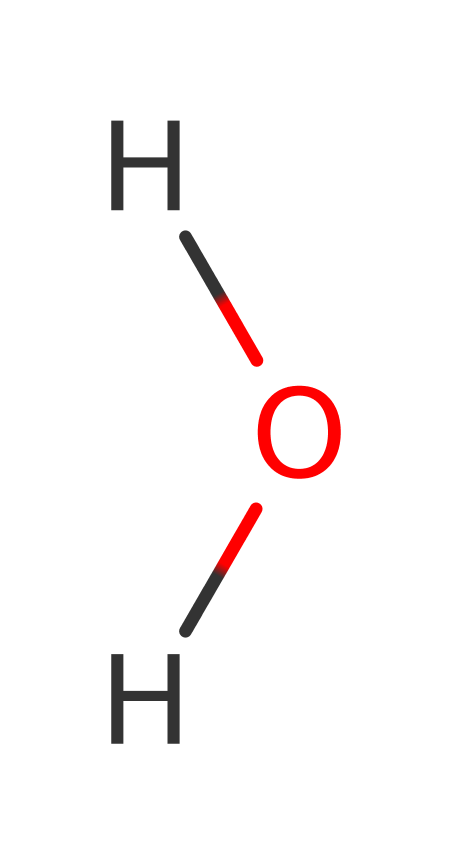
The key feature of the mechanism is the presence of the catalytic triad of serine, histidine and aspartate. Serine, having been deprotonated by histidine, attacks the carbonyl of the substrate. The negatively charged tetrahedral intermediate is stabilised by the oxyanion hole, while the positive charge on histidine is stabilised by the aspartate residue. When the tetrahedral intermediate collapses, the amide bond of the substrate is broken. The acylenzyme intermediate is hydrolysed by a water molecule, activated by histidine, to release the product and restore the enzyme to its active state.
Catalytic Residues Roles
| UniProt | PDB* (1azw) | ||
| Asp266 | Asp266A | Forms part of the catalytic triad. Stabilises the positive charge on histidine. | electrostatic stabiliser |
| His294 | His294A | Forms part of the catalytic triad. Deprotonates serine to activate it as a nucleophile, and is stabilised by hydrogen bonding interactions with aspartate. In the deacylation step, deprotonates a water molecule to activate it as a nucleophile. | proton shuttle (general acid/base), electrostatic stabiliser |
| Ser110 | Ser110A | When activated by histidine, serine is the nucleophile which attacks the substrate carbonyl, forming a covalent intermediate. | covalent catalysis, proton shuttle (general acid/base) |
| Trp111 (main-N), Gly43 (main-N) | Trp111A (main-N), Gly43A (main-N) | Forms part of the oxyanion hole which stabilises the negatively charged oxygen in the transition state. | electrostatic stabiliser |
Chemical Components
References
- Medrano FJ et al. (1998), EMBO J, 17, 1-9. Structure of proline iminopeptidase from Xanthomonas campestris pv. citri: a prototype for the prolyl oligopeptidase family. DOI:10.1093/emboj/17.1.1. PMID:9427736.
- Jing Z et al. (2015), Protein J, 34, 173-180. Studies on the Molecular Docking and Amino Acid Residues Involving in Recognition of Substrate in Proline Iminopeptidase by Site-Directed Mutagenesis. DOI:10.1007/s10930-015-9611-4. PMID:25957260.
- Goettig P et al. (2005), J Biol Chem, 280, 33387-33396. X-ray Snapshots of Peptide Processing in Mutants of Tricorn-interacting Factor F1 from Thermoplasma acidophilum. DOI:10.1074/jbc.m505030200. PMID:15994304.
- Topf M et al. (2002), Proteins, 47, 357-369. Molecular dynamics simulations of the acyl-enzyme and the tetrahedral intermediate in the deacylation step of serine proteases. DOI:10.1002/prot.10097. PMID:11948789.
- Goettig P et al. (2002), EMBO J, 21, 5343-5352. Structures of the tricorn-interacting aminopeptidase F1 with different ligands explain its catalytic mechanism. DOI:10.1093/emboj/cdf552. PMID:12374735.
- Yoshimoto T et al. (1999), J Biochem, 126, 559-565. Crystal Structure of Prolyl Aminopeptidase from Serratia marcescens. DOI:10.1093/oxfordjournals.jbchem.a022486. PMID:10467172.
- Tamura T et al. (1996), FEBS Lett, 398, 101-105. Tricorn protease (TRI) interacting factor 1 fromThermoplasma acidophilumis a proline iminopeptidase. DOI:10.1016/s0014-5793(96)01163-5. PMID:8946961.

Catalytic Residues Roles
| Residue | Roles |
|---|---|
| Gly43A (main-N) | electrostatic stabiliser |
| Trp111A (main-N) | electrostatic stabiliser |
| Asp266A | electrostatic stabiliser |
| His294A | electrostatic stabiliser, proton shuttle (general acid/base) |
| Ser110A | covalent catalysis, proton shuttle (general acid/base) |