Licheninase (glycosyl hydrolase 17 family)
Functions in plant cell wall hydrolysis ((1->4)-beta-D-glucosidic linkages in beta-D-glucans containing (1->3)- and (1->4)-bonds) during mobilization of the endosperm in germinating grain or during the growth of vegetative tissues. This protein is involved in the pathway beta-D-glucan degradation, which is part of Glycan metabolism.
Reference Protein and Structure
- Sequence
-
P12257
 (3.2.1.73)
 (Sequence Homologues)
(PDB Homologues)
(Sequence Homologues)
(PDB Homologues)
- Biological species
-
Hordeum vulgare (Barley)
- PDB
-
1aq0
- BARLEY 1,3-1,4-BETA-GLUCANASE IN MONOCLINIC SPACE GROUP
(2.0 Å)



- Catalytic CATH Domains
-
3.20.20.80
 (see all for 1aq0)
Enzyme Reaction (EC:3.2.1.73)




Enzyme Mechanism
Introduction
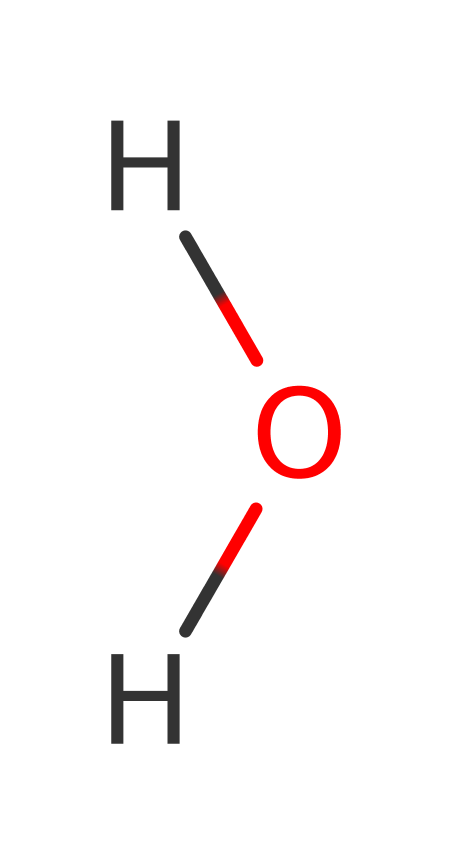
This is a retaining beta-glycosyl hydrolase: (1) Saccharide binds in a "twisted-boat" conformation. (2) The beta-1,4 linkage is broken, leading to the formation of a transition state with a slight positive charge at the anomeric carbon, in a "half-chair" conformation, which develops a oxocarbenium-ion-like character. (3) An approach of the ionic species to the catalytic nucleophile leads to the formation of a covalent intermediate of inverted alpha-configuration in a so-called chair conformation. The aglycon is released and a water molecule diffuses into the vicinity of the acidic residue as a general base. (4) The covalent intermediate reactivates through an oxocarbenium-ion-like transition state. The general base abstracts a proton from the incoming water, which in turn carries out a nucleophilic attack on the C1 atom of the residual saccharide.
Catalytic Residues Roles
| UniProt | PDB* (1aq0) | ||
| Glu238 | Glu232A | Catalytic nucleophile | covalent catalysis |
| Glu286, Lys289 | Glu280A, Lys283A | Stabilises the negatively charged transition state and intermediates. | electrostatic stabiliser |
| Glu294 | Glu288A | General acid/base | proton shuttle (general acid/base) |
Chemical Components
References
- Chiba S (2012), Biosci Biotechnol Biochem, 76, 215-231. A Historical Perspective for the Catalytic Reaction Mechanism of Glycosidase; So As to Bring about Breakthrough in Confusing Situation. DOI:10.1271/bbb.110713. PMID:22313774.
- Vuong TV et al. (2010), Biotechnol Bioeng, 107, 195-205. Glycoside hydrolases: Catalytic base/nucleophile diversity. DOI:10.1002/bit.22838. PMID:20552664.
- Hrmova M et al. (2002), J Biol Chem, 277, 30102-30111. Mutated Barley (1,3)-beta -D-Glucan Endohydrolases Synthesize Crystalline (1,3)-beta -D-Glucans. DOI:10.1074/jbc.m203971200. PMID:12023973.
- Müller JJ et al. (1998), J Biol Chem, 273, 3438-3446. Crystal Structure of Barley 1,3-1,4-beta -Glucanase at 2.0-A Resolution and Comparison with Bacillus 1,3-1,4-beta -Glucanase. DOI:10.1074/jbc.273.6.3438. PMID:9452466.
- Hrmova M et al. (1998), J Biol Chem, 273, 11134-11143. Substrate Binding and Catalytic Mechanism of a Barley -D-Glucosidase/(1,4)- -D-Glucan Exohydrolase. DOI:10.1074/jbc.273.18.11134.
- White A et al. (1997), Curr Opin Struct Biol, 7, 645-651. Mechanism of catalysis by retaining beta-glycosyl hydrolases. PMID:9345622.
- Chen L et al. (1993), J Biol Chem, 268, 13318-13326. Evolution of polysaccharide hydrolase substrate specificity. Catalytic amino acids are conserved in barley 1,3-1,4- and 1,3-beta-glucanases. PMID:8514770.

Catalytic Residues Roles
| Residue | Roles |
|---|---|
| Glu232A | covalent catalysis |
| Glu288A | proton shuttle (general acid/base) |
| Glu280A | electrostatic stabiliser |
| Lys283A | electrostatic stabiliser |