Sulfite reductase (NADPH)
The E. coli enzyme sulphite reductase, SiR, is a multimeric hemoflavoprotein that catalyses the six-electron reduction of sulphite (SO3-) to sulphide (HS-) and of nitrite (NO2-) to ammonia (NH4+) using electrons from NADPH. The complex consists of two types of subunit: the flavoprotein SiRFP and the hemoprotein SiRHP. Recent studies have suggested that the complex contains 8 subunits of SiRFP and 8 of SiRHP, rather than 8 of SiRFP and 4 of SiRHP as previously assumed. Electrons are transferred from NADPH to FAD in SiRFP and then to FMN in SiRFP. Next they are transferred to a 4Fe4S centre in SiRHP, which is linked to a sirohaem via a common cysteine ligand. Electrons are ultimately transferred to the substrate that is coordinated to the sirohaem iron. This entry deals only with the SiRHP component of the complex.
Reference Protein and Structure
- Sequence
-
P17846
 (1.8.1.2)
 (Sequence Homologues)
(PDB Homologues)
(Sequence Homologues)
(PDB Homologues)
- Biological species
-
Escherichia coli K-12 (Bacteria)
- PDB
-
1aop
- SULFITE REDUCTASE STRUCTURE AT 1.6 ANGSTROM RESOLUTION
(1.6 Å)



- Catalytic CATH Domains
-
3.90.480.10
 3.30.413.10
(see all for 1aop)
3.30.413.10
(see all for 1aop)
- Cofactors
- Tetra-mu3-sulfido-tetrairon (1), Siroheme (1)
Enzyme Reaction (EC:1.8.1.2)
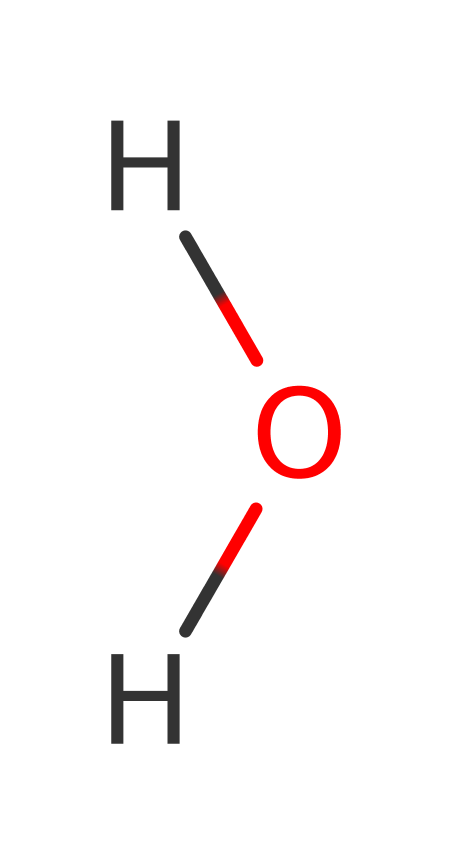


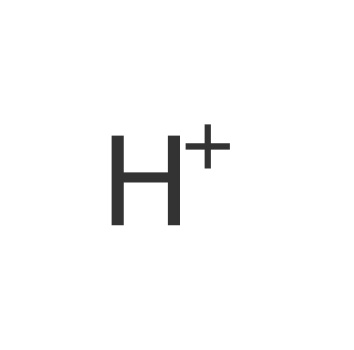


Enzyme Mechanism
Introduction
The resting state of SiRHP is assumed to contain oxidised cofactors, i.e. Fe(III) in the sirohaem and [4Fe4S]2+, with inorganic phosphate coordinating the sixth position of the sirohaem iron. The first step of the reaction involves reduction of the two cofactors (to Fe(II) and [4Fe4S]+ by transfer of electrons from the FMN in the SiRFP subunits of the complex to the 4Fe4S centre. Electron transfer between the 4Fe4S centre and the sirohaem is facilitated by Cys 483, the side chain thiol of which is a ligand to both. The details of electron transfer from FMN in SiRFP to the 4Fe4S centre are not yet well understood.
Reduction of the cofactors is followed by dissociation of the phosphate. Sulphite now binds to the sirohaem iron as HSO3-. It receives two electrons from the reduced cofactors, takes up a proton from a water molecule, and releases its O3 oxygen as water. Movement of electrons onto the sulphite is promoted by the positively charged residues Arg 83, Arg 153, Lys 215 and Lys 217; these 'pull' negative charge onto the substrate while the electron-rich cofactors 'push' electrons onto it. The oxidised cofactors are now re-reduced by SiRFP, and can then transfer two more electrons to the substrate. Uptake of two protons, probably from water molecules, and release of a second water molecule from the substrate leaves a mono-oxygenated sulphur species. Transfer of another pair of electrons and protons in the same way with loss of a water molecule leaves sulphide, S2-, which takes up a proton and dissociates from the sirohaem as HS- (sulphide is a poor sirohaem ligand). Conformational changes of the positively charged active site residues, particularly Arg 153, occur at specific points during the catalytic cycle; this is important in maintaining interactions with the substrate as the reduction proceeds and oxygen atoms are lost from it.
Reduction of nitrite to ammonia is thought to occur in a similar way, with NO2- initially binding to the sirohaem and coordinated NO and hydroxylamine as possible intermediates. As with sulphite reduction, the exact timing of electron and proton transfers to the substrate remains to be established.
Catalytic Residues Roles
| UniProt | PDB* (1aop) | ||
| Arg153, Lys215, Arg83, Lys217 | Arg153(80)A, Lys215(142)A, Arg83(10)A, Lys217(144)A | Provides a positive charge to help 'pull' electrons onto the substrate from the siroheme cofactor. | activator |
| Cys483, Cys440, Cys479, Cys434 | Cys483(410)A, Cys440(367)A, Cys479(406)A, Cys434(361)A | Forms the [Fe4S4] binding site. | electron shuttle, metal ligand |
Chemical Components
References
- Crane BR et al. (1997), Biochemistry, 36, 12120-12137. Probing the Catalytic Mechanism of Sulfite Reductase by X-ray Crystallography: Structures of theEscherichia coliHemoprotein in Complex with Substrates, Inhibitors, Intermediates, and Products†,‡. DOI:10.1021/bi971066i. PMID:9315849.
- Sibille N et al. (2005), Biochemistry, 44, 9086-9095. Solution Structure of the Sulfite Reductase Flavodoxin-like Domain fromEscherichia coli†,‡. DOI:10.1021/bi050437p. PMID:15966732.
- Zeghouf M et al. (2000), J Biol Chem, 275, 37651-37656. A Simplifed Functional Version of the Escherichia coli Sulfite Reductase. DOI:10.1074/jbc.m005619200. PMID:10984484.
- Crane BR et al. (1997), Biochemistry, 36, 12101-12119. Structures of the Siroheme- and Fe4S4-Containing Active Center of Sulfite Reductase in Different States of Oxidation: Heme Activation via Reduction-Gated Exogenous Ligand Exchange†,‡. DOI:10.1021/bi971065q. PMID:9315848.
- Crane BR et al. (1995), Science, 270, 59-67. Sulfite Reductase Structure at 1.6 : Evolution and Catalysis for Reduction of Inorganic Anions. DOI:10.1126/science.270.5233.59. PMID:7569952.

Catalytic Residues Roles
| Residue | Roles |
|---|---|
| Arg83(10)A | activator |
| Arg153(80)A | activator |
| Lys215(142)A | activator |
| Lys217(144)A | activator |
| Cys483(410)A | metal ligand, electron shuttle |
| Cys479(406)A | metal ligand |
| Cys434(361)A | metal ligand |
| Cys440(367)A | metal ligand |