Glucan 1,4-alpha-glucosidase
Glucoamylase (alpha-1,4-D-glucan glucohydrolase) catalyses the removal of beta-D-glucose from the non-reducing ends of starch and other related poly- and oligosaccharides. The enzyme is used widely in industry for the conversion of starch to glucose syrups. The glucose in turn is used in the production of fructose sweeteners, ethanol and light beer.
Reference Protein and Structure
- Sequence
-
P69327
 (3.2.1.3)
 (Sequence Homologues)
(PDB Homologues)
(Sequence Homologues)
(PDB Homologues)
- Biological species
-
Aspergillus awamori (Fungus)
- PDB
-
1agm
- Refined structure for the complex of acarbose with glucoamylase from Aspergillus awamori var. x100 to 2.4 angstroms resolution
(2.3 Å)



- Catalytic CATH Domains
-
1.50.10.10
 (see all for 1agm)
Enzyme Reaction (EC:3.2.1.3)
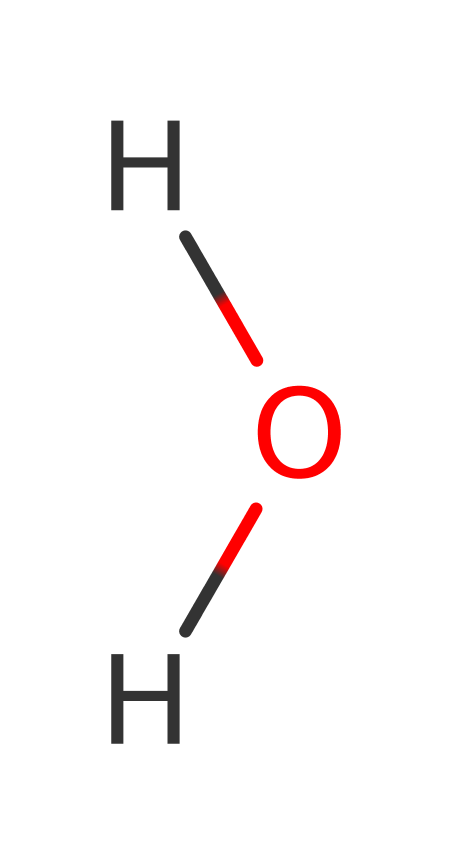

+

→

+


Alternative enzyme names: Gamma-1,4-glucan glucohydrolase, Gamma-amylase, Acid maltase, Amyloglucosidase, Exo-1,4-alpha-glucosidase, Glucoamylase, Glucose amylase, Lysosomal alpha-glucosidase, 1,4-alpha-D-glucan glucohydrolase,
Enzyme Mechanism
Introduction
The general base residue deprotonates water, which attacks the anomeric carbon of the substrate in a nucleophilic substitution. The leaving group deprotonates the general acid residue. To return the enzyme to its active state, it is likely that one or more water molecules shuttle a proton between the acidic and basic residues.
Catalytic Residues Roles
| UniProt | PDB* (1agm) | ||
| Glu204 | Glu180(179)A | The charged Glu180 contributes to the high pKa value of Glul79. | activator |
| Trp144 | Trp120(119)A | Stabilises transition state. | transition state stabiliser |
| Glu424 | Glu400(399)A | Activates a water molecule in the active site. | activator |
| Glu203 | Glu179(178)A | Proposed to act as the catalytic acid with a resting PkA of 5.9. | proton shuttle (general acid/base) |
| Asp200 | Asp176(175)A | Stabilises the transition state and interacts with Trp120. Also the proposed general base with a resting pKa of 2.7. | proton shuttle (general acid/base), transition state stabiliser |
*PDB label guide - RESx(y)B(C) - RES: Residue Name; x: Residue ID in PDB file;
y: Residue ID in PDB sequence if different from PDB file; B: PDB Chain;
C: Biological Assembly Chain if different from PDB. If label is "Not Found" it means this residue is not found in the reference PDB.
Chemical Components
References
- Aleshin AE et al. (1994), J Biol Chem, 269, 15631-15639. Refined structure for the complex of acarbose with glucoamylase from Aspergillus awamori var. X100 to 2.4-A resolution. DOI:10.2210/pdb1agm/pdb. PMID:8195212.
- Sauer J et al. (2013), Carbohydr Res, 375, 21-28. Kinetic analysis of inhibition of glucoamylase and active site mutants via chemoselective oxime immobilization of acarbose on SPR chip surfaces. DOI:10.1016/j.carres.2013.04.012. PMID:23680647.
- Davies G et al. (1995), Structure, 3, 853-859. Structures and mechanisms of glycosyl hydrolases. DOI:10.1016/s0969-2126(01)00220-9. PMID:8535779.
- Sierks MR et al. (1990), Protein Eng Des Sel, 3, 193-198. Catalytic mechanism of fungal glucoamylase as defined by mutagenesis of Asp176, Glu179 and Glu180 in the enzyme from Aspergillus awamori. DOI:10.1093/protein/3.3.193.
- Sierks MR et al. (1989), Protein Eng, 2, 621-625. Site-directed mutagenesis at the active site Trp120 of Aspergillus awamori glucoamylase. PMID:2510150.

Catalytic Residues Roles
| Residue | Roles |
|---|---|
| Trp120(119)A | transition state stabiliser |
| Glu400(399)A | activator |
| Asp176(175)A | transition state stabiliser, proton shuttle (general acid/base) |
| Glu179(178)A | proton shuttle (general acid/base) |
| Glu180(179)A | activator |