Laccase
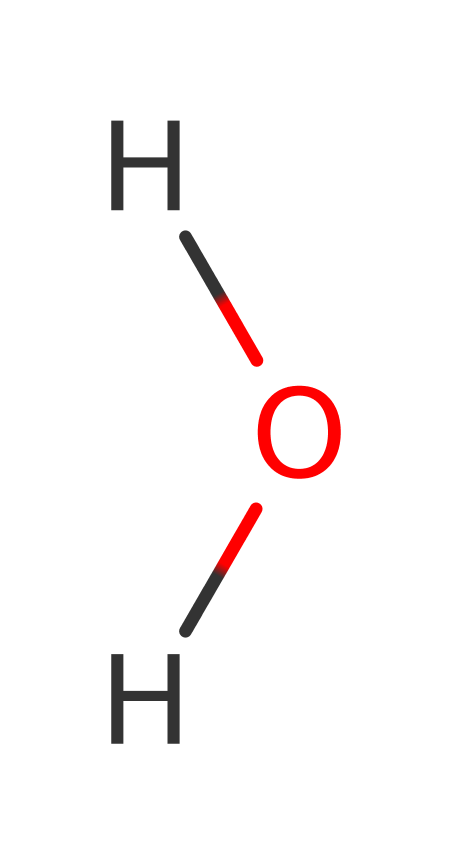
Laccase catalyses the oxidation of a variety of organic substrates coupled to the reduction of oxygen to water, using three precisely positioned copper ions. It is widely believed to be the simplest representative of the ubiquitous blue multi-copper oxidase family. Laccase is implicated in a wide spectrum of biological activities and, in particular, plays a key role in morphogenesis, development and lignin metabolism in fungi and plants.
Reference Protein and Structure
- Sequence
-
Q5EBY5
 (1.10.3.2)
 (Sequence Homologues)
(PDB Homologues)
(Sequence Homologues)
(PDB Homologues)
- Biological species
-
Lentinus tigrinus (Fungus)
- PDB
-
2qt6
- Crystal Structure Determination of a Blue Laccase from Lentinus Tigrinus
(1.5 Å)



- Catalytic CATH Domains
-
2.60.40.420
 (see all for 2qt6)
- Cofactors
- Copper(2+) (4)
Enzyme Reaction (EC:1.10.3.2)




Enzyme Mechanism
Introduction
The first active site is near to the external surface where the p-toluate molecule is found and where organic substrates (mainly phenols or arylamines) are oxidized releasing electrons to the T1 copper ion through a bound His residue (His457). The coordination of the T1 copper ion, which is not solvent exposed, is completed by His394 and Cys452.
The electrons taken from the substrates are transferred, through two intramolecular electron transfer pathway starting from the T1 copper ligand Cys452 and subsequently splitting between His451 and His453 which bind to the T3(a) and T3(b) copper ions respectively in the second active site. Here the oxygen molecules bind and are reduced to water molecules. It is composed by a trinuclear copper cluster, with a T2 Cu ion and two T3 Cu ions arranged in a triangular way, embedded between domains I and III and bound to eight histidine residues and two water molecules. T2 Cu is tricoordinated and bound to His64, His397 and one water molecule. The two T3 coppers are tetracoordinated: T3(a) Cu binds to residues His111, His399 and His449, T3(b) Cu binds to residues His66, His109 and His453; moreover there is a water molecule asymmetrically bound between the two T3 copper ions.
Catalytic Residues Roles
| UniProt | PDB* (2qt6) | ||
| Ile454, Phe462 | Ile454A, Phe462A | Contributes to the high T1 copper redox potential. | activator |
| Cys452, His451 | Cys452A, His451A | Forms part of the the electron transfer pathway between T1 copper and T3(a) copper. | electron shuttle, metal ligand |
| His394, Cys452, His457 | His394A, Cys452A, His457A | Forms the T1 copper site. | metal ligand |
| His64, His397 | His64A, His397A | Forms the T2 copper binding site. | metal ligand |
| His451, His399, His111 | His451A, His399A, His111A | Forms the T3(a) copper binding site. | metal ligand, electron shuttle |
| His453, His109, His66 | His453A, His109A, His66A | Forms the T3(b) copper binding site. | metal ligand, electron shuttle |
Chemical Components
References
- Ferraroni M et al. (2007), BMC Struct Biol, 7, 60-. Crystal structure of a blue laccase from Lentinus tigrinus: evidences for intermediates in the molecular oxygen reductive splitting by multicopper oxidases. DOI:10.1186/1472-6807-7-60. PMID:17897461.
- Ferraroni M et al. (2012), J Inorg Biochem, 111, 203-209. Reaction intermediates and redox state changes in a blue laccase from Steccherinum ochraceum observed by crystallographic high/low X-ray dose experiments. DOI:10.1016/j.jinorgbio.2012.01.011. PMID:22341982.
- Matera I et al. (2008), Inorganica Chim Acta, 361, 4129-4137. Crystal structure of the blue multicopper oxidase from the white-rot fungus Trametes trogii complexed with p-toluate. DOI:10.1016/j.ica.2008.03.091.
- Morozova OV et al. (2007), Biochemistry (Mosc), 72, 1136-1150. “Blue” laccases. DOI:10.1134/s0006297907100112.
- Ferraroni M et al. (2005), Acta Crystallogr Sect F Struct Biol Cryst Commun, 61, 205-207. Crystallization and preliminary structure analysis of the blue laccase from the ligninolytic fungusPanus tigrinus. DOI:10.1107/s1744309104034463. PMID:16510995.
- Piontek K et al. (2002), J Biol Chem, 277, 37663-37669. Crystal Structure of a Laccase from the Fungus Trametes versicolor at 1.90-A Resolution Containing a Full Complement of Coppers. DOI:10.1074/jbc.m204571200. PMID:12163489.
- Hakulinen N et al. (2002), Nat Struct Biol, 9, 601-605. Crystal structure of a laccase from Melanocarpus albomyces with an intact trinuclear copper site. DOI:10.1038/nsb823. PMID:12118243.

Catalytic Residues Roles
| Residue | Roles |
|---|---|
| His394A | metal ligand |
| Cys452A | metal ligand |
| His457A | metal ligand |
| Ile454A | activator |
| Phe462A | activator |
| Cys452A | electron shuttle |
| His453A | electron shuttle |
| His451A | electron shuttle |
| His111A | metal ligand |
| His399A | metal ligand |
| His451A | metal ligand |
| His66A | metal ligand |
| His109A | metal ligand |
| His453A | metal ligand |
| His64A | metal ligand |
| His397A | metal ligand |