Adenosine deaminase
Adenosine deaminase (ADA) is the critical enzyme in purine metabolism, which catalyses the irreversible deamination of adenosine and deoxyadenosine to their respective inosine product. It is present in virtually all mammalian cells and has a central role in maintaining immune competence. Genetic deficiency of ADA in humans is associated with severe combined immunodeficiency disease, whereas abnormally high level of ADA is involved in a variety of other diseases including acquired immunodeficiency syndrome (AIDS), tuberculosis, Parkinson's disease, anemia, various lymphomas and leukemias. ADA is therefore regarded as an important therapeutic target and the detailed knowledge of its catalytic mechanism is of high significance in drug design.
Reference Protein and Structure
- Sequence
-
P03958
 (3.5.4.4)
 (Sequence Homologues)
(PDB Homologues)
(Sequence Homologues)
(PDB Homologues)
- Biological species
-
Mus musculus (house mouse)
- PDB
-
1a4l
- ADA STRUCTURE COMPLEXED WITH DEOXYCOFORMYCIN AT PH 7.0
(2.6 Å)



- Catalytic CATH Domains
-
3.20.20.140
 (see all for 1a4l)
- Cofactors
- Zinc(2+) (1)
Enzyme Reaction (EC:3.5.4.4)


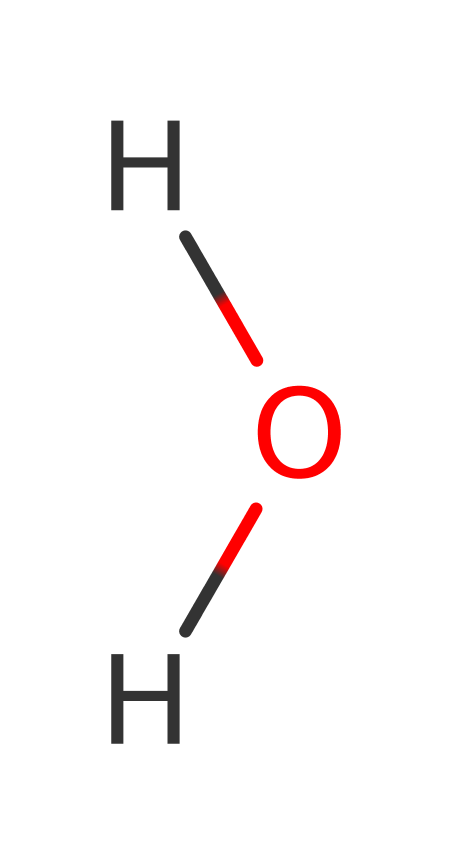
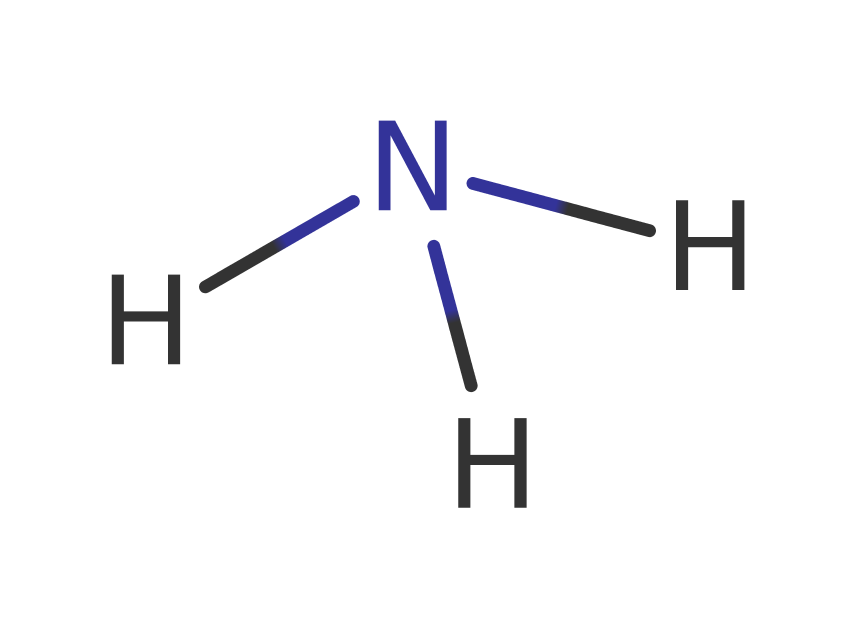


Enzyme Mechanism
Introduction
ADA catalyses the irreversible hydrolytic deamination of adenosine nucleosides to inosine nucleosides and ammonia. The reaction has two stages:
- Nucleophilic addition of water to the purine C6-carbon to form a tetrahedral intermediate.
- Elimination of ammonia from the intermediate.
Catalytic Residues Roles
| UniProt | PDB* (1a4l) | ||
| Glu217 | Glu217(214)A | Deprotonates water and donates the proton to N1 on the substrate. | proton shuttle (general acid/base) |
| His238 | His238(235)A | Assists formation and stabilisation of the attacking hydroxide. Shuttles proton from Zn-coordinated hydroxyl to 6-NH2. | proton shuttle (general acid/base) |
| Asp295 | Asp295(292)A | Ensures correct stereochemistry of the hydroxide addition. | metal ligand, steric role |
| His17, Asp295, His15, His214 | His17(14)A, Asp295(292)A, His15(12)A, His214(211)A | Form the catalytic zinc binding site. | metal ligand |
Chemical Components
References
- Cortés A et al. (2015), Med Res Rev, 35, 85-125. Moonlighting Adenosine Deaminase: A Target Protein for Drug Development. DOI:10.1002/med.21324. PMID:24933472.
- Wu XH et al. (2010), J Comput Chem, 31, 2238-2247. A theoretical study on the catalytic mechanism of Mus musculus adenosine deaminase. DOI:10.1002/jcc.21513. PMID:20575011.
- Ford H Jr et al. (2000), Biochemistry, 39, 2581-2592. Adenosine deaminase prefers a distinct sugar ring conformation for binding and catalysis: kinetic and structural studies. PMID:10704207.
- Wang Z et al. (1998), Biochemistry, 37, 8314-8324. Complexes of Adenosine Deaminase with Two Potent Inhibitors: X-ray Structures in Four Independent Molecules at pH of Maximum Activity†,‡. DOI:10.1021/bi980324o. PMID:9622483.
- Deng H et al. (1998), Biochemistry, 37, 4968-4976. Characterization of Hydrogen Bonding in the Complex of Adenosine Deaminase with a Transition State Analogue: A Raman Spectroscopic Study†. DOI:10.1021/bi9727904. PMID:9538015.
- Kahata K et al. (1997), Bone Marrow Transplant, 20, 1001-1003. Inhaled vancomycin-induced allergic reaction in decontamination of respiratory tracts for allogeneic bone marrow transplantation. DOI:10.1038/sj.bmt.1701007. PMID:9422483.
- Sideraki V et al. (1996), Biochemistry, 35, 7862-7872. Probing the Functional Role of Two Conserved Active Site Aspartates in Mouse Adenosine Deaminase†. DOI:10.1021/bi952920d. PMID:8672487.
- Sideraki V et al. (1996), Biochemistry, 35, 15019-15028. Site-Directed Mutagenesis of Histidine 238 in Mouse Adenosine Deaminase: Substitution of Histidine 238 Does Not Impede Hydroxylate Formation†,‡. DOI:10.1021/bi961427e. PMID:8942668.
- Mohamedali KA et al. (1996), Biochemistry, 35, 1672-1680. Site-Directed Mutagenesis of Active Site Glutamate-217 in Mouse Adenosine Deaminase†. DOI:10.1021/bi9514119. PMID:8634299.
- Shih P et al. (1996), Biochemistry, 35, 4697-4703. Enzyme−Substrate Complexes of Adenosine and Cytidine Deaminases: Absence of Accumulation of Water Adducts†. DOI:10.1021/bi952357z. PMID:8664259.
- Wilson DK et al. (1994), Nat Struct Biol, 1, 691-694. Crystallographic observation of a trapped tetrahedral intermediate in a metalloenzyme. PMID:7634072.
- Wilson DK et al. (1993), Biochemistry, 32, 1689-1694. A pre-transition-state mimic of an enzyme: X-ray structure of adenosine deaminase with bound 1-deazaadenosine and zinc-activated water. PMID:8439534.
- Kati WM et al. (1992), Biochemistry, 31, 7356-7366. A transition state in pieces: major contributions of entropic effects to ligand binding by adenosine deaminase. PMID:1510925.
- Wilson DK et al. (1991), Science, 252, 1278-1284. Atomic structure of adenosine deaminase complexed with a transition-state analog: understanding catalysis and immunodeficiency mutations. PMID:1925539.
- Jones W et al. (1989), Biochemistry, 28, 1242-1247. Transition-state stabilization by adenosine deaminase: 1,6-addition of water to purine ribonucleoside, the enzyme's affinity for 6-hydroxy-1,6-dihydropurine ribonucleoside, and the effective concentration of substrate water at the active site. PMID:2713361.
- Kurz LC et al. (1987), Biochemistry, 26, 8450-8457. Adenosine deaminase converts purine riboside into an analogue of a reactive intermediate: a 13C NMR and kinetic study. PMID:3442668.
- Weiss PM et al. (1987), Biochemistry, 26, 7378-7384. Evidence from nitrogen-15 and solvent deuterium isotope effects on the chemical mechanism of adenosine deaminase. PMID:3427079.

Catalytic Residues Roles
| Residue | Roles |
|---|---|
| His15(12)A | metal ligand |
| His17(14)A | metal ligand |
| His214(211)A | metal ligand |
| Asp295(292)A | metal ligand |
| Glu217(214)A | proton shuttle (general acid/base) |
| His238(235)A | proton shuttle (general acid/base) |
| Asp295(292)A | steric role |