3-hydroxyisobutyryl-CoA hydrolase
Hydrolyses 3-hydroxyisobutyryl-CoA (HIBYL-CoA), a saline catabolite. Has high activity toward isobutyryl-CoA. Could be an isobutyryl-CoA dehydrogenase that functions in valine catabolism. Also hydrolyses 3-hydroxypropanoyl-CoA. Involved in the pathway L-valine degradation, which is part of Amino-acid degradation. A member of the crotonase superfamily.
Reference Protein and Structure
- Sequence
-
Q6NVY1
 (3.1.2.4)
 (Sequence Homologues)
(PDB Homologues)
(Sequence Homologues)
(PDB Homologues)
- Biological species
-
Homo sapiens (Human)
- PDB
-
3bpt
- Crystal structure of human beta-hydroxyisobutyryl-CoA hydrolase in complex with quercetin
(1.5 Å)



- Catalytic CATH Domains
-
3.90.226.40
 (see all for 3bpt)
Enzyme Reaction (EC:3.1.2.4)
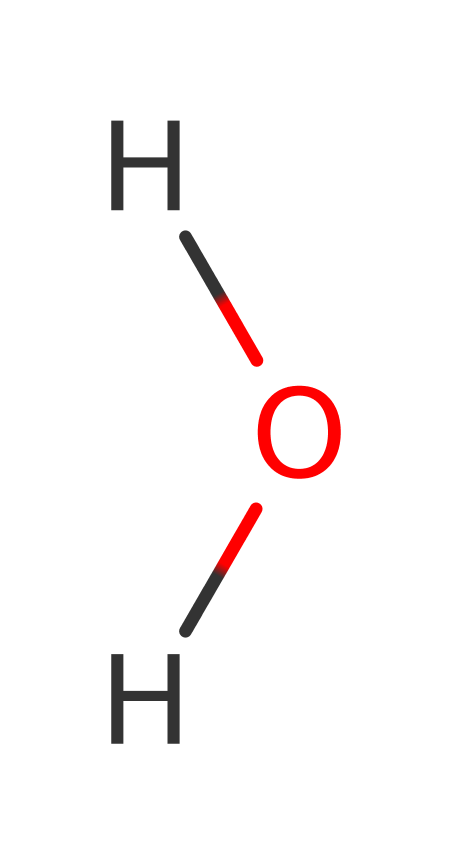


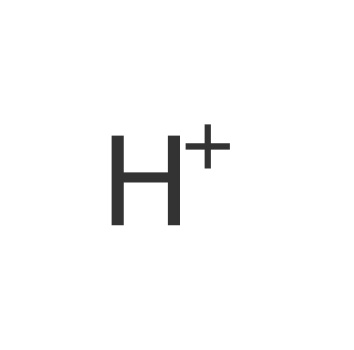


Enzyme Mechanism
Introduction
Glu169 nucleophilicly attacks the carboxylate group on the substrate to generate an anhydride intermediate. This is facilitated by the binding of the thioester oxygen atom to an oxyanion hole formed by the peptide nitrogens of Gly98 and of Gly146. The anhydride intermediate undergoes internal elimination to produce CoA and an intermediate. A water molecule, activated by Asp177A, attacks the carbonyl carbon of the covalently attached Glu169A. The final intermediate undergoes internal elimination to liberate the Glu169A and producing 3-hydroxy-2-methylpropanoate.
Catalytic Residues Roles
| UniProt | PDB* (3bpt) | ||
| Gly146 (main-N), Gly98 (main-N) | Gly146(116)A (main-N), Gly98(68)A (main-N) | Forms an oxyanion hole that stabilises the reactive intermediates and transition states formed during the course of the reaction. | hydrogen bond donor, electrostatic stabiliser |
| Glu169 | Glu169(139)A | Acts as a catalytic nucleophile. It attacks the carbonyl group of the CoA substrate and is eliminated by Asp177 activated water | covalently attached, hydrogen bond donor, nucleophile, polar interaction, proton donor, activator, electrofuge, electrophile |
| Asp177 | Asp177(147)A | Acts as a general acid/base. It first donates a proton to the CoA leaving group and then abstracts a proton from the catalytic water to initiate the cleavage of the enzyme-substrate bond formed. | hydrogen bond acceptor, hydrogen bond donor, proton acceptor, proton donor, increase acidity |
Chemical Components
bimolecular nucleophilic addition, overall reactant used, intermediate formation, enzyme-substrate complex formation, unimolecular elimination by the conjugate base, proton transfer, intermediate collapse, overall product formed, intermediate terminated, enzyme-substrate complex cleavage, inferred reaction step, native state of enzyme regeneratedReferences
- Wong BJ et al. (2003), J Am Chem Soc, 125, 12076-12077. Divergent Function in the Crotonase Superfamily: An Anhydride Intermediate in the Reaction Catalyzed by 3-Hydroxyisobutyryl-CoA Hydrolase. DOI:10.1021/ja037652i. PMID:14518977.
- Zolman BK et al. (2001), J Biol Chem, 276, 31037-31046. chy1, an Arabidopsis Mutant with Impaired beta -Oxidation, Is Defective in a Peroxisomal beta -Hydroxyisobutyryl-CoA Hydrolase. DOI:10.1074/jbc.m104679200. PMID:11404361.

Step 1. Glu169 nucleophilicly attacks the carboxylate group on the substrate to generate an anhydride intermediate. This is facilitated by the binding of the thioester oxygen atom to an oxyanion hole formed by the peptide nitrogens of Gly98 and of Gly146.
Download: Image, Marvin FileCatalytic Residues Roles
| Residue | Roles |
|---|---|
| Gly146(116)A (main-N) | electrostatic stabiliser, hydrogen bond donor |
| Gly98(68)A (main-N) | electrostatic stabiliser, hydrogen bond donor |
| Asp177(147)A | hydrogen bond donor |
| Glu169(139)A | polar interaction, nucleophile |
Chemical Components
ingold: bimolecular nucleophilic addition, overall reactant used, intermediate formation, enzyme-substrate complex formation
Step 2. The anhydride intermediate undergoes internal elimination to produce CoA and an intermediate.
Download: Image, Marvin FileCatalytic Residues Roles
| Residue | Roles |
|---|---|
| Gly146(116)A (main-N) | electrostatic stabiliser, hydrogen bond donor |
| Gly98(68)A (main-N) | electrostatic stabiliser, hydrogen bond donor |
| Asp177(147)A | hydrogen bond donor |
| Glu169(139)A | covalently attached, activator |
| Asp177(147)A | proton donor |
Chemical Components
ingold: unimolecular elimination by the conjugate base, proton transfer, intermediate collapse, intermediate formation, overall product formed
Step 3. A water molecule, activated by Asp177A, attacks the carbonyl carbon of the covalently attached Glu169A.
Download: Image, Marvin FileCatalytic Residues Roles
| Residue | Roles |
|---|---|
| Gly146(116)A (main-N) | electrostatic stabiliser, hydrogen bond donor |
| Gly98(68)A (main-N) | electrostatic stabiliser, hydrogen bond donor |
| Asp177(147)A | hydrogen bond acceptor |
| Glu169(139)A | covalently attached, electrophile |
| Asp177(147)A | proton acceptor |
Chemical Components
proton transfer, ingold: bimolecular nucleophilic addition, intermediate formation
Step 4. The final intermediate undergoes internal elimination to liberate the Glu169A and producing 3-hydroxy-2-methylpropanoate.
Download: Image, Marvin FileCatalytic Residues Roles
| Residue | Roles |
|---|---|
| Gly146(116)A (main-N) | electrostatic stabiliser, hydrogen bond donor |
| Gly98(68)A (main-N) | electrostatic stabiliser, hydrogen bond donor |
| Asp177(147)A | hydrogen bond donor |
| Glu169(139)A | hydrogen bond donor, electrofuge |
Chemical Components
ingold: unimolecular elimination by the conjugate base, proton transfer, intermediate terminated, overall product formed, enzyme-substrate complex cleavage
Step 5. Inferred return step in which a water molecule deprotonates Glu169.
Download: Image, Marvin FileCatalytic Residues Roles
| Residue | Roles |
|---|---|
| Asp177(147)A | increase acidity |
| Glu169(139)A | proton donor |
 Download: