Alcohol dehydrogenase (SDR type)
An NAD+-dependent enzyme that catalyzes the oxidation of alcohols to aldehydes/ketones and that is also able to further oxidize aldehydes to their corresponding carboxylic acids. It is a zinc-independent protein which is a member of the short-chain dehydrogenases/reductases (SDR) family. It is known to be inhibited by 2,2,2-trifluoroethanol and pyrazole.
Reference Protein and Structure
- Sequence
-
P00334
 (1.1.1.1)
 (Sequence Homologues)
(PDB Homologues)
(Sequence Homologues)
(PDB Homologues)
- Biological species
-
Drosophila melanogaster (Fruit fly)
- PDB
-
1mg5
- Crystal structure of Drosophila melanogaster alcohol dehydrogenase complexed with NADH and acetate at 1.6 A
(1.63 Å)



- Catalytic CATH Domains
-
3.40.50.720
 (see all for 1mg5)
- Cofactors
- Water (1), Nadph(4-) (1)
Enzyme Reaction (EC:1.1.1.1)




Enzyme Mechanism
Introduction
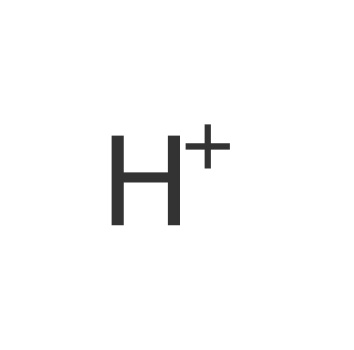
The NAD cofactor binds first, causing one of the active site waters to deprotonate Tyr152. Once the alcohol substrate has been bound, Tyr152 abstracts its hydroxyl proton, initiating the hydride transfer to NAD. The ketone product is released first, followed by the NADH.
Catalytic Residues Roles
| UniProt | PDB* (1mg5) | ||
| Ser140 | Ser139A | Stabilises the transition state and helps to orient the substrate by forming a hydrogen bond | hydrogen bond donor, electrostatic stabiliser, increase acidity |
| Tyr153 | Tyr152A | Acts as the general acid/base, when NAD+ binds, the residue is in the neutral state, and deprotonated by water. It is negatively charged when the alcohol substrate binds, and abstracts the proton that initiates the hydride transfer to NAD+. Its pKa is lowered by the charge constellation found in the immediate neighborhood created by the conserved lysine (Lys156) and by the nicotinamide ring of the oxidized form of the coenzyme, NAD(P)+. | hydrogen bond acceptor, hydrogen bond donor, proton acceptor, proton donor |
| Lys157 | Lys156A | Has two functions: first is to assist the proper orientation of the NAD(P) by forming hydrogen bonds to the O atoms of the nicotinamide-ribose moiety and the second is to lower the pKa value of Tyr155 by an electrostatic effect. | increase basicity, hydrogen bond acceptor, electrostatic stabiliser |
| Asn109 | Asn108A | Acts to stabilise the position of Lys-155, and furthermore, forms part of the proton relay that links the bulk solvent with the active site (coenzyme, substrate, Tyr-151, ribose 2′OH, Lys-155, water, and Asn-111) | electrostatic stabiliser |
Chemical Components
cofactor used, overall product formed, proton transfer, hydride transfer, aromatic bimolecular nucleophilic additionReferences
- Benach J et al. (1999), J Mol Biol, 289, 335-355. The catalytic reaction and inhibition mechanism of Drosophila alcohol dehydrogenase: observation of an enzyme-bound NAD-ketone adduct at 1.4 Å resolution by X-ray crystallography. DOI:10.1006/jmbi.1999.2765. PMID:10366509.
- Ladenstein R et al. (2008), Cell Mol Life Sci, 65, 3918-3935. Medium- and short-chain dehydrogenase/reductase gene and protein families. DOI:10.1007/s00018-008-8590-4. PMID:19011748.
- Gani OA et al. (2008), Biophys J, 94, 1412-1427. Theoretical Calculations of the Catalytic Triad in Short-Chain Alcohol Dehydrogenases/Reductases. DOI:10.1529/biophysj.107.111096. PMID:17981907.
- Hoque MM et al. (2008), Acta Crystallogr D Biol Crystallogr, 64, 496-505. The structures ofAlcaligenes faecalisD-3-hydroxybutyrate dehydrogenase before and after NAD+and acetate binding suggest a dynamical reaction mechanism as a member of the SDR family. DOI:10.1107/s0907444908004009. PMID:18453685.
- Benach J et al. (2005), J Mol Biol, 345, 579-598. Drosophila Alcohol Dehydrogenase: Acetate–Enzyme Interactions and Novel Insights into the Effects of Electrostatics on Catalysis. DOI:10.1016/j.jmb.2004.10.028. PMID:15581900.
- Oppermann U et al. (2003), Chem Biol Interact, 143-144, 247-253. Short-chain dehydrogenases/reductases (SDR): the 2002 update. DOI:10.1016/s0009-2797(02)00164-3. PMID:12604210.
- Filling C et al. (2002), J Biol Chem, 277, 25677-25684. Critical Residues for Structure and Catalysis in Short-chain Dehydrogenases/Reductases. DOI:10.1074/jbc.m202160200. PMID:11976334.
- Benach J et al. (1998), J Mol Biol, 282, 383-399. The refined crystal structure of Drosophila lebanonensis alcohol dehydrogenase at 1.9 å resolution. DOI:10.1006/jmbi.1998.2015. PMID:9735295.
- Villarroya A et al. (1989), Eur J Biochem, 180, 191-197. The primary structure of alcohol dehydrogenase from Drosophila lebanonensis. Extensive variation within insect 'short-chain' alcohol dehydrogenase lacking zinc. PMID:2707261.
- Benyajati C et al. (1981), Proc Natl Acad Sci U S A, 78, 2717-2721. Alcohol dehydrogenase gene of Drosophila melanogaster: relationship of intervening sequences to functional domains in the protein. PMID:6789320.

Catalytic Residues Roles
| Residue | Roles |
|---|---|
| Lys156A | hydrogen bond acceptor |
| Tyr152A | hydrogen bond acceptor, hydrogen bond donor |
| Ser139A | increase acidity, hydrogen bond donor |
| Lys156A | increase basicity, electrostatic stabiliser |
| Asn108A | electrostatic stabiliser |
| Tyr152A | proton donor |
Chemical Components
cofactor used, overall product formed, proton transfer
Step 2. Tyr152 abstracts a proton from the substrate alcohol, initiating the elimination of a hydride (which is added to NAD).
Download: Image, Marvin FileCatalytic Residues Roles
| Residue | Roles |
|---|---|
| Asn108A | electrostatic stabiliser |
| Lys156A | electrostatic stabiliser |
| Ser139A | electrostatic stabiliser |
| Tyr152A | proton acceptor |
 Download: