
|
|
|
|
|
 |
Contents |
 |
|
|
|
|
|
|
|
|
|
|
|

 833 a.a.
|
|
|
|
|
|
|
|
|
|
|
 673 a.a.
|
|
|
|
|
|
|
|
|
|
|
 789 a.a.
|
|
|
|
|
|
|
|
|
|
|
PDB id:
|
|
|
|
| Name: |
|
Signaling protein
|
|
|
Title:
|
|
Crystal structure of rhodopsin bound to arrestin by femtosecond x-ray laser
|
|
Structure:
|
|
Chimera protein of human rhodopsin, mouse s-arrestin, and t4 endolysin. Chain: a, b, c, d. Synonym: lysis protein,lysozyme,muramidase,opsin-2,48 kda protein, retinal s-antigen,s-ag,rod photoreceptor arrestin. Engineered: yes. Mutation: yes
|
|
Source:
|
|
Enterobacteria phage t4, homo sapiens, mus musculus. Human, mouse. Organism_taxid: 10665, 9606, 10090. Cell_line: hek293s. Gene: rho, opn2, sag. Expressed in: homo sapiens. Expression_system_taxid: 9606. Expression_system_cell_line: hek293s
|
|
Resolution:
|
|
|
3.30Å
|
R-factor:
|
0.255
|
R-free:
|
0.293
|
|
|
Authors:
|
|
Y.Kang,X.E.Zhou,X.Gao,Y.He,W.Liu,A.Ishchenko,A.Barty,T.A.White, O.Yefanov,G.W.Han,Q.Xu,P.W.De Waal,J.Ke,M.H.E.Tan,C.Zhang,A.Moeller, G.M.West,B.Pascal,N.V.Eps,L.N.Caro,S.A.Vishnivetskiy,R.J.Lee, K.M.Suino-Powell,X.Gu,K.Pal,J.Ma,X.Zhi,S.Boutet,G.J.Williams, M.Messerschmidt,C.Gati,N.A.Zatsepin,D.Wang,D.James,S.Basu,S.Roy- Chowdhury,C.Conrad,J.Coe,H.Liu,S.Lisova,C.Kupitz,I.Grotjohann, R.Fromme,Y.Jiang,M.Tan,H.Yang,J.Li,M.Wang,Z.Zheng,D.Li,N.Howe, Y.Zhao,J.Standfuss,K.Diederichs,Y.Dong,C.S.Potter,B.Carragher, M.Caffrey,H.Jiang,H.N.Chapman,J.C.H.Spence,P.Fromme,U.Weierstall,
|
|
Key ref:
|
|
Y.Kang
et al.
(2015).
Crystal structure of rhodopsin bound to arrestin by femtosecond X-ray laser.
Nature,
523,
561-567.
PubMed id:
DOI:
|
|
|
Date:
|
|
|
19-May-15
|
Release date:
|
29-Jul-15
|
|
|
|
|
|
|
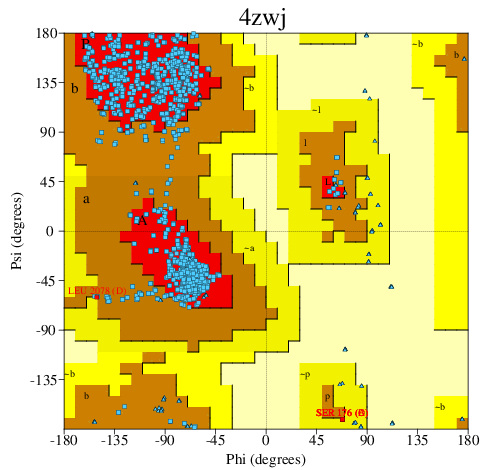
PROCHECK
|
|
|
|
|
|
Headers
|
|
|
|
References
|
|
|
|
|
|

|
|
P00720
(ENLYS_BPT4) -
Endolysin from Enterobacteria phage T4
|
|
|
|
Seq:
Struc:
|
|
|
|
164 a.a.
833 a.a.*
|
|

|

|

|
|
|
|
|
|
|
|
|
|
|
|
|
|
P08100
(OPSD_HUMAN) -
Rhodopsin from Homo sapiens
|
|
|
|
Seq:
Struc:
|
|
|
|
348 a.a.
833 a.a.*
|
|
|

|

|
|
|
|
|
|
|
|
|
|
|
|
|
|
P20443
(ARRS_MOUSE) -
S-arrestin from Mus musculus
|
|
|
|
Seq:
Struc:
|
|
|
|
403 a.a.
833 a.a.*
|
|
|

|

|
|
|
|
|
|
|
|
|
|
|
|

|
|
P00720
(ENLYS_BPT4) -
Endolysin from Enterobacteria phage T4
|
|
|
|
Seq:
Struc:
|
|
|
|
164 a.a.
673 a.a.*
|
|
|

|
|
|
|
|
|
|
|
|
|
|
|
|
|
|
P08100
(OPSD_HUMAN) -
Rhodopsin from Homo sapiens
|
|
|
|
Seq:
Struc:
|
|
|
|
348 a.a.
673 a.a.*
|
|
|

|
|
|
|
|
|
|
|
|
|
|
|
|
|
|
P20443
(ARRS_MOUSE) -
S-arrestin from Mus musculus
|
|
|
|
Seq:
Struc:
|
|
|
|
403 a.a.
673 a.a.*
|
|
|

|
|
|
|
|
|
|
|
|
|
|
|
|

|
|
P00720
(ENLYS_BPT4) -
Endolysin from Enterobacteria phage T4
|
|
|
|
Seq:
Struc:
|
|
|
|
164 a.a.
789 a.a.*
|
|
|

|

|
|
|
|
|
|
|
|
|
|
|
|
|
|
|
|
|
Enzyme class:
|
|
Chains A, B, C, D:
E.C.3.2.1.17
- lysozyme.
|
|
|
|
|
|
|
Reaction:
|
|
Hydrolysis of the 1,4-beta-linkages between N-acetyl-D-glucosamine and N-acetylmuramic acid in peptidoglycan heteropolymers of the prokaryotes cell walls.
|
|
|
|
|
|
|
|
|
|
|
|
|
|
|
|
|
|
 |
|
|
|
|
|
|
| |
|
DOI no:
|
Nature
523:561-567
(2015)
|
|
PubMed id:
|
|
|
|
|
|
| |
|
Crystal structure of rhodopsin bound to arrestin by femtosecond X-ray laser.
|
|
Y.Kang,
X.E.Zhou,
X.Gao,
Y.He,
W.Liu,
A.Ishchenko,
A.Barty,
T.A.White,
O.Yefanov,
G.W.Han,
Q.Xu,
P.W.de Waal,
J.Ke,
M.H.Tan,
C.Zhang,
A.Moeller,
G.M.West,
B.D.Pascal,
N.Van Eps,
L.N.Caro,
S.A.Vishnivetskiy,
R.J.Lee,
K.M.Suino-Powell,
X.Gu,
K.Pal,
J.Ma,
X.Zhi,
S.Boutet,
G.J.Williams,
M.Messerschmidt,
C.Gati,
N.A.Zatsepin,
D.Wang,
D.James,
S.Basu,
S.Roy-Chowdhury,
C.E.Conrad,
J.Coe,
H.Liu,
S.Lisova,
C.Kupitz,
I.Grotjohann,
R.Fromme,
Y.Jiang,
M.Tan,
H.Yang,
J.Li,
M.Wang,
Z.Zheng,
D.Li,
N.Howe,
Y.Zhao,
J.Standfuss,
K.Diederichs,
Y.Dong,
C.S.Potter,
B.Carragher,
M.Caffrey,
H.Jiang,
H.N.Chapman,
J.C.Spence,
P.Fromme,
U.Weierstall,
O.P.Ernst,
V.Katritch,
V.V.Gurevich,
P.R.Griffin,
W.L.Hubbell,
R.C.Stevens,
V.Cherezov,
K.Melcher,
H.E.Xu.
|
|
|
|
|
| |
ABSTRACT
|
|
|
|
| |
|
|
G-protein-coupled receptors (GPCRs) signal primarily through G proteins or
arrestins. Arrestin binding to GPCRs blocks G protein interaction and redirects
signalling to numerous G-protein-independent pathways. Here we report the
crystal structure of a constitutively active form of human rhodopsin bound to a
pre-activated form of the mouse visual arrestin, determined by serial
femtosecond X-ray laser crystallography. Together with extensive biochemical and
mutagenesis data, the structure reveals an overall architecture of the
rhodopsin-arrestin assembly in which rhodopsin uses distinct structural
elements, including transmembrane helix 7 and helix 8, to recruit arrestin.
Correspondingly, arrestin adopts the pre-activated conformation, with a ∼20°
rotation between the amino and carboxy domains, which opens up a cleft in
arrestin to accommodate a short helix formed by the second intracellular loop of
rhodopsin. This structure provides a basis for understanding GPCR-mediated
arrestin-biased signalling and demonstrates the power of X-ray lasers for
advancing the frontiers of structural biology.
|
|
|
|
|
|
|
|
|
|
|
|
|
|
|
|
|
|
 |
 |
 |

| |


 Links
Links












