 |
PDBsum entry 3a0b

|
|
|
|
|
|

|

|

|

|
|

|
|

|
|

|
|

|
|

|
|

|
|
|
 |

|

|
|
|
|
|
|
|
|
|
|
|
|
|
|
|
|
|
|
|
|
|
|
|
|
|
|
|
|
|
|
|
|
|
|
|
Electron transport
|
PDB id
|
|
|
|
3a0b
|
|
|
|
|
|
|
|
|
|
|
|
|
|
|

|

|

|
|
|
|
|
|
|
|
 |
Contents |
 |
|
|
|
|
|
|
|
|
|
|
|

 335 a.a.
|
|
|
|
|
|
|
|
|
|
|

 485 a.a.
|
|
|
|
|
|
|
|
|
|
|

 447 a.a.
|
|
|
|
|
|
|
|
|
|
|

 340 a.a.
|
|
|
|
|
|
|
|
|
|
|

 82 a.a.
|
|
|
|
|
|
|
|
|
|
|

 35 a.a.
|
|
|
|
|
|
|
|
|
|
|

 64 a.a.
|
|
|
|
|
|
|
|
|
|
|

 35 a.a.
|
|
|
|
|
|
|
|
|
|
|

 34 a.a.
|
|
|
|
|
|
|
|
|
|
|

 36 a.a.
|
|
|
|
|
|
|
|
|
|
|

 37 a.a.
|
|
|
|
|
|
|
|
|
|
|

 36 a.a.
|
|
|
|
|
|
|
|
|
|
|

 242 a.a.
|
|
|
|
|
|
|
|
|
|
|

 30 a.a.
|
|
|
|
|
|
|
|
|
|
|

 98 a.a.
|
|
|
|
|
|
|
|
|
|
|

 137 a.a.
|
|
|
|
|
|
|
|
|
|
|

 34 a.a.
|
|
|
|
|
|
|
|
|
|
|

 28 a.a.
|
|
|
|
|
|
|
|
|
|
|

 24 a.a.
|
|
|
|
|
|
|
|
|
|
|

 62 a.a.
|
|
|
|
|
|
|
|
|
|
|
|
×2
|
|
|
|
|
|
|
|
|
|
|
×70
|
|
|
|
|
|
|
|
|
|
|
×4
|
|
|
|
|
|
|
|
|
|
|
×4
|
|
|
|
|
|
|
|
|
|
|
×22
|
|
|
|
|
|
|
|
|
|
|
×2
|
|
|
|
|
|
|
|
|
|
|
×8
|
|
|
|
|
|
|
|
|
|
|
×8
|
|
|
|
|
|
|
|
|
|
|
×4
|
|
|
|
|
|
|
|
|
* Residue conservation analysis
|
|
|
|
|
|
PDB id:
|
|
|
|
| Name: |
|
Electron transport
|
|
|
Title:
|
|
Crystal structure of br-substituted photosystem ii complex
|
|
Structure:
|
|
Photosystem q(b) protein. Chain: a, a. Synonym: 32 kda thylakoid membrane protein, photosystem ii protein d1. Photosystem ii core light harvesting protein. Chain: b, b. Photosystem ii cp43 protein. Chain: c, c. Photosystem ii d2 protein.
|
|
Source:
|
|
Thermosynechococcus vulcanus. Synechococcus vulcanus. Organism_taxid: 32053. Cellular_location: thylakoid membrane. Cellular_location: thylakoid membrane
|
|
Resolution:
|
|
|
3.70Å
|
R-factor:
|
0.302
|
R-free:
|
0.358
|
|
|
Authors:
|
|
K.Kawakami,Y.Umena,N.Kamiya,J.-R.Shen
|
Key ref:

|
|
K.Kawakami
et al.
(2009).
Location of chloride and its possible functions in oxygen-evolving photosystem II revealed by X-ray crystallography.
Proc Natl Acad Sci U S A,
106,
8567-8572.
PubMed id:
DOI:

|
|
|
Date:
|
|
|
16-Mar-09
|
Release date:
|
19-May-09
|
|
|
|
|
|
|
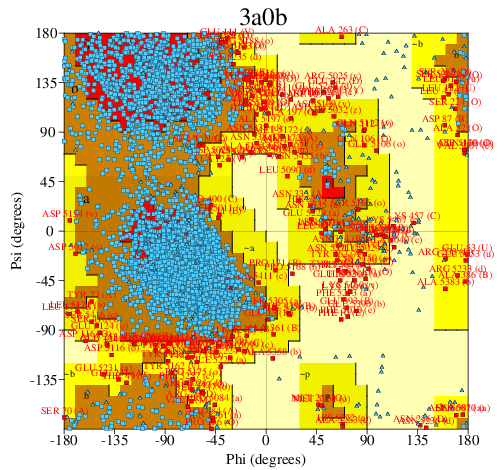
PROCHECK
|
|
|
|
|
|
Headers
|
|
|
|
References
|
|
|
|
|
|

|
|
P51765
(PSBA_THEVL) -
Photosystem II protein D1 from Thermostichus vulcanus
|
|
|
|
Seq:
Struc:
|
|
|
|
360 a.a.
335 a.a.
|
|

|

|

|
|
|
|
|
|
|
|
|
|
|
|

|
|
D0VWR1
(PSBB_THEVL) -
Photosystem II CP47 reaction center protein (Fragment) from Thermostichus vulcanus
|
|
|
|
Seq:
Struc:
|
|
|
|
505 a.a.
485 a.a.
|
|
|

|

|
|
|
|
|
|
|
|
|
|
|
|

|
|
D0VWR7
(PSBC_THEVL) -
Photosystem II CP43 reaction center protein (Fragment) from Thermostichus vulcanus
|
|
|
|
Seq:
Struc:
|
|
|
|
451 a.a.
447 a.a.
|
|
|

|

|
|
|
|
|
|
|
|
|
|
|
|

|
|
D0VWR8
(PSBD_THEVL) -
Photosystem II D2 protein (Fragment) from Thermostichus vulcanus
|
|
|
|
Seq:
Struc:
|
|
|
|
342 a.a.
340 a.a.
|
|
|

|

|
|
|
|
|
|
|
|
|
|
|
|

|
|
P12238
(PSBE_THEVL) -
Cytochrome b559 subunit alpha from Thermostichus vulcanus
|
|
|
|
Seq:
Struc:
|
|
|
|
84 a.a.
82 a.a.
|
|
|

|
|
|
|
|
|
|
|
|
|
|
|
|

|
|
P12239
(PSBF_THEVL) -
Cytochrome b559 subunit beta from Thermostichus vulcanus
|
|
|
|
Seq:
Struc:
|
|
|
|
45 a.a.
35 a.a.
|
|
|

|
|
|
|
|
|
|
|
|
|
|
|
|

|
|
P19052
(PSBH_THEVL) -
Photosystem II reaction center protein H (Fragment) from Thermostichus vulcanus
|
|
|
|
Seq:
Struc:
|
|
|
|
65 a.a.
64 a.a.
|
|
|

|
|
|
|
|
|
|
|
|
|
|
|
|

|
|
P12240
(PSBI_THEVL) -
Photosystem II reaction center protein I from Thermostichus vulcanus
|
|
|
|
Seq:
Struc:
|
|
|
|
38 a.a.
35 a.a.
|
|
|

|
|
|
|
|
|
|
|
|
|
|
|
|

|
|
Q7DGD4
(PSBJ_THEVL) -
Photosystem II reaction center protein J from Thermostichus vulcanus
|
|
|
|
Seq:
Struc:
|
|
|
|
40 a.a.
34 a.a.
|
|
|

|
|
|
|
|
|
|
|
|
|
|
|
|

|
|
P19054
(PSBK_THEVL) -
Photosystem II reaction center protein K (Fragment) from Thermostichus vulcanus
|
|
|
|
Seq:
Struc:
|
|
|
|
37 a.a.
36 a.a.
|
|
|

|
|
|
|
|
|
|
|
|
|
|
|
|

|
|
P12241
(PSBL_THEVL) -
Photosystem II reaction center protein L from Thermostichus vulcanus
|
|
|
|
Seq:
Struc:
|
|
|
|
37 a.a.
37 a.a.
|
|
|

|
|
|
|
|
|
|
|
|
|
|
|
|

|
|
P12312
(PSBM_THEVL) -
Photosystem II reaction center protein M from Thermostichus vulcanus
|
|
|
|
Seq:
Struc:
|
|
|
|
36 a.a.
36 a.a.
|
|
|

|
|
|
|
|
|
|
|
|
|
|
|
|

|
|
D0VWR2
(PSBO_THEVL) -
Photosystem II extrinsic protein O from Thermostichus vulcanus
|
|
|
|
Seq:
Struc:
|
|
|
|
244 a.a.
242 a.a.
|
|
|

|
|
|
|
|
|
|
|
|
|
|
|
|

|
|
P12313
(PSBT_THEVL) -
Photosystem II reaction center protein T from Thermostichus vulcanus
|
|
|
|
Seq:
Struc:
|
|
|
|
32 a.a.
30 a.a.
|
|
|

|
|
|
|
|
|
|
|
|
|
|
|
|

|
|
P56152
(PSBU_THEVL) -
Photosystem II extrinsic protein U from Thermostichus vulcanus
|
|
|
|
Seq:
Struc:
|
|
|
|
104 a.a.
98 a.a.
|
|
|

|
|
|
|
|
|
|
|
|
|
|
|
|

|
|
P0A387
(CY550_THEVL) -
Photosystem II extrinsic protein V from Thermostichus vulcanus
|
|
|
|
Seq:
Struc:
|
|
|
|
163 a.a.
137 a.a.
|
|
|

|
|
|
|
|
|
|
|
|
|
|
|
|

|
|
D0VWR4
(PSBX_THEVL) -
Photosystem II reaction center protein X (Fragment) from Thermostichus vulcanus
|
|
|
|
Seq:
Struc:
|
|
|
|
40 a.a.
34 a.a.
|
|
|

|
|
|
|
|
|
|
|
|
|
|
|
|

|
|
D0VWR3
(PSB30_THEVL) -
Photosystem II reaction center protein Psb30 (Fragment) from Thermostichus vulcanus
|
|
|
|
Seq:
Struc:
|
|
|
|
30 a.a.
28 a.a.
|
|
|

|
|
|
|
|
|
|
|
|
|
|
|
|
|
|
|
|
|
Enzyme class:
|
|
Chains A, D, a, d:
E.C.1.10.3.9
- photosystem Ii.
|
|
|
|
|
|
|
Reaction:
|
|
2 a plastoquinone + 4 hnu + 2 H2O = 2 a plastoquinol + O2
|
|
|
|
|
|
2
×
a plastoquinone
|
+
|
4
×
hnu
|
+
|
2
×
H2O
|
=
|
2
×
a plastoquinol
|
+
|
 O2
O2
|
|
|
|
|
|
|
|
|
|
|
|
|
Molecule diagrams generated from .mol files obtained from the
KEGG ftp site
|
|
|
|
|
|
|
|
|
|
|
|
|
|
 |
|
|
|
|
|
|
| |
|
|
| |
|
DOI no:
|
Proc Natl Acad Sci U S A
106:8567-8572
(2009)
|
|
PubMed id:
|
|
|
|
|
|
| |
|
Location of chloride and its possible functions in oxygen-evolving photosystem II revealed by X-ray crystallography.
|
|
K.Kawakami,
Y.Umena,
N.Kamiya,
J.R.Shen.
|
|
|
|
|
| |
ABSTRACT
|
|
|
|
| |
|
|
The chloride ion, Cl(-), is an essential cofactor for oxygen evolution of
photosystem II (PSII) and is closely associated with the Mn(4)Ca cluster. Its
detailed location and function have not been identified, however. We substituted
Cl(-) with a bromide ion (Br(-)) or an iodide ion (I(-)) in PSII and analyzed
the crystal structures of PSII with Br(-) and I(-) substitutions. Substitution
of Cl(-) with Br(-) did not inhibit oxygen evolution, whereas substitution of
Cl(-) with I(-) completely inhibited oxygen evolution, indicating the efficient
replacement of Cl(-) by I(-). PSII with Br(-) and I(-)substitutions were
crystallized, and their structures were analyzed. The results showed that there
are 2 anion-binding sites in each PSII monomer; they are located on 2 sides of
the Mn(4)Ca cluster at equal distances from the metal cluster. Anion-binding
site 1 is close to the main chain of D1-Glu-333, and site 2 is close to the main
chain of CP43-Glu-354; these 2 residues are coordinated directly with the
Mn(4)Ca cluster. In addition, site 1 is located in the entrance of a proton exit
channel. These results indicate that these 2 Cl(-) anions are required to
maintain the coordination structure of the Mn(4)Ca cluster as well as the
proposed proton channel, thereby keeping the oxygen-evolving complex fully
active.
|
|
|
|
|
|
| |
Selected figure(s)
|
|
|
|
| |
|
|

|
|

|
|
Figure 3.
Location of the 2 anion-binding sites in PSII. (A) Composite
omit Fo-Fc map (blue) and anomalous map (red) of PSII with
Br^− substitution contoured at σ = 1.0 and 4.0, respectively,
superimposed on the structure of the Mn[4]Ca cluster and its
surrounding regions. The structure of PSII with
Br^−substitution was shown by the molecular replacement method
with the structure of the PDB code 2AXT as the search model.
Color codes for the residues are as follows: yellow, D1; green,
D2; orange, CP43; purple, Mn atoms. (B) Composite omit Fo-Fc map
(blue) and anomalous map (red) of I^−-substituted PSII
contoured at σ = 1.0 and 4.0, respectively, superimposed on the
structure of the Mn[4]Ca cluster and its surrounding regions.
The structure of PSII with I^− substitution was shown by the
molecular replacement method. The color codes for the residues
are the same as in A. (C) Location of Br[1] relative to the
proton exit channel proposed in (16, 27–29). The residues of
PsbO are drawn in blue, and the residues of other subunits are
in the same colors as in A. The directions of atoms from Cα to
Cβ in the residues are indicated by capsule-shaped objects.
|
|
Figure 4.
Additional binding sites of I^− in I^−-substituted PSII.
(A) Fo-Fc omit map of PSII with I^− substitution (red)
contoured at σ = 3.0, superimposed on the structure of CP47
(green) obtained by the molecular replacement method, showing
the association of I^− with CP47-Cys-112. (B) Fo-Fc omit map
of PSII with I^− substitution (red) contoured at σ = 3.0,
superimposed on the structure of PsbTc (pink), showing the
association of I^− with PsbTc-Cys-12. The capsule-shaped
objects show the direction of atoms from Cα to Cβ in the 2 Cys
residues. (C) 2Fo-Fc map (blue, σ = 1.0) and omit Fo-Fc map
(red, σ = 2.0) of PSII with I^− substitution around the
region of D2-Tyr-160(Y[D]), together with the structure of D2
(green) in this region.
|
|
|
|
| |
Figures were
selected
by an automated process.
|
|
|
|
|
|
|
|
|
|
|
|
|
|
|
|
 |
 |
 |
|
Literature references that cite this PDB file's key reference
|
|
|
| |
PubMed id
|
|
Reference
|
|
|
|
|
|
S.Nayak,
H.P.Nayek,
S.Dehnen,
A.K.Powell,
and
J.Reedijk
(2011).
Trigonal propeller-shaped [Mn(III)3M(II)Na] complexes (M = Mn, Ca): structural and functional models for the dioxygen evolving centre of PSII.
|
| |
Dalton Trans,
40,
2699-2702.
|
|
|
|
|
|
|
Y.Umena,
K.Kawakami,
J.R.Shen,
and
N.Kamiya
(2011).
Crystal structure of oxygen-evolving photosystem II at a resolution of 1.9 Å.
|
| |
Nature,
473,
55-60.
|
|
|
PDB codes:
|
|
|
|
|
|
|
|
A.Guskov,
A.Gabdulkhakov,
M.Broser,
C.Glöckner,
J.Hellmich,
J.Kern,
J.Frank,
F.Müh,
W.Saenger,
and
A.Zouni
(2010).
Recent progress in the crystallographic studies of photosystem II.
|
| |
Chemphyschem,
11,
1160-1171.
|
|
|
|
|
|
The most recent references are shown first.
Citation data come partly from CiteXplore and partly
from an automated harvesting procedure. Note that this is likely to be
only a partial list as not all journals are covered by
either method. However, we are continually building up the citation data
so more and more references will be included with time.
Where a reference describes a PDB structure, the PDB
codes are
shown on the right.
|
| | |


 Links
Links


