 |
PDBsum entry 4yym

|
|
|
|
|
|

|

|

|

|
|

|
|

|
|

|
|

|
|

|
|

|
|
|
 |

|

|
|
|
|
|
|
|
|
|
|
|
|
|
|
|
|
|
|
|
|
|
|
|
|
|
|
|
|
|
|
|
|
|
|
|
Protein binding
|
PDB id
|
|
|
|
4yym
|
|
|
|
|
|
|
|
|
|
|
|
|
|
|

|

|

|
|
|
|
|
|
|
PDB id:
|
|
|
|
| Name: |
|
Protein binding
|
|
|
Title:
|
|
Crystal structure of taf1 bd2 bromodomain bound to a butyryllysine peptide
|
|
Structure:
|
|
Transcription initiation factor tfiid subunit 1. Chain: a, b. Fragment: bromodomain (unp residues 1497-1638). Synonym: cell cycle gene 1 protein, tbp-associated factor 250 kda, p250, transcription initiation factor tfiid 250 kda subunit, tafii250. Engineered: yes. Histone h4. Chain: z.
|
|
Source:
|
|
Homo sapiens. Human. Organism_taxid: 9606. Gene: taf1, ba2r, ccg1, ccgs, taf2a. Expressed in: escherichia coli bl21(de3). Expression_system_taxid: 469008. Synthetic: yes. Organism_taxid: 9606
|
|
Resolution:
|
|
|
1.50Å
|
R-factor:
|
0.220
|
R-free:
|
0.261
|
|
|
Authors:
|
|
Y.Tang,S.Bellon,A.G.Cochran,F.Poy
|
|
Key ref:
|
|
E.M.Flynn
et al.
(2015).
A Subset of Human Bromodomains Recognizes Butyryllysine and Crotonyllysine Histone Peptide Modifications.
Structure,
23,
1801-1814.
PubMed id:
DOI:
|
|
|
Date:
|
|
|
24-Mar-15
|
Release date:
|
16-Sep-15
|
|
|
|
|
|
|
PROCHECK
|

|
|
|
|
|
Headers
|
|
|
|
References
|
|
|
|
|
|

|
|
P21675
(TAF1_HUMAN) -
Transcription initiation factor TFIID subunit 1 from Homo sapiens
|
|
|
|
Seq:
Struc:
|
|
|
|
1872 a.a.
132 a.a.
|
|

|

|

|
|
|
|
|
|
|
|
|
|
|
Key: |
 |
PfamA domain |
|
|
 |
Secondary structure |
|
 |
CATH domain |
|
|
|
|
|
|
|
|
|
|
|
|
|
Enzyme class 1:
|
|
E.C.2.3.1.48
- histone acetyltransferase.
|
|
|
|
|
|
|
Reaction:
|
|
L-lysyl-[protein] + acetyl-CoA = N6-acetyl-L-lysyl-[protein] + CoA + H+
|
|
|
|
|
|
L-lysyl-[protein]
|
+
|
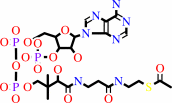 acetyl-CoA
|
=
|
N(6)-acetyl-L-lysyl-[protein]
|
+
|
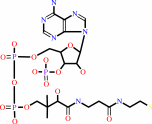 CoA
CoA
|
+
|
H(+)
|
|
|
|
|
|
|
|
|
|
Enzyme class 2:
|
|
E.C.2.7.11.1
- non-specific serine/threonine protein kinase.
|
|
|
|
|
|
|
Reaction:
|
|
|
1.
|
L-seryl-[protein] + ATP = O-phospho-L-seryl-[protein] + ADP + H+
|
|
2.
|
L-threonyl-[protein] + ATP = O-phospho-L-threonyl-[protein] + ADP + H+
|
|
|
|
|
|
|
L-seryl-[protein]
|
+
|
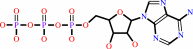 ATP
ATP
|
=
|
O-phospho-L-seryl-[protein]
|
+
|
 ADP
ADP
|
+
|
H(+)
|
|
|
|
|
|
|
L-threonyl-[protein]
|
+
|
ATP
|
=
|
O-phospho-L-threonyl-[protein]
|
+
|
ADP
|
+
|
H(+)
|
|
|
|
|
|
|
|
|
|
|
|
|
Note, where more than one E.C. class is given (as above), each may
correspond to a different protein domain or, in the case of polyprotein
precursors, to a different mature protein.
|
|
|
|
Molecule diagrams generated from .mol files obtained from the
KEGG ftp site
|
|
|
|
|
|
|
|
|
|
|
|
|
|
 |
|
|
|
|
|
|
| |
|
|
| |
|
DOI no:
|
Structure
23:1801-1814
(2015)
|
|
PubMed id:
|
|
|
|
|
|
| |
|
A Subset of Human Bromodomains Recognizes Butyryllysine and Crotonyllysine Histone Peptide Modifications.
|
|
E.M.Flynn,
O.W.Huang,
F.Poy,
M.Oppikofer,
S.F.Bellon,
Y.Tang,
A.G.Cochran.
|
|
|
|
|
| |
ABSTRACT
|
|
|
|
| |
|
|
Bromodomains are epigenetic readers that are recruited to acetyllysine residues
in histone tails. Recent studies have identified non-acetyl acyllysine
modifications, raising the possibility that these might be read by bromodomains.
Profiling the nearly complete human bromodomain family revealed that while most
human bromodomains bind only the shorter acetyl and propionyl marks, the
bromodomains of BRD9, CECR2, and the second bromodomain of TAF1 also recognize
the longer butyryl mark. In addition, the TAF1 second bromodomain is capable of
binding crotonyl marks. None of the human bromodomains tested binds succinyl
marks. We characterized structurally and biochemically the binding to different
acyl groups, identifying bromodomain residues and structural attributes that
contribute to specificity. These studies demonstrate a surprising degree of
plasticity in some human bromodomains but no single factor controlling
specificity across the family. The identification of candidate butyryl- and
crotonyllysine readers supports the idea that these marks could have specific
physiological functions.
|
|
|
|
|
|
|
|
|
|
|
|
|
|
|
|
|
|
 |
 |
 |
|


 Links
Links


