
Trainer biographies
Aleena Mushtaq | EMBL-EBI
Aleena studied Molecular and Biomedical Sciences at King’s College London. She joined the Quadram Institute Biosciences, UK to pursue her PhD in the field of Molecular Biology. Her PhD investigated the molecular and microbial changes in the gut-liver axis in response to the high-fibre and low-fibre Western diets. Aleena joined EMBL-EBI as an Ensembl Outreach Officer in 2021 and delivers training on Ensembl resources.
ORCID: 0000-0003-1624-458X

Baron Koylass | EMBL-EBI
Baron started off his career with a BSc in Medical Biotechnology. From there he moved onto a MSc in the Genetics of Human Disease at University College London where he worked on a database containing 6,000+ exomes of patients affected with retinal dystrophies. His work now involves maintenance of the Variant Call Format and data ingested into the European Variation Archive, an open access resource for variant data holding more than 3.2 billion variants across 2,374 studies and 227 species (https://www.ebi.ac.uk/eva/) (https://samtools.github.io/hts-specs/VCFv4.3.pdf). His current project focuses on investigating genomic variation between separate human populations and contact with a variety of research communities ensuring emerging species genome data abides by FAIR principles (https://www.go-fair.org/fair-principles/).
ORCID: 0000-0002-1187-8148

Chiara Batini | University of Leicester
With a background in evolutionary biology, Chiara has dedicated the first ten years of her career to the study of human genetic diversity, with a special focus on sex-biased demographic processes in the history of Central African and European populations. In late 2016 she joined the Genetic Epidemiology group at University of Leicester to contribute to the development of precision medicine approaches in the context of multi-ethnicity. She holds a UKRI Innovation Fellowship at HDR UK for a project aimed at embracing multi-ethnicity in studying the genetics of smoking behaviour. This will help to underpin advances in precision prevention of tobacco-related disease, and contribute to define best practice for the analysis of health data in populations with a different demographic history, and genetic structure, from Europeans. Chiara has developed and delivered NGS and bioinformatics training courses in the context of several international programmes since 2013.

Charles Solomon | University of Leicester
Dr Charles Solomon is a Bioinformatician at the Department of Cardiovascular Sciences, University of Leicester. He uses large OMICS datasets to investigate gene regulatory networks.

Kayesha Coley | University of Leicester
Kayesha is a Genetic Epidemiology PhD student in the Department of Health Sciences at the University of Leicester. Prior to starting her PhD, Kayesha spent four years studying at the University of Sheffield, receiving a BSc in Biochemistry and Genetics in 2018, and a MSc in Genomic Medicine in 2019. Kayesha’s PhD focusses on utilising electronic health record data to perform observational pharmacogenomic studies, with a particular emphasis on smoking cessation pharmacotherapies and commonly prescribed cardiovascular drugs.

Maira Ihsan | EMBL-EBI
Maira has an educational background in Biomedical Sciences and Bioinformatics. She works at the ENA as a User Support Bioinformatician dealing with data submission and retrieval issues on a daily basis.
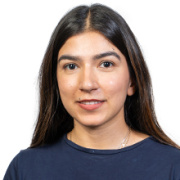
Malvika Sharan | The Alan Turing Institute
I am a senior researcher for the Tools, Practices and Systems research programme at The Alan Turing Institute, London. With a focus on Open Research, I lead a team of community managers and co-lead The Turing Way project that aim to make data science reproducible, collaborative, ethical and inclusive for researchers around the globe. I am a co-founder of Open Life Science, a mentoring and training programme that empowers researchers to gain an understanding of open science principles, build collaborations with experts and adopt best practices in the context of their communities. After receiving my PhD in Bioinformatics, I started my career in community building at the European Molecular Biology Laboratory. I am a Software Sustainability Institute fellow, Open Bioinformatics Foundation board member and an active contributor of open source projects. Connect with me on topics such as community building, open science, bioinformatics and representation of marginalised members in data science and research leadership.

Marie Nugent | Genomics England
Marie has a PhD in Genetics and went straight into science communication and engagement in industry. She then spent over 5 years developing a wide range of engagement for the University of Leicester. Marie is Community Manager within the Diverse Data team, where she will be developing connections and building networks between patients, clinicians, researchers and institutions.

Maxime Tarabichi | IRIBHM (Université Libre de Bruxelles)
Maxime studied engineering 2005-2010 at the Faculty of Applied Sciences, Université Libre de Bruxelles (ULB) and specialised in medical informatics and imagery. He then embarked on a PhD in computational biology with Vincent Detours at the Faculty of Medicine (ULB) from 2010-2015, during which he integrated multiple omics bulk profiles of thyroid cancers. He joined Peter Van Loo’s group at the Crick early 2016 and studied intratumour heterogeneity across cancer types in light of cancer evolution, with a focus on rare sarcomas. He was also a visiting scientist at the Wellcome Trust Sanger Institute in the lab of Thierry Voet, where he developed expertise in single-cell sequencing. He is now a Junior Group Leader at IRIBHM, and a visiting scientist at the Crick, looking at sarcoma and thyroid cancer evolution.

Raheleh Rahbari | Sanger Institute
Raheleh Rahbari is a group leader at the Sanger Institute investigating mutations arising in cancer and normal human cells during lifetime. With a background in Medical genetics and evolutionary genomics. My research focuses on understanding mutations acquired during ageing, with an aim to provide insight into the development, maintenance, mutational processes, and the role of selection in shaping cell populations. Over the past few years, systematic sequencing of tumours has revolutionised our understanding of cancer evolution. This has revealed that most cancers carry elevated number of mutations, accumulated through the lifetime of their cells. However, due to technical limitations, little is known about the pre-cancerous stage and how normal cells within our tissues accumulate mutations during ageing and in their progression towards cancer and/or other diseases. We investigate these early changes by studying somatic evolution in normal and precancerous tissues. Our current research focuses on understanding the role of germline predisposition on extent of somatic evolution in normal tissues, and the mechanisms that protect the germline cells from accumulating mutations during ageing.
ORCID: 0000-0002-1839-7785 |

Samuel Tallman | Genomics England
I completed my Masters degree in Genetics from University College London, after which I undertook my PhD in Human Population Genomics at the University of Leicester. My PhD research was focussed on Whole Genome Sequences from Angola and Mozambique, with a focus on understanding the recent genetic history of the Bantu Expansion and the Late Iron-Age in Central and Southern Africa. After my PhD, I joined Genomics England’s Diverse Data initiative, where my focus has been on understanding how missing diversity and under-representation of communities may be contributing to inequalities in Genomic Medicine. In particular, I am testing and developing new methods for evaluating disease causing mutations in diverse communities across the United Kingdom, and building novel genomic datasets for evaluating the spectrum of disease causing genomic variation across all human populations.

Sean Laidlaw | Sanger Institute
Sean Laidlaw is a PhD student in the department of Cancer Ageing and Somatic Mutation at the Wellcome Sanger Institute where he is using spatial multi-omic approaches for studying the pre-cancerous landscape of the breast. Before joining the Sanger as a PhD student, he obtained his MSc in Bioinformatics and Data Science at the University of Montpellier (Montpellier, France) and worked at Sanger as a Bioinformatician for two years in the Rahbari group. Sean’s previous work leveraged single-cell genomics and transcriptomics to study the impact of ageing on oocyte health, studying the developmental trajectories of T cells in breast cancer, and spatially exploring the immune environment of kidney cancer.
