 |
PDBsum entry 5nk5
|
|

|
|
PDB id:
|
|
|
|
| Name: |
|
Transferase
|
|
|
Title:
|
|
Crystal structure of ephrin a2 (epha2) receptor protein kinase with compound 1m
|
|
Structure:
|
|
Ephrin type-a receptor 2. Chain: a. Fragment: unp residues 596-900. Synonym: epithelial cell kinase,tyrosine-protein kinase receptor eck. Engineered: yes
|
|
Source:
|
|
Homo sapiens. Human. Organism_taxid: 9606. Gene: epha2, eck. Expressed in: spodoptera frugiperda. Expression_system_taxid: 7108
|
|
Resolution:
|
|
|
1.33Å
|
R-factor:
|
0.181
|
R-free:
|
0.202
|
|
|
Authors:
|
|
D.Kudlinzki,V.L.Linhard,K.Witt,S.L.Gande,K.Saxena,S.Heinzlmeir, G.Medard,B.Kuester,H.Schwalbe
|
|
Key ref:
|
|
S.Heinzlmeir
et al.
(2017).
Chemoproteomics-Aided Medicinal Chemistry for the Discovery of EPHA2 Inhibitors.
ChemMedChem,
12,
999.
PubMed id:
DOI:
|
|
|
Date:
|
|
|
31-Mar-17
|
Release date:
|
07-Jun-17
|
|
|
|
|
|
|
PROCHECK
|

|
|
|
|
|
Headers
|
|
|
|
References
|
|
|
|
|
|

|
|
P29317
(EPHA2_HUMAN) -
Ephrin type-A receptor 2 from Homo sapiens
|
|
|
|
Seq:
Struc:
|
|
|
|
976 a.a.
287 a.a.
|
|

|

|

|
|
|
|
|
|
|
|
|
|
|
|
|
|
|
|
|
|
|
|
|
|
|
Enzyme class:
|
|
E.C.2.7.10.1
- receptor protein-tyrosine kinase.
|
|
|
|
|
|
|
Reaction:
|
|
L-tyrosyl-[protein] + ATP = O-phospho-L-tyrosyl-[protein] + ADP + H+
|
|
|
|
|
|
L-tyrosyl-[protein]
|
+
|
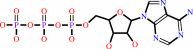 ATP
ATP
|
=
|
O-phospho-L-tyrosyl-[protein]
|
+
|
 ADP
ADP
|
+
|
H(+)
|
|
|
|
|
|
|
|
|
|
|
|
|
Molecule diagrams generated from .mol files obtained from the
KEGG ftp site
|
|
|
|
|
|
|
|
|
|
|
|
|
|
 |
|
|
|
|
|
|
| |
|
|
| |
|
DOI no:
|
ChemMedChem
12:999
(2017)
|
|
PubMed id:
|
|
|
|
|
|
| |
|
Chemoproteomics-Aided Medicinal Chemistry for the Discovery of EPHA2 Inhibitors.
|
|
S.Heinzlmeir,
J.Lohse,
T.Treiber,
D.Kudlinzki,
V.Linhard,
S.L.Gande,
S.Sreeramulu,
K.Saxena,
X.Liu,
M.Wilhelm,
H.Schwalbe,
B.Kuster,
G.Médard.
|
|
|
|
|
| |
ABSTRACT
|
|
|
|
| |
|
|
The receptor tyrosine kinase EPHA2 has gained attention as a therapeutic drug
target for cancer and infectious diseases. However, EPHA2 research and
EPHA2-based therapies have been hampered by the lack of selective small-molecule
inhibitors. Herein we report the synthesis and evaluation of dedicated EPHA2
inhibitors based on the clinical BCR-ABL/SRC inhibitor dasatinib as a lead
structure. We designed hybrid structures of dasatinib and the previously known
EPHA2 binders CHEMBL249097, PD-173955, and a known EPHB4 inhibitor in order to
exploit both the ATP pocket entrance as well as the ribose pocket as binding
epitopes in the kinase EPHA2. Medicinal chemistry and inhibitor design were
guided by a chemical proteomics approach, allowing early selectivity profiling
of the newly synthesized inhibitor candidates. Concomitant protein
crystallography of 17 inhibitor co-crystals delivered detailed insight into the
atomic interactions that underlie the structure-affinity relationship. Finally,
the anti-proliferative effect of the inhibitor candidates was confirmed in the
glioblastoma cell line SF-268. In this work, we thus discovered a novel EPHA2
inhibitor candidate that features an improved selectivity profile while
maintaining potency against EPHA2 and anticancer activity in SF-268 cells.
|
|
|
|
|
|
|
|
|
|
|
|
|
|
|
|
|
|
 |
 |
 |
|


 Links
Links


