 |
PDBsum entry 4zg9

|
|
|
|
|
|

|

|

|

|
|

|
|

|
|

|
|

|
|

|
|

|
|

|
|
|
 |

|

|
|
|
|
|
|
|
|
|
|
|
|
|
|
|
|
|
|
|
|
|
|
|
|
|
|
|
|
|
|
|
|
|
|
|
|
Hydrolase/hydrolase inhibitor
|
PDB id
|
|
|
|
4zg9
|
|
|
|
|
|
|
|
|
|
|
|
|
|
|

|

|

|
|
|
|
|
|
|
PDB id:
|
|
|
|
| Name: |
|
Hydrolase/hydrolase inhibitor
|
|
|
Title:
|
|
Structural basis for inhibition of human autotaxin by four novel compounds
|
|
Structure:
|
|
Ectonucleotide pyrophosphatase/phosphodiesterase family member 2. Chain: a, b. Synonym: e-npp 2,autotaxin,extracellular lysophospholipase d,lysopld. Engineered: yes
|
|
Source:
|
|
Homo sapiens. Human. Organism_taxid: 9606. Gene: enpp2, atx, pdnp2. Expressed in: spodoptera frugiperda. Expression_system_taxid: 7108.
|
|
Resolution:
|
|
|
2.95Å
|
R-factor:
|
0.183
|
R-free:
|
0.244
|
|
|
Authors:
|
|
A.J.Stein,G.Bain,J.H.Hutchinson,J.F.Evans
|
|
Key ref:
|
|
A.J.Stein
et al.
(2015).
Structural Basis for Inhibition of Human Autotaxin by Four Potent Compounds with Distinct Modes of Binding.
Mol Pharmacol,
88,
982-992.
PubMed id:
DOI:
|
|
|
Date:
|
|
|
22-Apr-15
|
Release date:
|
14-Oct-15
|
|
|
|
|
|
|
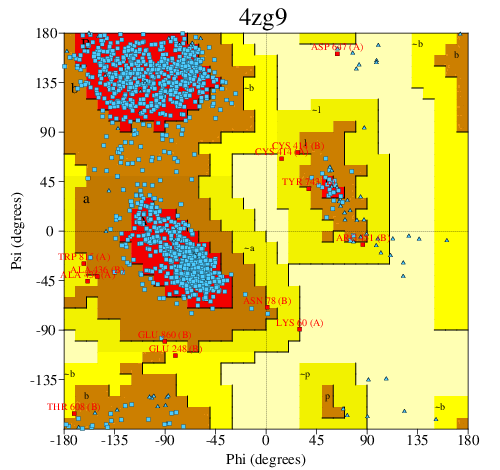
PROCHECK
|
|
|
|
|
|
Headers
|
|
|
|
References
|
|
|
|
|
|

|
|
Q13822
(ENPP2_HUMAN) -
Autotaxin from Homo sapiens
|
|
|
|
Seq:
Struc:
|
|
|
|
863 a.a.
750 a.a.
|
|

|

|

|
|
|
|
|
|
|
|
|
|
|
Key: |
 |
PfamA domain |
|
|
 |
Secondary structure |
|
 |
CATH domain |
|
|
|
|
|
|
|
|
|
|
|
|
|
Enzyme class 1:
|
|
E.C.3.1.4.39
- alkylglycerophosphoethanolamine phosphodiesterase.
|
|
|
|
|
|
|
Reaction:
|
|
a 1-O-alkyl-sn-glycero-3-phosphoethanolamine + H2O = a 1-O-alkyl- sn-glycero-3-phosphate + ethanolamine + H+
|
|
|
|
|
|
1-O-alkyl-sn-glycero-3-phosphoethanolamine
|
+
|
H2O
|
=
|
1-O-alkyl- sn-glycero-3-phosphate
|
+
|
ethanolamine
Bound ligand (Het Group name = )
matches with 60.00% similarity
|
+
|
H(+)
|
|
|
|
|
|
|
|
|
|
Enzyme class 2:
|
|
E.C.3.1.4.4
- phospholipase D.
|
|
|
|
|
|
|
Reaction:
|
|
a 1,2-diacyl-sn-glycero-3-phosphocholine + H2O = a 1,2-diacyl-sn-glycero- 3-phosphate + choline + H+
|
|
|
|
|
|
 1,2-diacyl-sn-glycero-3-phosphocholine
|
+
|
H2O
|
=
|
1,2-diacyl-sn-glycero- 3-phosphate
|
+
|
 choline
|
+
|
H(+)
|
|
|
|
|
|
|
|
|
|
|
|
|
Note, where more than one E.C. class is given (as above), each may
correspond to a different protein domain or, in the case of polyprotein
precursors, to a different mature protein.
|
|
|
|
Molecule diagrams generated from .mol files obtained from the
KEGG ftp site
|
|
|
|
|
|
|
|
|
|
|
|
|
|
 |
|
|
|
|
|
|
| |
|
|
| |
|
DOI no:
|
Mol Pharmacol
88:982-992
(2015)
|
|
PubMed id:
|
|
|
|
|
|
| |
|
Structural Basis for Inhibition of Human Autotaxin by Four Potent Compounds with Distinct Modes of Binding.
|
|
A.J.Stein,
G.Bain,
P.Prodanovich,
A.M.Santini,
J.Darlington,
N.M.Stelzer,
R.S.Sidhu,
J.Schaub,
L.Goulet,
D.Lonergan,
I.Calderon,
J.F.Evans,
J.H.Hutchinson.
|
|
|
|
|
| |
ABSTRACT
|
|
|
|
| |
|
|
Autotaxin (ATX) is a secreted enzyme that hydrolyzes lysophosphatidylcholine to
lysophosphatidic acid (LPA). LPA is a bioactive phospholipid that regulates
diverse biological processes, including cell proliferation, migration, and
survival/apoptosis, through the activation of a family of G protein-coupled
receptors. The ATX-LPA pathway has been implicated in many pathologic
conditions, including cancer, fibrosis, inflammation, cholestatic pruritus, and
pain. Therefore, ATX inhibitors represent an attractive strategy for the
development of therapeutics to treat a variety of diseases. Mouse and rat ATX
have been crystallized previously with LPA or small-molecule inhibitors bound.
Here, we present the crystal structures of human ATX in complex with four
previously unpublished, structurally distinct ATX inhibitors. We demonstrate
that the mechanism of inhibition of each compound reflects its unique
interactions with human ATX. Our studies may provide a basis for the rational
design of novel ATX inhibitors.
|
|
|
|
|
|
|
|
|
|
|
|
|
|
|
|
|
|
 |
 |
 |
|


 Links
Links



