Photinus-luciferin 4-monooxygenase (ATP-hydrolysing)
Luciferases (EC:1.13.12.7) are the enzymes that catalyse the reactions that produce light in bioluminescence. Photinus pyralis luciferase produces green light with a wavelength of 562 nm, but the colour for firefly bioluminescence can vary between yellow-green to red. Luciferase is commonly used as a reporter in biological research.
Reference Protein and Structure
- Sequence
-
P08659
 (1.13.12.7)
 (Sequence Homologues)
(PDB Homologues)
(Sequence Homologues)
(PDB Homologues)
- Biological species
-
Photinus pyralis (common eastern firefly)
- PDB
-
1ba3
- FIREFLY LUCIFERASE IN COMPLEX WITH BROMOFORM
(2.2 Å)



- Catalytic CATH Domains
-
3.40.50.980
 3.30.300.30
(see all for 1ba3)
3.30.300.30
(see all for 1ba3)
- Cofactors
- Magnesium(2+) (1) Metal MACiE
Enzyme Reaction (EC:1.13.12.7)




Enzyme Mechanism
Introduction
Partial reactions are catalysed by two different conformations of the enzyme. Adenylation in the PheA closed conformation and thioester formation in the bAcs rotated form. Lys443 and Lys529 are located on opposite sides of the C-terminal domain of the enzyme and are each essential for only one of the partial reactions of firefly bioluminescence supporting the proposal of two different conformations catalysing the two half-reactions [PMID:15683224]. The multistep oxidation of firefly luciferin results in the production of excited oxyluciferin. Luciferase modulates emission colour by controlling the resonance-based charge delocalisation of the anionic keto form of the oxyluciferin excited state. The key residues Arg218 His245 Phe247 Thr343 Ala348 and Asp422 are absolutely conserved among luciferases and have major roles in the modulation of emission colour [PMID:15182171]. While CoA is not required for bioluminescence the cofactor does have a stimulatory effect on light production [PMID:15683224]. ATP is also an allosteric modulator of luciferase, with two putative allosteric sites [PMID:12530517].
Catalytic Residues Roles
| UniProt | PDB* (1ba3) | ||
| Arg218, Thr343, Lys529, Thr343 (main-N), Lys443, His245 | Arg218A, Thr343A, Lys529A, Thr343A (main-N), Lys443A, His245A | Arg218 His245 Phe247 Thr343 Ala348 and Asp422 are known to be highly conserved and critical to the modulation of the light emitted by the enzyme. The exact role is unclear, but likely to function by binding and stabilising the active intermediates. | electrostatic stabiliser |
Chemical Components
bimolecular nucleophilic substitution, overall reactant used, intermediate formation, overall product formed, proton transfer, rate-determining step, bimolecular nucleophilic addition, intramolecular nucleophilic substitution, intermediate collapse, cyclisation, electron transfer, intramolecular elimination, intermediate terminated, decyclisation, decarboxylationReferences
- Branchini BR et al. (2005), Biochemistry, 44, 1385-1393. Mutagenesis Evidence that the Partial Reactions of Firefly Bioluminescence Are Catalyzed by Different Conformations of the Luciferase C-Terminal Domain†. DOI:10.1021/bi047903f. PMID:15683224.
- Sundlov JA et al. (2012), Biochemistry, 51, 6493-6495. Crystal structure of firefly luciferase in a second catalytic conformation supports a domain alternation mechanism. DOI:10.1021/bi300934s. PMID:22852753.
- Nakatsu T et al. (2006), Nature, 440, 372-376. Structural basis for the spectral difference in luciferase bioluminescence. DOI:10.1038/nature04542. PMID:16541080.
- Branchini BR et al. (2004), Biochemistry, 43, 7255-7262. An Alternative Mechanism of Bioluminescence Color Determination in Firefly Luciferase†. DOI:10.1021/bi036175d. PMID:15182171.
- Viviani VR (2002), Cell Mol Life Sci, 59, 1833-1850. The origin, diversity, and structure function relationships of insect luciferases. DOI:10.1007/pl00012509. PMID:12530517.
- Branchini BR et al. (2000), Biochemistry, 39, 5433-5440. The Role of Lysine 529, a Conserved Residue of the Acyl-Adenylate-Forming Enzyme Superfamily, in Firefly Luciferase†. DOI:10.1021/bi9928804. PMID:10820015.
- Branchini BR et al. (1998), Biochemistry, 37, 15311-15319. Site-Directed Mutagenesis of Histidine 245 in Firefly Luciferase: A Proposed Model of the Active Site†. DOI:10.1021/bi981150d. PMID:9799491.
- Koo JA et al. (1978), Proc Natl Acad Sci U S A, 75, 30-33. What Has and What Hasn't Been Done With Cellular Automata. PMID:272645.

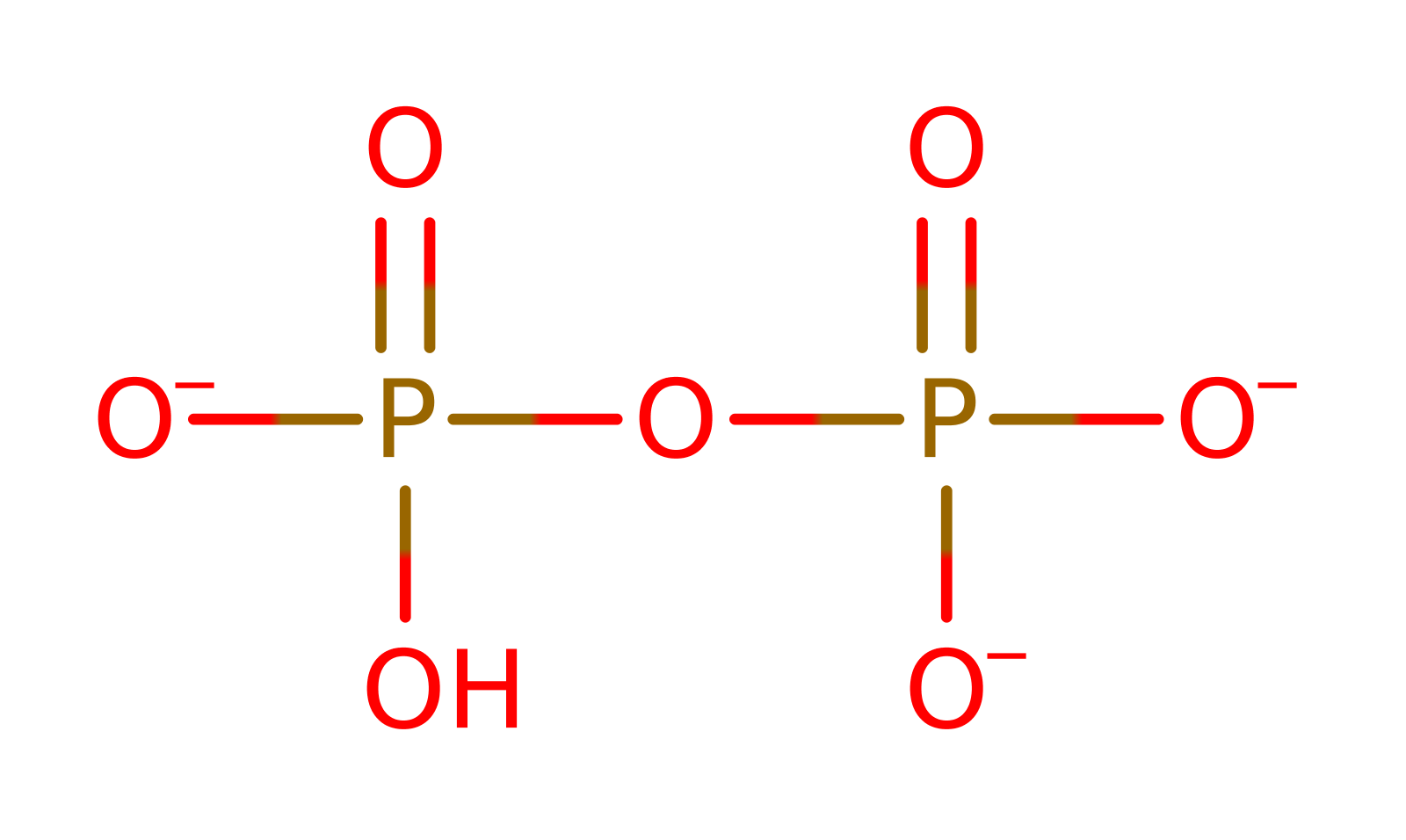
Step 1. The carboxylate oxygen of photinus luciferin attacks the alpha-phosphate of ATP in a nucleophilic substitution reaction, producing the pyrophosphate product.
Download: Image, Marvin FileCatalytic Residues Roles
| Residue | Roles |
|---|---|
| Lys529A | hydrogen bond donor, electrostatic stabiliser |
| Thr343A | hydrogen bond donor, electrostatic stabiliser |
| Arg218A | electrostatic stabiliser |
| His245A | electrostatic stabiliser |
Chemical Components
ingold: bimolecular nucleophilic substitution, overall reactant used, intermediate formation, overall product formed
Step 2. To oxidise luciferin, luciferase must abstract the C4 proton producing a carbanion that undergoes electrophilic attack by molecular oxygen. This process is greatly facilitated by the activating effect of AMP which increases the acidity of C4 and is a good leaving group, allowing the formation of the dioxetanone ring. The abstraction of the proton from C4 is the rate-limiting step of the oxygenase reaction [PMID:12530517]. Due to lack of evidence suggesting an enzymatic base we have assumed that the base is water.
Download: Image, Marvin FileCatalytic Residues Roles
| Residue | Roles |
|---|---|
| Thr343A | hydrogen bond donor |
| Lys443A | hydrogen bond donor, electrostatic stabiliser |
| Thr343A | electrostatic stabiliser |
| Thr343A (main-N) | electrostatic stabiliser |
Chemical Components
proton transfer, intermediate formation, rate-determining step
Catalytic Residues Roles
| Residue | Roles |
|---|---|
| Thr343A | hydrogen bond donor |
| Lys443A | hydrogen bond donor |
| Thr343A | electrostatic stabiliser |
| Thr343A (main-N) | electrostatic stabiliser |
| Lys443A | electrostatic stabiliser |
Chemical Components
ingold: bimolecular nucleophilic addition, overall reactant used, intermediate formation
Step 4. The peroxide anion attacks the carbonyl carbon in an intramolecular nucleophilic substitution, resulting in the formation of the AMP product and a 4-membered peroxo ring intermediate.
Download: Image, Marvin FileCatalytic Residues Roles
| Residue | Roles |
|---|---|
| Thr343A | hydrogen bond donor, electrostatic stabiliser |
| Lys443A | hydrogen bond donor, electrostatic stabiliser |
| Thr343A (main-N) | electrostatic stabiliser |
Chemical Components
ingold: intramolecular nucleophilic substitution, intermediate collapse, intermediate formation, overall product formed, cyclisation
Step 5.
The cleavage of the dioxetanone ring yields carbon dioxide and singlet excited oxyluciferin, which then decays emitting a photon in the green-red region of the spectrum with very high efficiency (0.88). To achieve an efficient production of singlet excited species, the breakdown of the dioxetanone ring intermediate is suggested to be activated by an intramolecular chemically initiated electron exchange luminescence (CIEEL) process. In this process, the electron transfer from the benzothiazolyl moiety of the luciferin in the phenolate form destabilizes the dioxetanone ring yielding a radical ion pair luciferin and CO2 followed by the return of the electron to generate a singlet excited state of the oxyluciferin moiety [PMID:12530517, PMID:272645].
Download: Image, Marvin FileCatalytic Residues Roles
| Residue | Roles |
|---|---|
| Lys443A | hydrogen bond donor, electrostatic stabiliser |
 Download: