- Course overview
- Search within this course
- What is machine learning?
- ML in drug discovery: why now?
- ML in the drug discovery pipeline
- Getting started in ML using WEKA
- Hands-on with WEKA
- Identifying targets for cancer using gene expression profiles
- Other tools utilising ML or NLP for drug discovery
- Summary
- Your feedback
- Learn more
- References

All materials are free cultural works licensed under a Creative Commons Attribution 4.0 International (CC BY 4.0) license, except where further licensing details are provided.
ML in the drug discovery pipeline
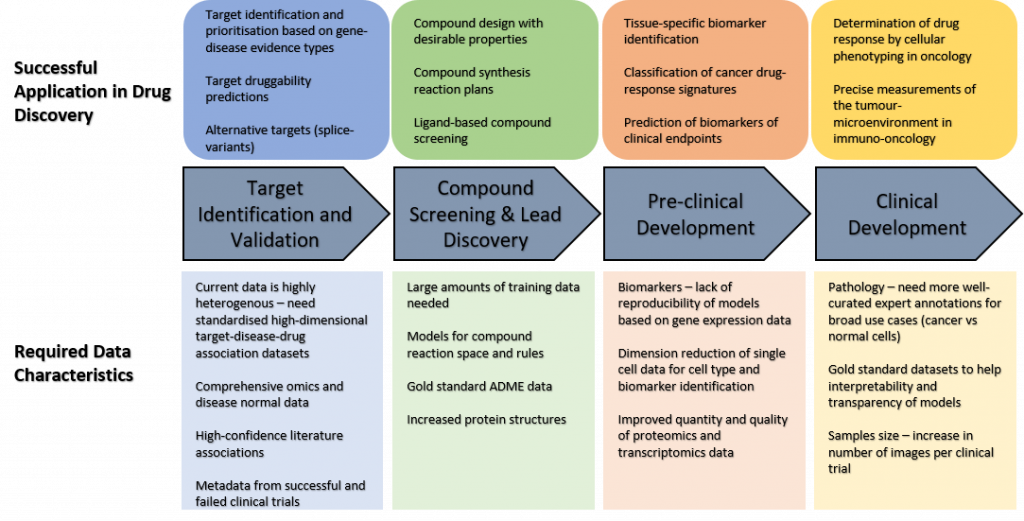
Figure 2 explains how machine learning can be used in each step of the drug development pipeline. This tutorial will focus mainly on drug target identification. Drug targets are molecules (e.g., proteins) that have a causal relationship with a disease and can be modulated by a drug to produce a therapeutic effect. Target identification is the first step in the drug discovery pipeline, and successful target identification can increase the success rate of drug development.
The next section of this tutorial will provide an introduction to WEKA and how it can be used to develop ML models for target identification. Later in the tutorial, we will introduce a number of ML/NLP tools that can help in target identification.