
Trainer biographies
Germana Baldi – EMBL-EBI
Germana Baldi has worked as a bioinformatician in the MGnify group for almost 3 years. In the last years she has focused on the chicken gut microbiome and its functions through metagenomics.

Vladimír Beneš– EMBL
Vladimír Beneš, PhD, Head of EMBL GeneCore, born & studied in Prague, the Czech Republic. He has been at EMBL since 1994 when he came as a postdoc to Ansorge group in the Biochemical Instrumentation Unit. Vladimir worked on development of methodology supporting genome-wide high-throughput sequencing, mainly in the sample processing part. In 2001 he was appointed to build EMBL Genomics Core Facility, a technology orientated service laboratory founded to assist researchers with functional genomics projects. This facility is currently utilizing mainly massively parallel sequencing in its both short as well as long form and supporting technologies, such as qPCR, for example. Most recently, Vladimír’s expertise has enhanced by adding single-cell genomic approaches. Among Vladimír’s tasks belong also assessment of new technologies and their applications in functional genomics, in particular their suitability for implementation in the environment of core facilities. He is also strongly involved in teaching of methods applied in this field.

Josephine Burgin – EMBL-EBI
Josephine Burgin is a bioinformatics project manager and the product owner for the European Nucleotide Archive (ENA) at EMBL-EBI. She manages operations of the archive and projects involving data and metadata standardisation and coordination, particularly for biodiversity and metagenomics data.
Josephine’s academic background is in environmental biology, ecology and bioinformatics. She completed an MSc in Applied Bioinformatics at Cranfield University with a focus on plant genomics. Following which, she joined EMBl-EBI as a metagenomic bioinformatician and software engineer for the ENA service where she largely worked on the ENA metagenome assembly submission model before moving into project management and general service operations.

Alejandra Escobar – EMBL-EBI
Alejandra has a PhD in Biochemistry from the National Autonomous University of Mexico (UNAM). She is a chemist and a microbiologist with bioinformatics education and experience analysing data from high-throughput sequencing of microbial communities from a variety of biomes such as fermented foods, marine environments, and host-associated microbiotas. In her former role as a postdoctoral researcher at the EBI-Sanger Postdoctoral (ESPOD) programme, she explored the mobilome of the human gut microbiome through high-quality hybrid assemblies of bacterial isolates. Currently, she works in the Microbial Informatics Team as MGnify bioinformatician.

Tatiana Gurbich – EMBL-EBI
Tatiana Gurbich is a bioinformatician on the MGnify team at EMBL-EBI. In this role, she works on generating and maintaining catalogs of metagenome-assembled genomes.
Prior to joining EMBL-EBI, Tatiana worked as a bioinformatician at a clinical genomics start-up, where she analysed next-generation sequencing data and developed a computational pipeline to identify and annotate copy-number variants in clinical samples.
Tatiana’s academic background is in computational evolutionary genomics. She holds a PhD in Integrative Biology from the University of California, Berkeley, where her research focused on the evolution of gene content on the X chromosome in Drosophila. Tatiana’s teaching experience includes working as a lecturer for an introductory biology course at the University of California, Berkeley.

Joel Hellewell – EMBL-EBI
Joel is a Postdoctoral Fellow in the Lees Group at EMBL-EBI.
Samuel Horsfield – EMBL-EBI
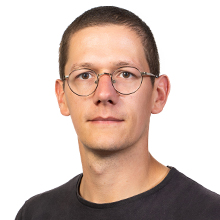
Samuel is a Visiting Predoctoral Fellow in the Lees Group at EMBL-EBI.

Maira Ihsan – EMBL-EBI
Maira has an educational background in Biomedical Sciences and Bioinformatics. She works at the ENA as a User Support Bioinformatician dealing with data submission and retrieval issues on a daily basis.

Varsha Kale – EMBL-EBI
Varsha Kale is a bioinformatician in the Microbiome Informatics team at EMBL-EBI. She works on the HoloFood project which aims to characterise the chicken and salmon gut microbiome and their functions using metagenomic and metatranscriptomic datasets, in response to novel sustainable feeds.
Prior to EMBL-EBI Varsha has completed a bachelors in Biomedical Sciences followed by a masters in Bioinformatics, and gained experience working in a clinical microbiology laboratory, using culture and molecular methods to classify bacterial species and serotypes.

Jethro Johnson – Kennedy Institute of Rheumatology
I am an Innovation Track Principal Investigator at the Kennedy Institute of Rheumatology and Deputy Director of the Oxford Centre for Microbiome Studies.
My research uses multi-omic and computational approaches to identify the molecular basis of host-gut microbiome interactions and understand their impact on health and disease.
In 2012 I completed a PhD in nutritional ecology at the University of Auckland, New Zealand, focussing on the effects of temperature on microbially-mediated digestion in ectothermic herbivores. I subsequently transitioned from wet to dry-lab research via an MRC career development fellowship in computational genomics, working with Professor Chris Ponting and Dr Andreas Heger at the Oxford MRC Functional Genomics Unit. As a postdoctoral research associate, I moved to the lab of Professor George Weinstock at the Jackson Laboratory for Genomic Medicine, Connecticut, USA, where I applied next-generation sequencing and computational genomic approaches to characterize the human microbiome. In particular, I focussed on the role of the microbiome in metabolic disease, working on the type 2 diabetes arm of the NIH Integrative Human Microbiome Project. I joined the Kennedy Institute in 2020 to establish my own research group and help run the OCMS.

John Lees – EMBL-EBI
My previous work has attempted to understand the pathogenesis and transmission of infectious diseases. I primarily works on statistical genetics, genomic epidemiology and genome evolution of pathogenic bacteria. I have also worked on infectious disease modelling, GPU algorithms, and visualisation. I write methods and software to scale these analyses and make them more accessible to others in attempts to democratise bioinformatics. I currently lead the pathogen informatics and modelling group at EMBL-EBI.

Richard Leggett – Earlham Institute
Richard Leggett is a Group Leader at the Earlham Institute in Norwich. He leads a research group focussed on developing new tools and methods for analysing environmental and clinical metagenomic samples, particularly focussed on in-field sequencing and real-time analysis. Much of the group’s work focusses on nanopore technology, but they also work with PacBio and Illumina data.
Richard’s background is in computing, having worked as a software engineer for 10 years prior to undertaking his PhD in Computational Biology. However, the group he leads is multi-disciplinary, with both computational and wet lab expertise.

Leonie Johanna Lorenz – EMBL-EBI
I am a first-year PhD student at EMBL-EBI. In my PhD, I will focus on jointly using epidemiological and genomic data for developing mathematical models of pathogen transmission and evolution. Before coming to EBI, I studied biomathematics at the University of Greifswald, Germany. I wrote my master thesis at the Max Delbrück Center for Molecular Medicine in the Helmholtz Association in Berlin, Germany.

Jennifer Lu – EMBL-EBI
Jennifer is a bioinformatician in the Microbiome Informatics team at EMBL-EBI. She works on the National Mouse Genetics Network projects which aims to investigate the role of the microbiome in genetic diseases associated with barrier surface malfunctions in mouse models.
Jennifer’s academic background is in cancer epigenomics and transcriptomics, having completed a PhD in multi-comics biomarker discovery from the University of Queensland (UQ) in Australia. her doctoral research focused on the use of bioinformatic methods to uncover and validate multi-comics pan-cancer biomarkers. Furthermore, Jennifer has experience in the development and delivery of course content to Masters level students at UQ.

Ned Peel – Earlham Institute
Ned is a postdoctoral research scientist in the Technology Algorithms Group (Richard Leggett’s group) at the Earlham Institute. His work focuses on developing real-time metagenomics algorithms for nanopore sequencing devices, such as the MinION. His research interests include exploring ways of interacting with and visualising data generated in real-time and developing approaches for streamed analysis of metagenomic sequence data. Prior to joining the Earlham Institute, Ned completed a BSc in Biological Sciences at the University of East Anglia and an MSc in Plant Genetics at the John Innes Centre.

Sebastien Raguideau – Warwick Medical School
I am a postdoctoral researcher at the Earlham Institute working within Chris Quince’s group.
My main interest is devising ad hoc bioinformatic pipeline and tools related to exploration of meta-omics datasets. I have been working on various subjects such as AMR, fiber degradation and syntrophy in anaerobic digesters. My most recent projects are linked to coverage estimation from unique k-mer and eukaryotic MAGs identification.
My secondary interest is related to mathematical modelling, in particular Non Negative Factorisation and Bayesian approaches.

Lorna Richardson – EMBL – EBI
Lorna Richardson is the Coordinator for EMBL-EBI’s Microbiome Resources and is responsible for the content of the MGnify data resource. MGnify provides access to analysis of metagenomics, metatranscriptomics and assembly microbiome data, providing functional and taxonomic profiles of relevant datasets. Lorna is also responsible for Genome Properties, a resource used in the analysis of assembly data within MGnify. Lorna’s experience in microbiome annotation was developed though her previous role as a scientific curator for InterPro and Pfam, two further resources used in the analysis of MGnify data.
Lorna joined EMBL-EBI from the University of Edinburgh where she was responsible for the eMouseAtlas, a resource providing integrated 3D anatomy and gene expression patterns in the mouse embryo. Lorna’s academic background is in Biotechnology.

Sandy Alexander Rogers – EMBL-EBI
Sandy is a software developer for MGnify, EMBL-EBI’s metagenomics resource. He primarily works on the websites, APIs, databases and analysis packages that surface the metagenomic datasets gathered and analysed by MGnify.
Sandy’s academic background is in Astrophysics, with a PhD in high-redshift observational astronomy from Edinburgh University at the Royal Observatory Edinburgh which combined multi-wavelength image analysis with computational modelling to understand galaxy formation in the early Universe. Prior to joining EMBL-EBI, Sandy worked at a tech startup building web and data analysis applications.

Jacqueline Toussaint – EMBL-EBI
I’m a PhD student currently focused on developing more efficient and accurate methods for performing genome-wide association studies (GWAS) in bacteria. I previously studied biochemistry and microbiology at Montana State University, and am excited to further my education in the lab of Dr. John Lees at EMBL-EBI and the University of Cambridge, UK.
