Trainer biographies
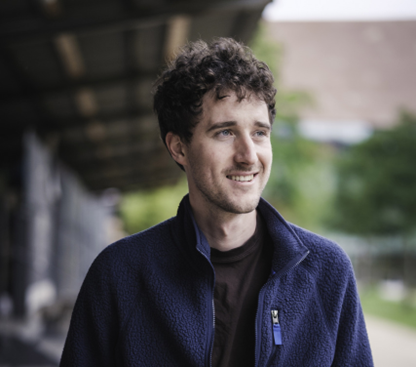
Aurelien Dugourd – EMBL–EBI
After I graduated from my Computational Biology master’s degree in 2015, I joined Julio Saez-Rodriguez team at the JRC COMBINE lab in Aachen as a PhD student. I worked on the development of an hybrid mechanistic model, integrating gene regulation, signaling pathways and metabolomics data to explain disease phenotypes, help find new therapeutic targets and predict their potential effect based on a specific patient profile. This project was part of the collaborative SyMBioSys ITN project, financed by the European Marie Sklodowska-Curie actions. Today, I am a senior post-doc leading the development and application of methods to extract interpretable mechanistic insights from multi-omic datasets. I especially focus on leveraging prior knowledge, in the context of signaling and metabolism of complex diseases, such as cancer and development of treatment resistance. I work in collaboration with pharmaceutical partners, to support the development of novel cancer treatments and better understand the development of resistances by bringing those methods closer to relevant industrial applications.
Theodoros Koutsandreas– EMBL-EBI
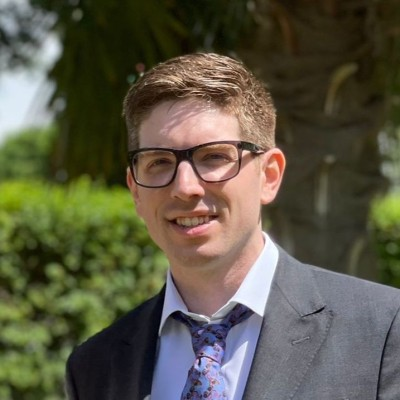
I graduated from the School of Chemical Engineering of the National Technical University of Athens (NTUA) in 2013 and I completed my PhD in Translational Bioinformatics and Systems Biology in the School of Mechanical Engineering of NTUA in 2021, under the supervision of Professor L. Alexopoulos (NTUA) and Professor A. Chatziioannou (BRFAA). During my PhD studies I developed computational methods for the semantic interpretation, comparative analysis and visualization of omics data. Since September 2021, I have been working in the Petsalaki Group (EMBL/EBI) as a postdoctoral researcher. My research interests focus on the development of signaling network-based methods for the cell type deconvolution of bulk RNA-seq data and the systemic interpretation of complex phenotypes and diseases.
Dezso Modos – Quadram Institute
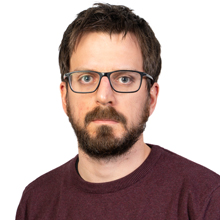
I am a systems biologist with a medical doctor background. I aim to understand the systemic problems behind diseases using computational approaches, and to use systems medicine to improve clinical practice and patient quality of life. After my PhD, I went to the University of Cambridge where I learnt cheminformatics and qualitative structure activity relationships as a post-doc. I am currently a senior post-doc in Norwich Quadram Institute/Earlham Institute where I learnt single cell RNA-seq analysis techniques and applied my network science expertise in inflammatory bowel disease research. I am passionate about teaching since my PhD I taught physiology in the Semmelweis University, and I was guest lecturer at University of Cambridge Systems Biology course. I taught at the Bioinformatics Summer School and Multiomics data integrating and visualisation course here at the EBI.
Chenqu Suo – Wellcome Sanger Institute
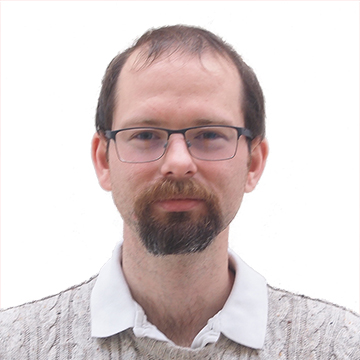
Chenqu is an NIHR Clinical Lecturer at the University of Cambridge, working with Dr Sarah Teichmann. Her area of research has been primarily focused on human immune cell development from both in vivo and in vitro angles, utilising a combination of experimental tools such as artificial thymic organoids and newly developed computational approaches on scVDJ-seq data and trajectory alignment.
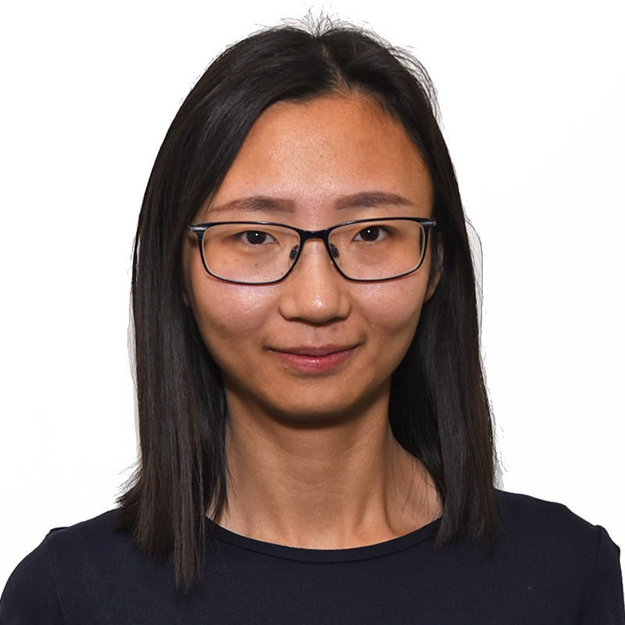
Eliot Ragueneau – EMBL-EBI
Software Engineer for Reactome and IntAct. Author of IntAct App, contributor of IntAct Portal and Reactome website.
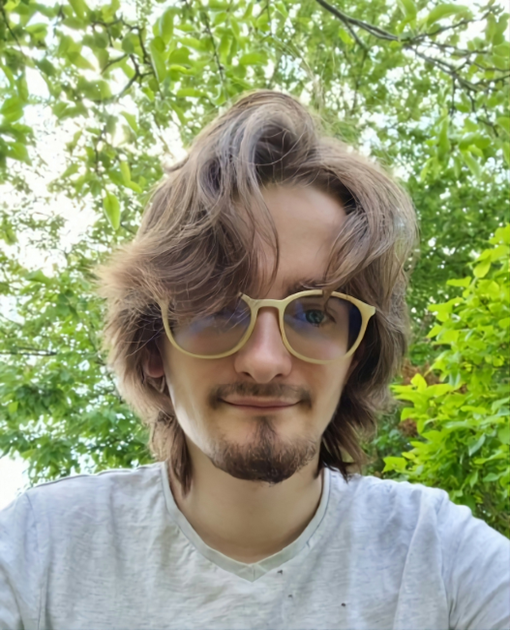
Marton Olbei – Imperial College London
Hi! My name is Marton Olbei, I am a research associate in the Korcsmaros group. My main scientific interest revolves around trying to understand how the immune system talks to itself through cytokines. I am trying to achieve this by creating cytokine-cytokine networks, in an attempt to capture how certain cytokines regulate other cytokines.
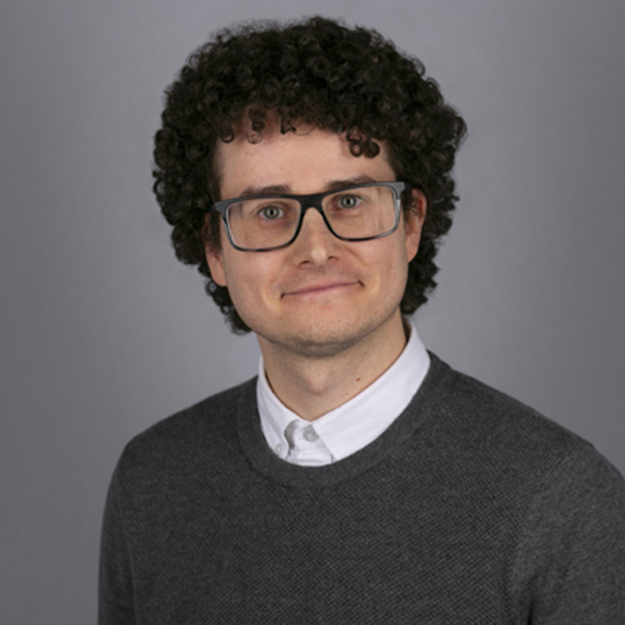
Ricard Argelaguet – Altos Labs
I am a computational biologist motivated by the applications of machine learning and artificial intelligence to the field of biology. I did my PhD in the groups of John Marioni (EMBL-EBI, now at Genentech) and Oliver Stegle (EMBL & DKFZ), followed by a short postdoctoral stay in the group of Wolf Reik at the Babraham Institute. I developed methods for single-cell and multi-omics data integration, the most popular one being MOFA. I also worked on generating single-cell and/or multi-modal data resources, mostly in the context of embryonic development. Currently, I am working as a Senior Scientist at Altos Labs in the AI/ML team, where I work on modelling gene perturbation screenings to characterise the regulatory networks that underlie cellular rejuvenation programming.
Tamás Korcsmáros – Imperial College London
As a PhD student, Tamas developed a signalling network database, SignaLink, which filled a vital niche in the landscape of bioinformatics tools, and by now it has become one of the most used signalling network resources. It also forms the core of OmniPath, a more general human signaling network resource Tamas co-developed with the group of Julio Saez-Rodriguez. In 2014, Tamas received a 5-year fellowship to work in the computational biology focused Earlham Institute and the gut microbiome centred Quadram Institute in Norwich. This allowed him to establish a multi-disciplinary group that combines computational and experimental approaches, including gut organoids. His group has carried out multiple projects to predict, analyse and validate host-microbe interactions in the gut, especially in relation to the regulation of autophagy by microbes and upon disease conditions such as inflammatory bowel disease and cancer. He had multiple innovation and industrial partnerships to develop new computational tools and platforms to analyse multi-omics data. In 2021, Tamas moved to Imperial College as a Senior Lecturer, and currently leads a research group that focuses on improving our understanding on the pathomechanisms of IBD and the NIHR Imperial BRC Organoid Facility to establish patient-specific multi-omics studies for various complex diseases.
Pau Badia i Mompel – Heidelberg University
Pau Badia i Mompel is a PhD candidate at the Julio Saez-Rodriguez lab based in Heidelberg, Germany. He integrates bulk, single-cell and spatial multi-omics data to acquire a functional understanding of the molecular changes in disease, applying this knowledge to develop novel therapeutics. Particularly, he is interested in applying gene regulatory networks to better understand how cellular identity is established, maintained and disrupted in disease. He is also involved in the development of open-source computational frameworks, providing the community with free and accessible tools to perform complex analyses. In 2018, he earned his BSc in Biology at the Autonomous University of Barcelona in Catalonia. In 2020, he finished his MSc in Bioinformatics in health science at the Pompeu Fabra University and moved to Heidelberg to start his PhD.
Umran Yaman – UCL
Umran Yaman is a final-year PhD student in Professor John Hardy’s lab at the UK Dementia Research Institute, University College London. Her research encompasses a variety of bioinformatics techniques, including analyses of short and long-read sequencing data, as well as the development of computational pipelines. In her Ph.D. project, Umran focused specifically on genome-wide long-read sequencing. This concentration aimed to uncover critical information regarding isoform usage and alternative splicing in a mouse model of Alzheimer’s Disease, particularly during the early stages of amyloid pathology. The outcomes of her work provide valuable insights into the intricate mechanisms underlying the disease. Alongside her research endeavors, Umran has actively engaged in teaching computational biology at various levels for the past three years at UCL.
Valentina Lorenzi – EMBL-EBI
Valentina is a third year PhD student co-supervised by John Marioni at EMBL-EBI and Roser Vento at the Wellcome Sanger Institute. Her research focusses on characterising the pre-natal development of the human reproductive system by integrating single-cell and spatial genomics data.

Ajay Mishra – EMBL-EBI
Ajay has DPhil in Biochemistry from University of Oxford where he studied the mechanisms underlying the regulation of chromosome segregation during cell division. For his post-doctoral research at Cancer Research UK, Cambridge Institute and King’s College London, Ajay investigated the molecular mechanisms regulating the stem cell differentiation in human skin using multi-omics, imaging and organotypic culture approaches. After post-doctoral research, Ajay headed a biology team at Cambridge Infinitus Research Centre (CIRCE) in the Department of Chemical Engineering and Biotechnology at the University of Cambridge where the key focus was to elucidate the mechanistic insight of the activity of traditional Chinese medicine in ageing and age-related human disorders such as neurodegeneration. Ajay joined EMBL-EBI Training team as a Scientific Training Officer in July 2019, and is now jointly responsible for managing EMBL-EBI’s e-learning programme.
Julio Saez-Rodriguez – EMBL-EBI
Julio Saez-Rodriguez is Head of Research at the European Bioinformatics Institute,(EMBL-EBI), Cambridge, UK, Professor on leave of Medical Bioinformatics and Data Analysis at the Faculty of Medicine of Heidelberg University, a member of the Heidelberg ELLIS Unit, and a co-director of the DREAM challenges. He holds a PhD in Chemical Engineering. He was a postdoctoral fellow at Harvard Medical School and M.I.T., group leader at EMBL-EBI, and professor at RWTH Aachen. He is interested in developing and applying computational methods to acquire from omics data a functional understanding of biological networks and their deregulation in disease, and to apply this knowledge to develop novel therapeutics. Current emphasis in his group is on use of single-cell technologies, multi-omics integration, and understanding multi-cellular communication. Application areas include cancer, autoimmune, and cardiovascular diseases. More information at www.saezlab.org
Roser Vilarrasa Blasi – Wellcome Sanger Institute
Dr Roser Vilarrasa-Blasi studied Biomedicine at the University of Barcelona, Spain, where she also completed her master’s degree in Molecular Biotechnology. She undertook her Ph.D. under the supervision of Dr. Martin-Subero at the August Pi I Sunyer Biomedical Research Institute (IDIBAPS) in conjunction with the University of Barcelona. Roser’s doctoral thesis focused on studying epigenetic processes and particularly the role of chromatin architecture in B-cell development and cancer. She characterised the dynamics of genome organization during B-cell maturation and neoplastic transformation (e.g. chronic lymphocytic leukemia or mantle cell lymphoma). This work led her to identify new potential therapeutic targets in B-cell tumors. Dr Vilarrasa-Blasi is now an EMBO-MSCA postdoctoral fellow in the Vento-Tormo group at the Wellcome Sanger Institute, United Kingdom. She is currently combining cell and tissue engineering with single cell and computational technologies to reconstruct the human bone marrow microenvironment with special interest in early B-cell differentiation.
Florin Walter – EMBL
I studied physics at the universities of Munich (LMU) and Heidelberg and am currently a PhD student at EMBL in the group of Oliver Stegle. My research interests are statistical and machine learning models for computational biology, in particular probabilistic matrix factorisation for various applications, including Multi-Omics and spatial data.