Trainer biographies
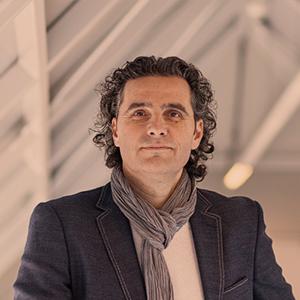
Alexandre BonvinAlexandre Bonvin (1964) studied Chemistry at Lausanne University, Switzerland and obtained his PhD at Utrecht University in the Netherlands (1993). After two post-doc periods at Yale University (USA) and the ETHZ (CH) he joined Utrecht University in 1998 where he was appointed full professor of computational structural biology in 2009. In 2006, he received a prestigious VICI grant from the Dutch Research Council. He was director of chemical education from February 2009 until February 2012, vice head of the Chemistry Department from 2010 until April 2012 and since September 2019 Scientific Director of the Bijvoet Centre for Biomolecular Research. He is participating to several EU projects including the BioExcel Center of Excellence in Biomolecular Simulations and the EGI-ACE project. His work has resulted in over 225 peer-reviewed publications. Research within the computational structural biology group focuses on the development of reliable bioinformatics and computational approaches to predict, model and dissect biomolecular interactions at atomic level. For this, bioinformatics data, structural information and available biochemical or biophysical experimental data are combined to drive the modelling process. This is implemented and further developed in the widely used HADDOCK software for the modelling of biomolecular complexes (http://bonvinlab.org/software). |
|
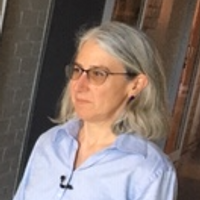
Alessandra VillaAlessandra was educated as a chemistry at the University of Milano. After a Ph.D.in quantum chemistry, she moved to Groningen University and she started to work in the field of biomolecular simulation. Then, she worked at Goethe University and at MPI for polymer science in Germany and recently at Karolinska Institute, Sweden.Her main research interest is to elucidate the molecular interactions that govern cellular processes using biomolecular simulations. She has wide experience both in combining experimental and simulation techniques and in combining molecular models (multiscale apporach) to solve biochemical and biophysical questions. A large part of her work focuses on the development of molecular models both at the atomistic and coarse grained levels to better describe how biomolecules interact. Alessandra is working for European Center of Excellence BioExcel, with focus on user-driven-development of GROMACS software package and member of the Molecular Biophysics Stockholm. She is also involved in activites for Center of Excellence for Personalised Medicine (PerMedCoE) and for the community of quantum chemistry (TREX, Targeting Real Chemical accuracy at the EXascale). |
 |
Berk HessBerk graduated for the university in Groningen in the Netherlands in 2002, where he did his PhD under the supervision of Herman Berendsen. After a post-doc at the Max-Planck institute for polymer research in Mainz (Germany), he moved to Stockholm University in 2009. Since 2011 he is employed at KTH. The center theme in his research is understanding how interactions at the molecular scale affect events at larger scale, both in macromolecules, such as proteins, as well as in wetting. A large part of his research focuses on methods for accelerating sampling, through general, parallel molecular dynamics method improvement as well as accelerated sampling of conformational transitions. All methods are freely available through the GROMACS molecular simulation package, of which Berk is a main developer since more than two decades. |
 |
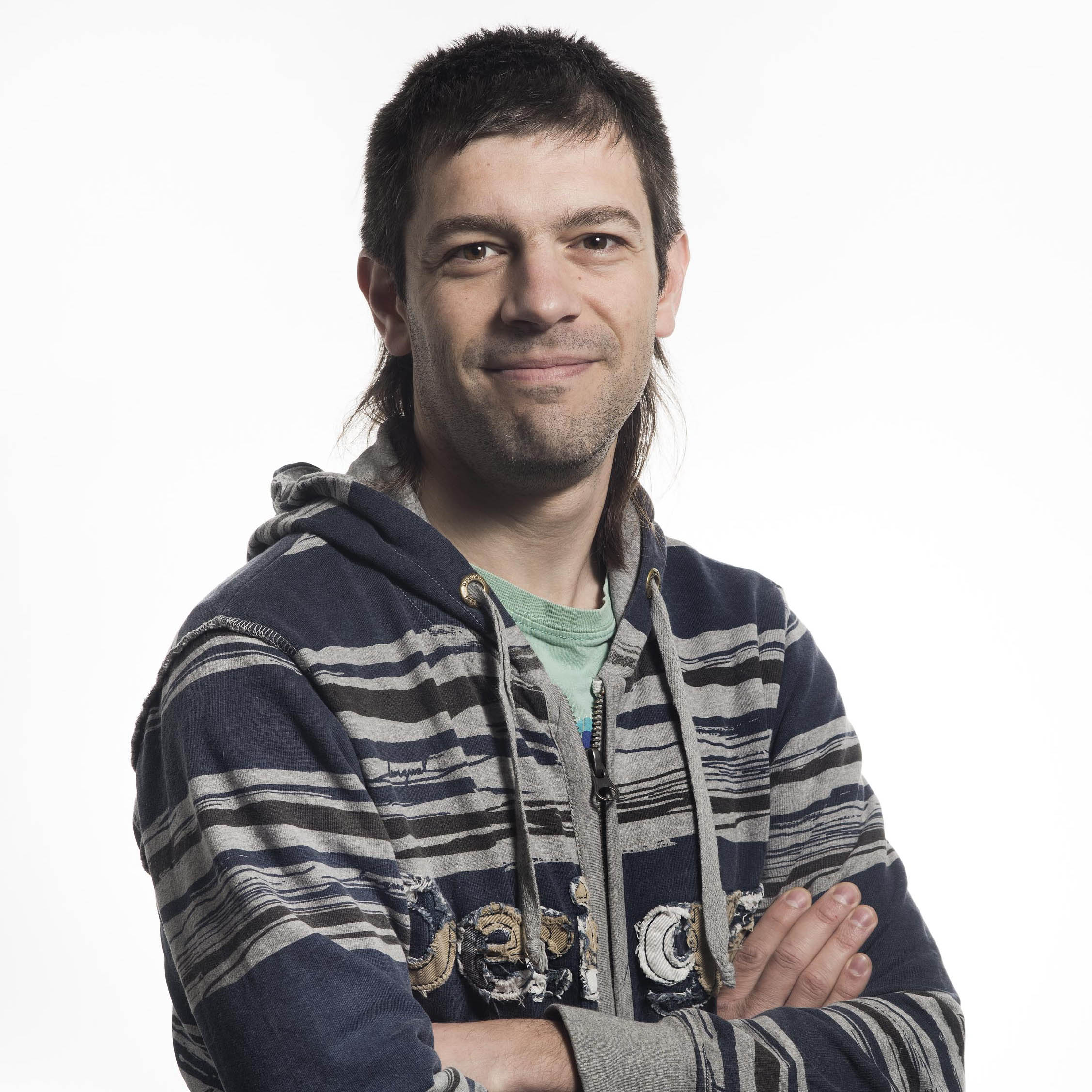
Adam HospitalAdam Hospital is a Postdoctoral fellow at the Molecular Modeling and Bioinformatics Unit (MMB) – Institute for Research in Biomedicine in Barcelona (IRB-Barcelona) and research software engineer for the Spanish National Institute of Bioinformatics (INB). From a computer science background, he jumped to the bioinformatics world and got trapped by the fascinating field of structural bioinformatics. He has been involved in scientific projects at IRB and at the Barcelona Supercomputing Center (BSC), and he is currently leading the workflows team in the BioExcel CoE. While working as a bioinformatician, he obtained his PhD in Biotechnology from the University of Barcelona with his thesis “High Throughput Computational Studies of Macromolecular Structure Flexibility”. He has developed a set of public web servers and databases related to macromolecular structure flexibility, including MDWeb, NAFlex and BigNASim. |
 |
Emiliano IppolitiEmiliano studied physics in Italy at the University of Pisa and obtained his Ph.D. in theoretical physics at the University of Trieste (2005). From 2006 to 2009 he was a postdoc at the International School for Advanced Studied (SISSA/ISAS) in Trieste and then he moved to Germany at the German Research School for Simulation Sciences as a research associate. From 2012, he is senior scientist at the Institute for Advanced Simulation (IAS) and Institute for Neuroscience and Medicine (INM) at the Jülich Research Center (Forschungszentrum Jülich). Emiliano does research in computational physics and biophysics. His current interests focus on high performance computing approaches and methodologies for systems of biological relevance, in particular classical, ab initio and multi-scale molecular dynamics techniques, including enhanced sampling ones. |
 |
Attilio VargiuM.Sc. in Physics in 2003, Ph.D. in Physics in 2008, currently Assistant Professor of Applied Physics at the Physics Department of the University of Cagliari. My main research interests are the following ones: i) development of computational protocols to improve the sampling of rare conformations of proteins and the predictive power of molecular docking and virtual screening; ii) computational investigation of the functioning and the inhibition of bacterial multidrug efflux transporters; iii) characterization and molecular rationalization of the self-assembly process of hydrogelling chiral peptides; iv) studies on molecular properties and inhibition of viral proteins by small molecules. |
|
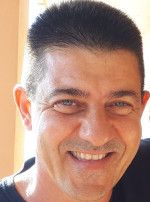
Giuliano MallociM.Sc. (Ph.D) in Physics in 1999 (2003), Assistant Professor in Physics of Matter, Physics Department, University of Cagliari. Main interests include i) set-up/development of computational protocols addressing function, mechanism, and inhibition of multidrug efflux transporters; ii) DFT calculations of vibrational, electronic and optical properties of molecules/nanostructures; iii) data collection and sharing for molecular design and applied Physics; iv) fun science experiments |
 |
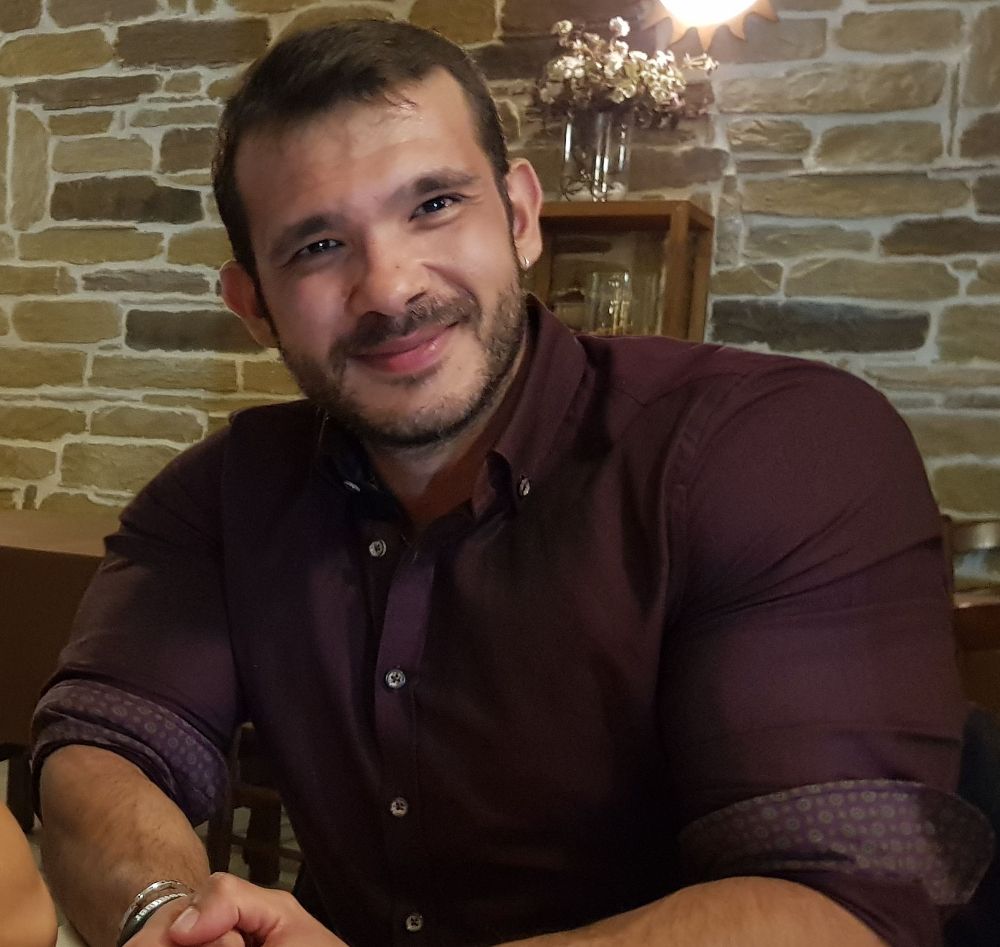
Andrea BasciuM.Sc. in Physics in 2016, Ph.D. in Physics in 2020, currently Post-Doctoral Researcher in Computational Biophysics, Physics Department, University of Cagliari. His main research topics include: (i) studying molecular recognition events by means of enhanced-sampling MD simulations, machine learning algorithms and docking calculations; (ii) the setting-up of a database of protein conformations for drug-design applications; (iii) studying the structural assembly and the functioning of bacterial multidrug efflux transporters. |
 |
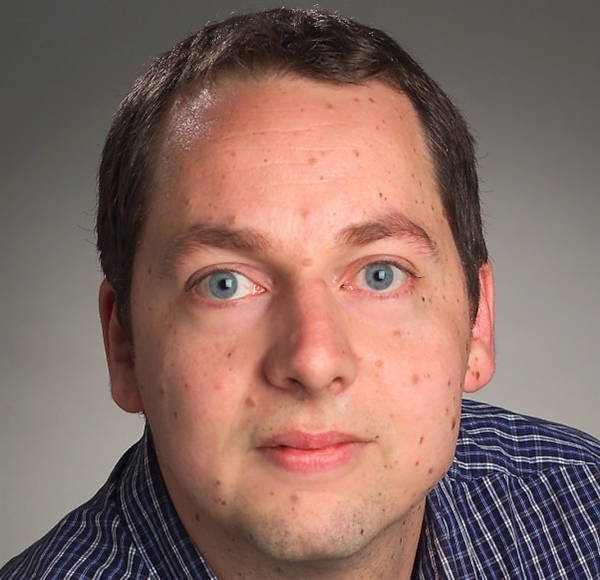
Bert de GrootComputational biomolecular dynamics group at the |
 |
Vytautas GapsysI am a project leader at the Max Planck Institute for Multidisciplinary Sciences in the Computational Biomolecular Dynamics group. My research focuses on alchemical free energy calculations: method development and implementation in the pmx package, as well as applications to the protein, nucleic acid mutations, as well as ligand modifications. |
 |