 |
PDBsum entry 3w2e

|
|
|
|
|
|

|

|

|

|
|

|
|

|
|

|
|

|
|

|
|
|
 |

|

|
|
|
|
|
|
|
|
|
|
|
|
|
|
|
|
|
|
|
|
|
|
|
|
|
|
|
|
|
|
|
|
|
|
Oxidoreductase
|
PDB id
|
|
|
|
3w2e
|
|
|
|
|
|
|
|
|
|
|
|
|
|
|

|

|

|
|
|
|
|
|
|
PDB id:
|
|
|
|
| Name: |
|
Oxidoreductase
|
|
|
Title:
|
|
Crystal structure of oxidation intermediate (20 min) of nadh- cytochrome b5 reductase from pig liver
|
|
Structure:
|
|
Nadh-cytochrome b5 reductase 3. Chain: a. Synonym: b5r, cytochrome b5 reductase, diaphorase-1. Engineered: yes
|
|
Source:
|
|
Sus scrofa. Pig. Organism_taxid: 9823. Gene: cyb5r3, dia1. Expressed in: escherichia coli. Expression_system_taxid: 562.
|
|
Resolution:
|
|
|
2.10Å
|
R-factor:
|
0.179
|
R-free:
|
0.213
|
|
|
Authors:
|
|
M.Yamada,T.Tamada,F.Matsumoto,Y.Shoyama,S.Kimura,R.Kuroki,K.Miki
|
|
Key ref:
|
|
M.Yamada
et al.
(2013).
Elucidations of the catalytic cycle of NADH-cytochrome b5 reductase by X-ray crystallography: new insights into regulation of efficient electron transfer.
J Mol Biol,
425,
4295-4306.
PubMed id:
DOI:
|
|
|
Date:
|
|
|
28-Nov-12
|
Release date:
|
17-Jul-13
|
|
|
|
|
|
|
PROCHECK
|

|
|
|
|
|
Headers
|
|
|
|
References
|
|
|
|
|
|

|
|
P83686
(NB5R3_PIG) -
NADH-cytochrome b5 reductase 3 (Fragment) from Sus scrofa
|
|
|
|
Seq:
Struc:
|
|
|
|
272 a.a.
271 a.a.
|
|

|

|

|
|
|
|
|
|
|
|
|
|
|
Key: |
 |
PfamA domain |
|
|
 |
Secondary structure |
|
 |
CATH domain |
|
|
|
|
|
|
|
|
|
|
|
|
|
Enzyme class:
|
|
E.C.1.6.2.2
- cytochrome-b5 reductase.
|
|
|
|
|
|
|
Reaction:
|
|
2 Fe(III)-[cytochrome b5] + NADH = 2 Fe(II)-[cytochrome b5] + NAD+ + H+
|
|
|
|
|
|
2
×
Fe(III)-[cytochrome b5]
|
+
|
NADH
Bound ligand (Het Group name = )
corresponds exactly
|
=
|
2
×
Fe(II)-[cytochrome b5]
|
+
|
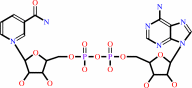 NAD(+)
|
+
|
H(+)
|
|
|
|
|
|
|
|
|
|
Cofactor:
|
|
FAD
|
|
|
|
|
|
FAD
Bound ligand (Het Group name =
FAD)
corresponds exactly
|
|
|
|
|
|
|
Molecule diagrams generated from .mol files obtained from the
KEGG ftp site
|
|
|
|
|
|
|
|
|
|
|
|
|
|
 |
|
|
|
|
|
|
| |
|
|
| |
|
DOI no:
|
J Mol Biol
425:4295-4306
(2013)
|
|
PubMed id:
|
|
|
|
|
|
| |
|
Elucidations of the catalytic cycle of NADH-cytochrome b5 reductase by X-ray crystallography: new insights into regulation of efficient electron transfer.
|
|
M.Yamada,
T.Tamada,
K.Takeda,
F.Matsumoto,
H.Ohno,
M.Kosugi,
K.Takaba,
Y.Shoyama,
S.Kimura,
R.Kuroki,
K.Miki.
|
|
|
|
|
| |
ABSTRACT
|
|
|
|
| |
|
|
NADH-Cytochrome b5 reductase (b5R), a flavoprotein consisting of NADH and flavin
adenine dinucleotide (FAD) binding domains, catalyzes electron transfer from the
two-electron carrier NADH to the one-electron carrier cytochrome b5 (Cb5). The
crystal structures of both the fully reduced form and the oxidized form of
porcine liver b5R were determined. In the reduced b5R structure determined at
1.68Å resolution, the relative configuration of the two domains was slightly
shifted in comparison with that of the oxidized form. This shift resulted in an
increase in the solvent-accessible surface area of FAD and created a new
hydrogen-bonding interaction between the N5 atom of the isoalloxazine ring of
FAD and the hydroxyl oxygen atom of Thr66, which is considered to be a key
residue in the release of a proton from the N5 atom. The isoalloxazine ring of
FAD in the reduced form is flat as in the oxidized form and stacked together
with the nicotinamide ring of NAD(+). Determination of the oxidized b5R
structure, including the hydrogen atoms, determined at 0.78Å resolution
revealed the details of a hydrogen-bonding network from the N5 atom of FAD to
His49 via Thr66. Both of the reduced and oxidized b5R structures explain how
backflow in this catalytic cycle is prevented and the transfer of electrons to
one-electron acceptors such as Cb5 is accelerated. Furthermore, crystallographic
analysis by the cryo-trapping method suggests that re-oxidation follows a
two-step mechanism. These results provide structural insights into the catalytic
cycle of b5R.
|
|
|
|
|
|
|
|
|
|
|
|
|
|
|
|
|
|
 |
 |
 |
|


 Links
Links


