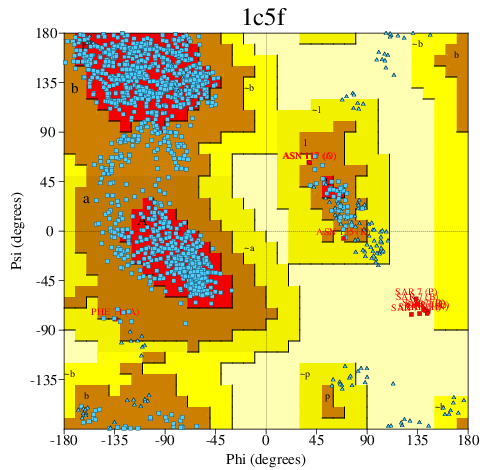
The resistance of the human parasite Brugia malayi to the antiparasitic activity
of cyclosporin A (CsA) may arise from the presence of cyclophilins with
relatively low affinity for the drug. The structure of the complex of B. malayi
cyclophilin (BmCYP-1) and CsA, with eight independent copies in the asymmetric
unit, has been determined at a resolution of 2.7 A. The low affinity of BmCYP-1
for CsA arises from incomplete preorganization of the binding site so that the
formation of a hydrogen bond between His132 of BmCYP-1 and N-methylleucine 9 of
CsA is associated with a shift in the backbone of approximately 1 A in this
region.