 |
PDBsum entry 4v0r
|
|

|
|
PDB id:
|
|
|
|
| Name: |
|
Transferase
|
|
|
Title:
|
|
Dengue virus full length ns5 complexed with gtp and sah
|
|
Structure:
|
|
Ns5 polymerase. Chain: a. Fragment: unp residues 2494-3385. Engineered: yes
|
|
Source:
|
|
Dengue virus 3. Organism_taxid: 11069. Strain: singapore strain. Expressed in: escherichia coli. Expression_system_taxid: 511693. Expression_system_variant: codon plus.
|
|
Resolution:
|
|
|
2.40Å
|
R-factor:
|
0.190
|
R-free:
|
0.237
|
|
|
Authors:
|
|
Y.Zhao,S.Soh,J.Zheng,W.W.Phoo,K.Swaminathan,T.C.Cornvik,S.P.Lim,P.- Y.Shi,J.Lescar,S.G.Vasudevan,D.Luo
|
|
Key ref:
|
|
Y.Zhao
et al.
(2015).
A crystal structure of the Dengue virus NS5 protein reveals a novel inter-domain interface essential for protein flexibility and virus replication.
Plos Pathog,
11,
e1004682.
PubMed id:
DOI:
|
|
|
Date:
|
|
|
18-Sep-14
|
Release date:
|
28-Jan-15
|
|
|
|
|
|
|
PROCHECK
|

|
|
|
|
|
Headers
|
|
|
|
References
|
|
|
|
|
|

|
|
Q5UB51
(POLG_DEN3I) -
Genome polyprotein from Dengue virus type 3 (strain Singapore/8120/1995)
|
|
|
|
Seq:
Struc:
|
|
|
|
3390 a.a.
852 a.a.*
|
|

|

|

|
|
|
|
|
|
|
|
|
|
|
Key: |
|
 |
Secondary structure |
|
 |
CATH domain |
|
|
*
PDB and UniProt seqs differ
at 16 residue positions (black
crosses)
|
|
|
|
|
|
|
|
|
|
|
|
|
Enzyme class 1:
|
|
E.C.2.1.1.56
- mRNA (guanine-N(7))-methyltransferase.
|
|
|
|
|
|
|
Reaction:
|
|
a 5'-end (5'-triphosphoguanosine)-ribonucleoside in mRNA + S-adenosyl-L- methionine = a 5'-end (N(7)-methyl 5'-triphosphoguanosine)-ribonucleoside in mRNA + S-adenosyl-L-homocysteine
|
|
|
|
|
|
5'-end (5'-triphosphoguanosine)-ribonucleoside in mRNA
|
+
|
 S-adenosyl-L- methionine
|
=
|
5'-end (N(7)-methyl 5'-triphosphoguanosine)-ribonucleoside in mRNA
|
+
|
S-adenosyl-L-homocysteine
Bound ligand (Het Group name = )
corresponds exactly
|
|
|
|
|
|
|
|
|
|
Enzyme class 2:
|
|
E.C.2.1.1.57
- methyltransferase cap1.
|
|
|
|
|
|
|
Reaction:
|
|
a 5'-end (N(7)-methyl 5'-triphosphoguanosine)-ribonucleoside in mRNA + S-adenosyl-L-methionine = a 5'-end (N(7)-methyl 5'-triphosphoguanosine)- (2'-O-methyl-ribonucleoside) in mRNA + S-adenosyl-L-homocysteine + H+
|
|
|
|
|
|
5'-end (N(7)-methyl 5'-triphosphoguanosine)-ribonucleoside in mRNA
|
+
|
S-adenosyl-L-methionine
|
=
|
5'-end (N(7)-methyl 5'-triphosphoguanosine)- (2'-O-methyl-ribonucleoside) in mRNA
|
+
|
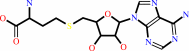 S-adenosyl-L-homocysteine
|
+
|
H(+)
Bound ligand (Het Group name = )
corresponds exactly
|
|
|
|
|
|
|
|
|
|
Enzyme class 3:
|
|
E.C.2.7.7.48
- RNA-directed Rna polymerase.
|
|
|
|
|
|
|
Reaction:
|
|
RNA(n) + a ribonucleoside 5'-triphosphate = RNA(n+1) + diphosphate
|
|
|
|
|
|
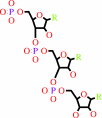 RNA(n)
|
+
|
ribonucleoside 5'-triphosphate
|
=
|
RNA(n+1)
|
+
|
 diphosphate
|
|
|
|
|
|
|
|
|
|
Enzyme class 4:
|
|
E.C.3.4.21.91
- flavivirin.
|
|
|
|
|
|
|
Reaction:
|
|
Selective hydrolysis of Xaa-Xaa-|-Xbb bonds in which each of the Xaa can be either Arg or Lys and Xbb can be either Ser or Ala.
|
|
|
|
|
|
Enzyme class 5:
|
|
E.C.3.6.1.15
- nucleoside-triphosphate phosphatase.
|
|
|
|
|
|
|
Reaction:
|
|
a ribonucleoside 5'-triphosphate + H2O = a ribonucleoside 5'-diphosphate + phosphate + H+
|
|
|
|
|
|
ribonucleoside 5'-triphosphate
|
+
|
H2O
|
=
|
ribonucleoside 5'-diphosphate
|
+
|
 phosphate
|
+
|
H(+)
|
|
|
|
|
|
|
|
|
|
Enzyme class 6:
|
|
E.C.3.6.4.13
- Rna helicase.
|
|
|
|
|
|
|
Reaction:
|
|
ATP + H2O = ADP + phosphate + H+
|
|
|
|
|
|
ATP
Bound ligand (Het Group name = )
matches with 96.88% similarity
|
+
|
H2O
|
=
|
 ADP
ADP
|
+
|
phosphate
|
+
|
H(+)
|
|
|
|
|
|
|
|
|
|
|
|
|
Note, where more than one E.C. class is given (as above), each may
correspond to a different protein domain or, in the case of polyprotein
precursors, to a different mature protein.
|
|
|
|
Molecule diagrams generated from .mol files obtained from the
KEGG ftp site
|
|
|
|
|
|
|
|
|
|
|
|
|
|
 |
|
|
|
|
|
|
| |
|
|
| |
|
DOI no:
|
Plos Pathog
11:e1004682
(2015)
|
|
PubMed id:
|
|
|
|
|
|
| |
|
A crystal structure of the Dengue virus NS5 protein reveals a novel inter-domain interface essential for protein flexibility and virus replication.
|
|
Y.Zhao,
T.S.Soh,
J.Zheng,
K.W.Chan,
W.W.Phoo,
C.C.Lee,
M.Y.Tay,
K.Swaminathan,
T.C.Cornvik,
S.P.Lim,
P.Y.Shi,
J.Lescar,
S.G.Vasudevan,
D.Luo.
|
|
|
|
|
| |
ABSTRACT
|
|
|
|
| |
|
|
Flavivirus RNA replication occurs within a replication complex (RC) that
assembles on ER membranes and comprises both non-structural (NS) viral proteins
and host cofactors. As the largest protein component within the flavivirus RC,
NS5 plays key enzymatic roles through its N-terminal methyltransferase (MTase)
and C-terminal RNA-dependent-RNA polymerase (RdRp) domains, and constitutes a
major target for antivirals. We determined a crystal structure of the
full-length NS5 protein from Dengue virus serotype 3 (DENV3) at a resolution of
2.3 Å in the presence of bound SAH and GTP. Although the overall molecular
shape of NS5 from DENV3 resembles that of NS5 from Japanese Encephalitis Virus
(JEV), the relative orientation between the MTase and RdRp domains differs
between the two structures, providing direct evidence for the existence of a set
of discrete stable molecular conformations that may be required for its
function. While the inter-domain region is mostly disordered in NS5 from JEV,
the NS5 structure from DENV3 reveals a well-ordered linker region comprising a
short 310 helix that may act as a swivel. Solution Hydrogen/Deuterium Exchange
Mass Spectrometry (HDX-MS) analysis reveals an increased mobility of the thumb
subdomain of RdRp in the context of the full length NS5 protein which correlates
well with the analysis of the crystallographic temperature factors.
Site-directed mutagenesis targeting the mostly polar interface between the MTase
and RdRp domains identified several evolutionarily conserved residues that are
important for viral replication, suggesting that inter-domain cross-talk in NS5
regulates virus replication. Collectively, a picture for the molecular origin of
NS5 flexibility is emerging with profound implications for flavivirus
replication and for the development of therapeutics targeting NS5.
|
|
|
|
|
|
|
|
|
|
|
|
|
|
|
|
|
|
 |
 |
 |
|


 Links
Links


