 |
PDBsum entry 4phc
|
|

|
|
PDB id:
|
|
|
|
| Name: |
|
Ligase
|
|
|
Title:
|
|
Crystal structure of a human cytosolic histidyl-tRNA synthetase, histidine-bound
|
|
Structure:
|
|
Histidine--tRNA ligase, cytoplasmic. Chain: a, b, c, d. Synonym: histidyl-tRNA synthetase,hisrs. Engineered: yes
|
|
Source:
|
|
Homo sapiens. Human. Organism_taxid: 9606. Gene: hars, hrs. Expressed in: escherichia coli. Expression_system_taxid: 469008.
|
|
Resolution:
|
|
|
2.84Å
|
R-factor:
|
0.202
|
R-free:
|
0.238
|
|
|
Authors:
|
|
C.Y.Koh,A.B.Wetzel,W.J.De Van Der Schueren,W.G.J.Hol
|
|
Key ref:
|
|
C.Y.Koh
et al.
(2014).
Comparison of histidine recognition in human and trypanosomatid histidyl-tRNA synthetases.
Biochimie,
106,
111-120.
PubMed id:
DOI:
|
|
|
Date:
|
|
|
06-May-14
|
Release date:
|
27-Aug-14
|
|
|
|
|
|
|
PROCHECK
|

|
|
|
|
|
Headers
|
|
|
|
References
|
|
|
|
|
|

|
|
P12081
(SYHC_HUMAN) -
Histidine--tRNA ligase, cytoplasmic from Homo sapiens
|
|
|
|
Seq:
Struc:
|
|
|
|
509 a.a.
444 a.a.
|
|

|

|

|
|
|
|
|
|
|
|
|
|
|
Key: |
 |
PfamA domain |
|
|
 |
Secondary structure |
|
 |
CATH domain |
|
|
|
|
|
|
|
|
|
|
|
|
|
Enzyme class:
|
|
E.C.6.1.1.21
- histidine--tRNA ligase.
|
|
|
|
|
|
|
Reaction:
|
|
tRNA(His) + L-histidine + ATP = L-histidyl-tRNA(His) + AMP + diphosphate + H+
|
|
|
|
|
|
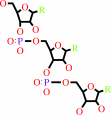 tRNA(His)
|
+
|
L-histidine
Bound ligand (Het Group name = )
corresponds exactly
|
+
|
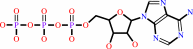 ATP
ATP
|
=
|
 L-histidyl-tRNA(His)
|
+
|
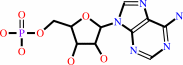 AMP
AMP
|
+
|
 diphosphate
|
+
|
H(+)
|
|
|
|
|
|
|
|
|
|
|
|
|
Molecule diagrams generated from .mol files obtained from the
KEGG ftp site
|
|
|
|
|
|
|
|
|
|
|
|
|
|
 |
|
|
|
|
|
|
| |
|
|
| |
|
DOI no:
|
Biochimie
106:111-120
(2014)
|
|
PubMed id:
|
|
|
|
|
|
| |
|
Comparison of histidine recognition in human and trypanosomatid histidyl-tRNA synthetases.
|
|
C.Y.Koh,
A.B.Wetzel,
W.J.de van der Schueren,
W.G.Hol.
|
|
|
|
|
| |
ABSTRACT
|
|
|
|
| |
|
|
As part of a project aimed at obtaining selective inhibitors and drug-like
compounds targeting tRNA synthetases from trypanosomatids, we have elucidated
the crystal structure of human cytosolic histidyl-tRNA synthetase (Hs-cHisRS) in
complex with histidine in order to be able to compare human and parasite
enzymes. The resultant structure of Hs-cHisRS•His represents the
substrate-bound state (H-state) of the enzyme. It provides an interesting
opportunity to compare with ligand-free and imidazole-bound structures Hs-cHisRS
published recently, both of which represent the ligand-free state (F-state) of
the enzyme. The H-state Hs-cHisRS undergoes conformational changes in active
site residues and several conserved motif of HisRS, compared to F-state
structures. The histidine forms eight hydrogen bonds with HisRS of which six
engage the amino and carboxylate groups of this amino acid. The availability of
published imidazole-bound structure provides a unique opportunity to dissect the
structural roles of individual chemical groups of histidine. The analysis
revealed the importance of the amino and carboxylate groups, of the histidine in
leading to these dramatic conformational changes of the H-state. Further,
comparison with previously published trypanosomatid HisRS structures reveals a
pocket in the F-state of the parasite enzyme that may provide opportunities for
developing specific inhibitors of Trypanosoma brucei HisRS.
|
|
|
|
|
|
|
|
|
|
|
|
|
|
|
|
|
|
 |
 |
 |
|


 Links
Links


