 |
PDBsum entry 4lwc

|
|
|
|
|
|

|

|

|

|
|

|
|

|
|

|
|
|
 |

|

|
|
|
|
|
|
|
|
|
|
|
|
|
|
|
|
|
|
|
|
|
|
|
|
|
|
|
|
|
|
|
|
DNA binding protein/inhibitor
|
PDB id
|
|
|
|
4lwc
|
|
|
|
|
|
|
|
|
|
|
|
|
|
|

|

|

|
|
|
|
|
|
|
PDB id:
|
|
|
|
| Name: |
|
DNA binding protein/inhibitor
|
|
|
Title:
|
|
Fragment-based discovery of a potent inhibitor of replication protein a protein-protein interactions
|
|
Structure:
|
|
Replication protein a 70 kda DNA-binding subunit. Chain: a. Fragment: rpa70n (unp residues 1-120). Synonym: rp-a p70, replication factor a protein 1, rf-a protein 1, single-stranded DNA-binding protein, replication protein a 70 kda DNA-binding subunit, n-terminally processed. Engineered: yes. Mutation: yes
|
|
Source:
|
|
Homo sapiens. Human. Organism_taxid: 9606. Gene: rpa1, repa1, rpa70. Expressed in: escherichia coli. Expression_system_taxid: 469008.
|
|
Resolution:
|
|
|
1.61Å
|
R-factor:
|
0.176
|
R-free:
|
0.215
|
|
|
Authors:
|
|
M.D.Feldkamp,A.O.Frank,J.P.Kennedy,A.G.Waterson,E.O.Olejnczak, N.F.Pelz,J.D.Patrone,B.Vangamudi,D.V.Camper,O.W.Rossanese,S.W.Fesik, W.J.Chazin
|
|
Key ref:
|
|
A.O.Frank
et al.
(2013).
Discovery of a potent inhibitor of replication protein a protein-protein interactions using a fragment-linking approach.
J Med Chem,
56,
9242-9250.
PubMed id:
DOI:
|
|
|
Date:
|
|
|
26-Jul-13
|
Release date:
|
11-Dec-13
|
|
|
|
|
|
|
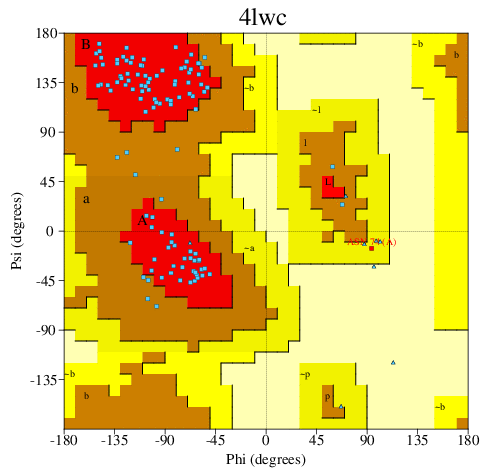
PROCHECK
|
|
|
|
|
|
Headers
|
|
|
|
References
|
|
|
|
|
|

|
|
P27694
(RFA1_HUMAN) -
Replication protein A 70 kDa DNA-binding subunit from Homo sapiens
|
|
|
|
Seq:
Struc:
|
|
|
|
616 a.a.
123 a.a.*
|
|

|

|
|
|
|
|
|
|
|
|
|
|
|
Key: |
 |
PfamA domain |
|
|
 |
Secondary structure |
|
 |
CATH domain |
|
|
*
PDB and UniProt seqs differ
at 1 residue position (black
cross)
|
|
|
|
|
|
|
|
|
|
|
|
|
|
|
|
|
 |
|
|
|
|
|
|
| |
|
DOI no:
|
J Med Chem
56:9242-9250
(2013)
|
|
PubMed id:
|
|
|
|
|
|
| |
|
Discovery of a potent inhibitor of replication protein a protein-protein interactions using a fragment-linking approach.
|
|
A.O.Frank,
M.D.Feldkamp,
J.P.Kennedy,
A.G.Waterson,
N.F.Pelz,
J.D.Patrone,
B.Vangamudi,
D.V.Camper,
O.W.Rossanese,
W.J.Chazin,
S.W.Fesik.
|
|
|
|
|
| |
ABSTRACT
|
|
|
|
| |
|
|
Replication protein A (RPA), the major eukaryotic single-stranded DNA
(ssDNA)-binding protein, is involved in nearly all cellular DNA transactions.
The RPA N-terminal domain (RPA70N) is a recruitment site for proteins involved
in DNA-damage response and repair. Selective inhibition of these protein-protein
interactions has the potential to inhibit the DNA-damage response and to
sensitize cancer cells to DNA-damaging agents without affecting other functions
of RPA. To discover a potent, selective inhibitor of the RPA70N protein-protein
interactions to test this hypothesis, we used NMR spectroscopy to identify
fragment hits that bind to two adjacent sites in the basic cleft of RPA70N.
High-resolution X-ray crystal structures of RPA70N-ligand complexes revealed how
these fragments bind to RPA and guided the design of linked compounds that
simultaneously occupy both sites. We have synthesized linked molecules that bind
to RPA70N with submicromolar affinity and minimal disruption of RPA's
interaction with ssDNA.
|
|
|
|
|
|
|
|
|
|
|
|
|
|
|
|
|
|
 |
 |
 |
|


 Links
Links


