 |
PDBsum entry 4l31

|
|
|
|
|
|

|

|

|

|
|

|
|

|
|

|
|

|
|

|
|

|
|

|
|
|
 |

|

|
|
|
|
|
|
|
|
|
|
|
|
|
|
|
|
|
|
|
|
|
|
|
|
|
|
|
|
|
|
|
|
|
|
|
|
Transferase/transferase inhibitor
|
PDB id
|
|
|
|
4l31
|
|
|
|
|
|
|
|
|
|
|
|
|
|
|

|

|

|
|
|
|
|
|
|
PDB id:
|
|
|
|
| Name: |
|
Transferase/transferase inhibitor
|
|
|
Title:
|
|
Tankyrase 2 in complex with methyl 4-(4-oxochromen-2-yl)benzoate
|
|
Structure:
|
|
Tankyrase-2. Chain: a, b. Fragment: c-terminal fragment, unp residues 946-1113. Synonym: tank2, adp-ribosyltransferase diphtheria toxin-like 6, artd6, poly [adp-ribose] polymerase 5b, tnks-2, trf1-interacting ankyrin-related adp-ribose polymerase 2, tankyrase ii, tankyrase-like protein, tankyrase-related protein. Engineered: yes. Tankyrase-2.
|
|
Source:
|
|
Homo sapiens. Human. Organism_taxid: 9606. Gene: tnks2, parp5b, tank2, tnkl. Expressed in: escherichia coli. Expression_system_taxid: 469008.
|
|
Resolution:
|
|
|
2.00Å
|
R-factor:
|
0.171
|
R-free:
|
0.216
|
|
|
Authors:
|
|
M.Narwal,T.Haikarainen,L.Lehtio
|
|
Key ref:
|
|
M.Narwal
et al.
(2013).
Discovery of tankyrase inhibiting flavones with increased potency and isoenzyme selectivity.
J Med Chem,
56,
7880-7889.
PubMed id:
DOI:
|
|
|
Date:
|
|
|
05-Jun-13
|
Release date:
|
30-Oct-13
|
|
|
|
|
|
|
PROCHECK
|

|
|
|
|
|
Headers
|
|
|
|
References
|
|
|
|
|
|
|
|
|
|
|
|
Enzyme class 2:
|
|
Chains A, C, B, D:
E.C.2.4.2.-
- ?????
|
|
|
|
|
|
|
Enzyme class 3:
|
|
Chains A, C, B, D:
E.C.2.4.2.30
- NAD(+) ADP-ribosyltransferase.
|
|
|
|
|
|
|
Pathway:
|
|
|
|
|
|
|
|
Reaction:
|
|
NAD+ + (ADP-D-ribosyl)n-acceptor = nicotinamide + (ADP-D- ribosyl)n+1-acceptor + H+
|
|
|
|
|
|
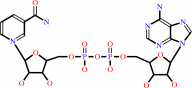 NAD(+)
|
+
|
(ADP-D-ribosyl)n-acceptor
|
=
|
 nicotinamide
|
+
|
(ADP-D- ribosyl)n+1-acceptor
|
+
|
H(+)
|
|
|
|
|
|
|
|
|
|
|
|
|
Note, where more than one E.C. class is given (as above), each may
correspond to a different protein domain or, in the case of polyprotein
precursors, to a different mature protein.
|
|
|
|
Molecule diagrams generated from .mol files obtained from the
KEGG ftp site
|
|
|
|
|
|
|
|
|
|
|
|
|
|
 |
|
|
|
|
|
|
| |
|
|
| |
|
DOI no:
|
J Med Chem
56:7880-7889
(2013)
|
|
PubMed id:
|
|
|
|
|
|
| |
|
Discovery of tankyrase inhibiting flavones with increased potency and isoenzyme selectivity.
|
|
M.Narwal,
J.Koivunen,
T.Haikarainen,
E.Obaji,
O.E.Legala,
H.Venkannagari,
P.Joensuu,
T.Pihlajaniemi,
L.Lehtiö.
|
|
|
|
|
| |
ABSTRACT
|
|
|
|
| |
|
|
Tankyrases are ADP-ribosyltransferases that play key roles in various cellular
pathways, including the regulation of cell proliferation, and thus, they are
promising drug targets for the treatment of cancer. Flavones have been shown to
inhibit tankyrases and we report here the discovery of more potent and selective
flavone derivatives. Commercially available flavones with single substitutions
were used for structure-activity relationship studies, and cocrystal structures
of the 18 hit compounds were analyzed to explain their potency and selectivity.
The most potent inhibitors were also tested in a cell-based assay, which
demonstrated that they effectively antagonize Wnt signaling. To assess
selectivity, they were further tested against a panel of homologous human
ADP-ribosyltransferases. The most effective compound, 22 (MN-64), showed 6 nM
potency against tankyrase 1, isoenzyme selectivity, and Wnt signaling
inhibition. This work forms a basis for rational development of flavones as
tankyrase inhibitors and guides the development of other structurally related
inhibitors.
|
|
|
|
|
|
|
|
|
|
|
|
|
|
|
|
|
|
 |
 |
 |
|
|


 Links
Links


