 |
PDBsum entry 3jwz

|
|
|
|
|
|

|

|

|

|
|

|
|

|
|

|
|

|
|

|
|

|
|

|
|
|
 |

|

|
|
|
|
|
|
|
|
|
|
|
|
|
|
|
|
|
|
|
|
|
|
|
|
|
|
|
|
|
|
|
|
|
|
|
|
Oxidoreductase
|
PDB id
|
|
|
|
3jwz
|
|
|
|
|
|
|
|
|
|
|
|
|
|
|

|

|

|
|
|
|
|
|
|
|
 |
Contents |
 |
|
|
|
|
|
|
|
|
|
|
|
|
|
|
* Residue conservation analysis
|
|
|
|
|
|
PDB id:
|
|
|
|
| Name: |
|
Oxidoreductase
|
|
|
Title:
|
|
Structure of endothelial nitric oxide synthase heme domain complexed with n1-[(3' s,4' r)-4'-((6"-amino-4"-methylpyridin-2"-yl)methyl) pyrrolidin-3'-yl]-n2-(3'-fluorophenethyl)ethane-1,2-diamine tetrahydrochloride
|
|
Structure:
|
|
Nitric oxide synthase, endothelial. Chain: a, b. Fragment: residues 39-482. Synonym: endothelial nos, enos, ec-nos, nos type iii, nosiii, constitutive nos, cnos. Engineered: yes
|
|
Source:
|
|
Bos taurus. Bovine. Organism_taxid: 9913. Gene: nos3. Expressed in: escherichia coli. Expression_system_taxid: 562.
|
|
Resolution:
|
|
|
2.40Å
|
R-factor:
|
0.174
|
R-free:
|
0.228
|
|
|
Authors:
|
|
S.L.Delker,H.Li,T.L.Poulos
|
|
Key ref:
|
|
S.L.Delker
et al.
(2010).
Unexpected binding modes of nitric oxide synthase inhibitors effective in the prevention of a cerebral palsy phenotype in an animal model.
J Am Chem Soc,
132,
5437-5442.
PubMed id:
|
|
|
Date:
|
|
|
18-Sep-09
|
Release date:
|
05-May-10
|
|
|
|
|
|
|
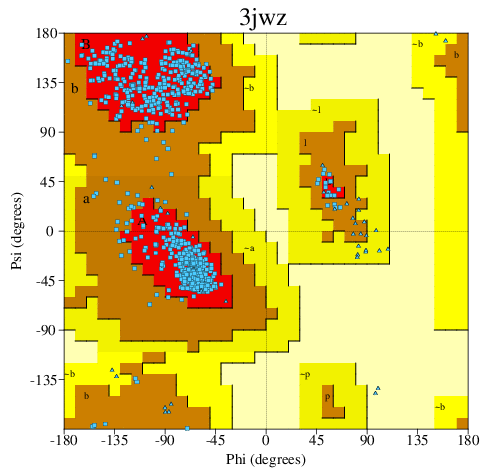
PROCHECK
|
|
|
|
|
|
Headers
|
|
|
|
References
|
|
|
|
|
|

|
|
P29473
(NOS3_BOVIN) -
Nitric oxide synthase 3 from Bos taurus
|
|
|
|
Seq:
Struc:
|
|
|
|
1205 a.a.
405 a.a.*
|
|

|

|
|
|
|
|
|
|
|
|
|
|
|
Key: |
 |
PfamA domain |
|
|
 |
Secondary structure |
|
 |
CATH domain |
|
|
*
PDB and UniProt seqs differ
at 1 residue position (black
cross)
|
|
|
|
|
|
|
|
|
|
|
|
|
Enzyme class:
|
|
E.C.1.14.13.39
- nitric-oxide synthase (NADPH).
|
|
|
|
|
|
|
Reaction:
|
|
2 L-arginine + 3 NADPH + 4 O2 + H+ = 2 L-citrulline + 2 nitric oxide + 3 NADP+ + 4 H2O
|
|
|
|
|
|
 2
×
L-arginine
2
×
L-arginine
|
+
|
 3
×
NADPH
3
×
NADPH
|
+
|
 4
×
O2
4
×
O2
|
+
|
H(+)
|
=
|
 2
×
L-citrulline
2
×
L-citrulline
|
+
|
 2
×
nitric oxide
2
×
nitric oxide
|
+
|
 3
×
NADP(+)
3
×
NADP(+)
|
+
|
4
×
H2O
|
|
|
|
|
|
|
|
|
|
|
|
|
Molecule diagrams generated from .mol files obtained from the
KEGG ftp site
|
|
|
|
|
|
|
|
|
|
|
|
|
|
 |
|
|
|
|
|
|
| |
|
|
| |
|
|
J Am Chem Soc
132:5437-5442
(2010)
|
|
PubMed id:
|
|
|
|
|
|
| |
|
Unexpected binding modes of nitric oxide synthase inhibitors effective in the prevention of a cerebral palsy phenotype in an animal model.
|
|
S.L.Delker,
H.Ji,
H.Li,
J.Jamal,
J.Fang,
F.Xue,
R.B.Silverman,
T.L.Poulos.
|
|
|
|
|
| |
ABSTRACT
|
|
|
|
| |
|
|
Selective inhibition of the neuronal isoform of nitric oxide synthase NOS (nNOS)
has been shown to prevent brain injury and is important for the treatment of
various neurodegenerative disorders. However, given the high active site
conservation among all three NOS isoforms, the design of selective inhibitors is
an extremely challenging problem. Here we present the structural basis for why
novel and potent nNOS inhibitors exhibit the highest level of selectivity over
eNOS reported so far (approximately 3,800-fold). By using a combination of
crystallography, computational methods, and site-directed mutagenesis, we found
that inhibitor chirality and an unanticipated structural change of the target
enzyme control both the orientation and selectivity of these novel nNOS
inhibitors. A new hot spot generated as a result of enzyme elasticity provides
important information for the future fragment-based design of selective NOS
inhibitors.
|
|
|
|
|
|
|
|
|
|
|
|
|
|
|
|
|
|
 |
 |
 |
|


 Links
Links


