See all EMBL-EBI jobs
We continue to recruit internationally and we are now interviewing both remotely and in-person. Explore our latest vacancies and sign up for job alerts.
A champion of gender equality, Elspeth Bruford shares what being a good team leader is all about.
Elspeth Bruford was acknowledged as one of three 2018 champions of gender equality in the Best Practice in Supporting Women in Science awards, which took place on the Wellcome Genome Campus. Multiple team members nominated Elspeth sharing powerful personal stories about how she has supported her team over the years. Here, we catch up with Elspeth to find out more about her work and her management style.
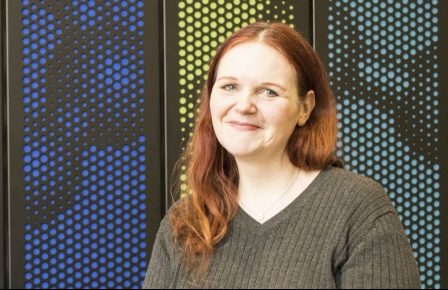
“You’ve got to be flexible to the needs of your team if you want people to be happy.”
I lead the HUGO Gene Nomenclature Committee (HGNC) at EMBL-EBI – a project that assigns standardised symbols and names to all human genes. We’ve also recently expanded our efforts to naming genes in some well-studied vertebrate genomes. Naming a gene is just as important as naming a person because it aids communication and avoids confusion. Using HGNC, gene names ensures that when researchers talk about a specific gene, everyone else knows what gene they are referring to.
I was always intrigued by the fact that there was so much more still to discover about how our world works. Human disease was particularly interesting to me at school, but medicine didn’t appeal, so I went on to study genetics and biochemistry at Aberdeen University. I then got my PhD in human genetics at the MRC in Edinburgh, where I studied eye disorders.
For a few years after my PhD, my career took a slight diversion through publishing. It started as a temp job, but I really enjoyed it so I stayed on for a while. At one point, I seriously considered going into science publishing, but decided against it. I didn’t just want to look at other people’s results, I wanted to analyse the data myself.
One of the things I find extremely interesting is analysing the difference between gene families in humans and other vertebrates. For many of these genomes, researchers have identified the really “easy” genes – the ones that have human orthologs. But it’s the more difficult ones to analyse, the ones for which we need manual curation, that will unveil the differences between species. It’s also something that we’re not aware of anybody else in the world doing in a concerted manner outside of EMBL-EBI.
On a different front, we’re also involved in the Transforming Genetic Medicine Initiative, which focuses on making genetic information usable in a clinical setting to help diagnose and treat disease. Ultimately that’s one of the key reasons we are studying the human genome.
The first person who comes to mind is Victor McKusick, widely known as the “father of medical genetics”, and one of the first people to propose mapping the human genome. He published the original Mendelian Inheritance in Man, a continuously updated catalogue of human genes and genetic disorders, whose online version, OMIM, is still widely used by researchers and clinicians half a century later!
It’s important to understand that everyone’s family circumstances are different, so you have to be flexible to the needs of your team if you want them to be happy. People work best when they’re happy so, as a team leader, you should do whatever you can to accommodate their needs. It may take more time, but it will definitely be worth it.
For example, we have some staff that work part time or from home a few days a week, so we use Slack, Google Hangouts and other tools to keep in touch and make sure they know what’s happening in the office and vice versa. It’s important to make these systems available to everyone in the team.
Flexible working is great, but there are still lots of things to improve. For example, science could make it easier for single parents to travel to meetings and conferences – speaking from personal experience, right now this is still very challenging.
I was very touched that my team thought of nominating me. I guess it showed me that I’ve been doing something right and that they’re happy, which is always an encouraging sign.
Check out our vacancies page or sign up for a job alert.
We continue to recruit internationally and we are now interviewing both remotely and in-person. Explore our latest vacancies and sign up for job alerts.

At EMBL-EBI you can use your energy and skills to make a valuable contribution to science and technology and be part of a new generation: digital science.
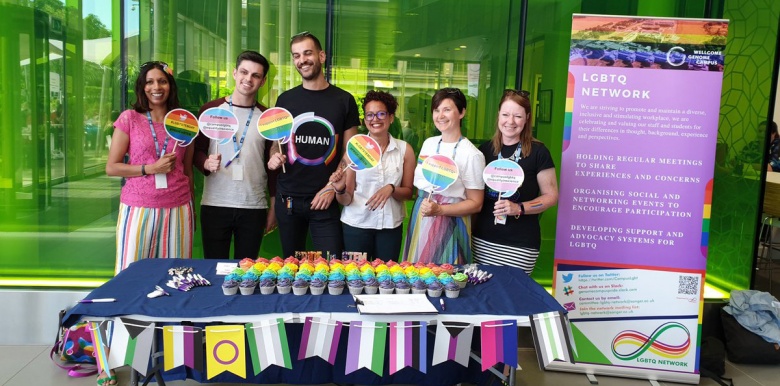
Behind its outstanding technical infrastructure and exceptional life science expertise, EMBL-EBI is a medium-sized organisation with a small-company feel.