Carboxymethylenebutenolidase
Dienelactone hydrolase (DLHase) catalyses the hydrolysis of dienelactone to maleylacetate. This reaction is part of the beta-ketoadipate pathway used in bacteria and fungi to degrade aromatic compounds. Bacteria which utilise this pathway play an important role in the detoxification of many toxic halogenated aromatic compounds produced in industry. DLHase is a member of the alpha/beta hydrolase superfamily, although it does not possess a Ser-Hys-Asp catalytic triad and instead uses a triad of Cys-His-Asp.
Reference Protein and Structure
- Sequence
-
P0A115
 (3.1.1.45)
 (Sequence Homologues)
(PDB Homologues)
(Sequence Homologues)
(PDB Homologues)
- Biological species
-
Pseudomonas knackmussii B13 (Bacteria)
- PDB
-
1din
- DIENELACTONE HYDROLASE AT 2.8 ANGSTROMS
(1.8 Å)



- Catalytic CATH Domains
-
3.40.50.1820
 (see all for 1din)
Enzyme Reaction (EC:3.1.1.45)


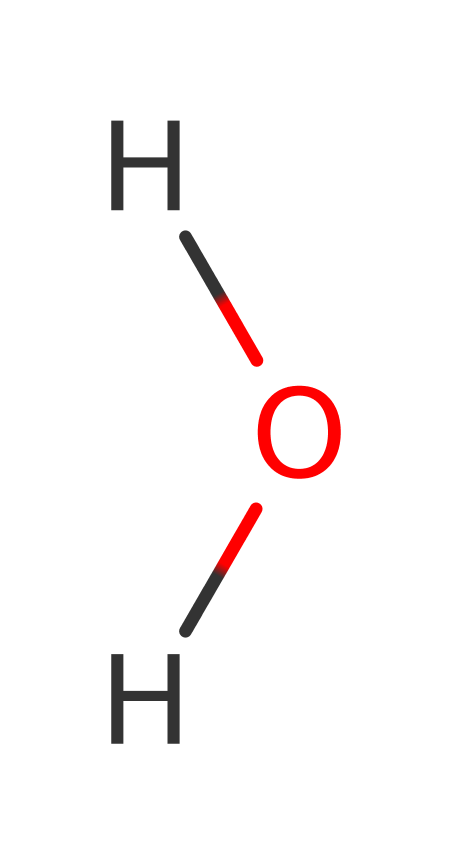

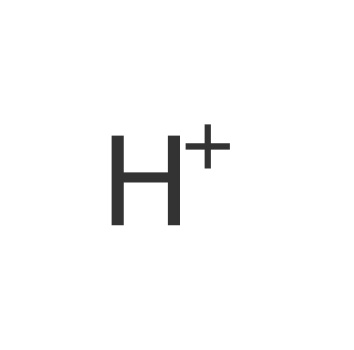


Enzyme Mechanism
Introduction
DLHase uses a Cys-His-Asp catalytic triad. The acyl carbon of dienelactone is attacked by the nucleophilic Cys123 to form the first enzyme-substrate tetrahedral intermediate. This collapses, resulting in ring cleavage and expulsion of the heterocyclic oxygen to give an enolate intermediate. The enolate is protonated to give an acyl intermediate. The enzyme is deacylated by hydrolytic attack and general base catalysis, leading to release of the product.
Catalytic Residues Roles
| UniProt | PDB* (1din) | ||
| Asp171 | Asp171A | The negatively charged side chain is important in stabilising the positive charge of His202, facilitating the activation of the catalytic nucleophile Cys123. | electrostatic stabiliser |
| His202 | His202A | The imidazole group is implicated in activating Cys123 to form a thiolate, increasing its nucleophilic character. The residue's positive charge is stabilised through interactions with Asp171. | electrostatic stabiliser |
| Cys123 | Cys123A | The residue is stabilised in the thiolate form through the formation of a salt linkage with His202. The thiolate acts as a nucleophile towards the substrate lactone group, forming the first enzyme-substrate tetrahedral intermediate. The resulting substrate-enzyme acyl intermediate is then hydrolysed, giving maleylacetate and regenerating the active site. | electrostatic stabiliser |
| Leu124 (main-N), Ile37 (main-N) | Leu124A (main-N), Ile37A (main-N) | The residue's backbone forms an oxyanion hole which stabilises the negatively charged oxyanion intermediates and the transition states associated with them. | electrostatic stabiliser |
| Tyr85 | Tyr85A | Thought to be involved in intermediate stabilisation, either via pi-pi interactions with the substrate or via hydrogen bonding to the enolate formed. | electrostatic stabiliser |
| Glu36 | Glu36A | In the enzyme with no substrate bound, E36 stabilises the neutral thol group. Upon substrate binding, the active site undergoes a significant rearrangement that results in the thiol proton of the C123 is exposed to a very repulsive electropositive field, allowing E36 to abstract the proton resulting in the formation of a thiolate anion which can be stabilized by the positive charge on H202. | proton shuttle (general acid/base) |
Chemical Components
References
- Walker I et al. (2012), Chembiochem, 13, 1645-1651. Substrate-Induced Conformational Change and Isomerase Activity of Dienelactone Hydrolase and its Site-Specific Mutants. DOI:10.1002/cbic.201200232. PMID:22761053.
- Kim HK et al. (2005), Acta Crystallogr D Biol Crystallogr, 61, 920-931. Following directed evolution with crystallography: structural changes observed in changing the substrate specificity of dienelactone hydrolase. DOI:10.1107/s0907444905009042. PMID:15983415.
- Robinson A et al. (2000), Acta Crystallogr D Biol Crystallogr, 56, 1376-1384. Structure of the C123S mutant of dienelactone hydrolase (DLH) bound with the PMS moiety of the protease inhibitor phenylmethylsulfonyl fluoride (PMSF). PMID:11053834.
- Brückmann M et al. (1998), J Bacteriol, 180, 400-402. Detoxification of protoanemonin by dienelactone hydrolase. PMID:9440530.
- Beveridge AJ et al. (1995), Protein Eng Des Sel, 8, 135-142. A theoretical study of substrate-induced activation of dienelactone hydrolase. DOI:10.1093/protein/8.2.135.
- Cheah E et al. (1993), Proteins, 16, 64-78. Catalysis by dienelactone hydrolase: A variation on the protease mechanism. DOI:10.1002/prot.340160108. PMID:8497485.
- Schlömann M et al. (1993), J Bacteriol, 175, 2994-3001. Dienelactone hydrolase from Pseudomonas cepacia. PMID:7684040.
- Pathak D et al. (1991), Proteins, 9, 267-279. Thiol protease-like active site found in the enzyme dienelactone hydrolase: Localization using biochemical, genetic, and structural tools. DOI:10.1002/prot.340090405. PMID:1866431.
- Pathak D et al. (1990), J Mol Biol, 214, 497-525. Refined structure of dienelactone hydrolase at 1.8 A. PMID:2380986.

Catalytic Residues Roles
| Residue | Roles |
|---|---|
| Cys123A | electrostatic stabiliser |
| Asp171A | electrostatic stabiliser |
| His202A | electrostatic stabiliser |
| Ile37A (main-N) | electrostatic stabiliser |
| Leu124A (main-N) | electrostatic stabiliser |
| Glu36A | proton shuttle (general acid/base) |
| Tyr85A | electrostatic stabiliser |