 |
PDBsum entry 5mxm
|
|

|
|
PDB id:
|
|
|
|
| Name: |
|
Transferase
|
|
|
Title:
|
|
The x-ray structure of human m190i phosphoglycerate kinase 1 mutant
|
|
Structure:
|
|
Phosphoglycerate kinase 1. Chain: a. Synonym: cell migration-inducing gene 10 protein,primer recognition protein 2,prp 2. Engineered: yes. Mutation: yes
|
|
Source:
|
|
Homo sapiens. Human. Organism_taxid: 9606. Gene: pgk1, pgka, mig10, ok/sw-cl.110. Expressed in: escherichia coli. Expression_system_taxid: 562
|
|
Resolution:
|
|
|
2.05Å
|
R-factor:
|
0.179
|
R-free:
|
0.226
|
|
|
Authors:
|
|
A.Ilari,A.Fiorillo,A.Cipollone,M.Petrosino
|
|
Key ref:
|
|
A.Fiorillo
et al.
(2018).
The phosphoglycerate kinase 1 variants found in carcinoma cells display different catalytic activity and conformational stability compared to the native enzyme.
PLoS One,
13,
e0199191.
PubMed id:
DOI:
|
|
|
Date:
|
|
|
23-Jan-17
|
Release date:
|
14-Feb-18
|
|
|
|
|
|
|
PROCHECK
|

|
|
|
|
|
Headers
|
|
|
|
References
|
|
|
|
|
|

|
|
P00558
(PGK1_HUMAN) -
Phosphoglycerate kinase 1 from Homo sapiens
|
|
|
|
Seq:
Struc:
|
|
|
|
417 a.a.
415 a.a.*
|
|

|

|

|
|
|
|
|
|
|
|
|
|
|
Key: |
 |
PfamA domain |
|
|
 |
Secondary structure |
|
|
*
PDB and UniProt seqs differ
at 1 residue position (black
cross)
|
|
|
|
|
|
|
|
|
|
|
|
|
Enzyme class:
|
|
E.C.2.7.2.3
- phosphoglycerate kinase.
|
|
|
|
|
|
|
Pathway:
|
|
Calvin Cycle (carbon fixation stages)
|
|
|
|
|
|
Reaction:
|
|
(2R)-3-phosphoglycerate + ATP = (2R)-3-phospho-glyceroyl phosphate + ADP
|
|
|
|
|
|
(2R)-3-phosphoglycerate
|
+
|
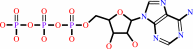 ATP
ATP
|
=
|
(2R)-3-phospho-glyceroyl phosphate
|
+
|
ADP
Bound ligand (Het Group name = )
corresponds exactly
|
|
|
|
|
|
|
|
|
|
|
|
|
Molecule diagrams generated from .mol files obtained from the
KEGG ftp site
|
|
|
|
|
|
|
|
|
|
|
|
|
|
 |
|
|
|
|
|
|
| |
|
|
| |
|
DOI no:
|
PLoS One
13:e0199191
(2018)
|
|
PubMed id:
|
|
|
|
|
|
| |
|
The phosphoglycerate kinase 1 variants found in carcinoma cells display different catalytic activity and conformational stability compared to the native enzyme.
|
|
A.Fiorillo,
M.Petrosino,
A.Ilari,
A.Pasquo,
A.Cipollone,
M.Maggi,
R.Chiaraluce,
V.Consalvi.
|
|
|
|
|
| |
ABSTRACT
|
|
|
|
| |
|
|
Cancer cells are able to survive in difficult conditions, reprogramming their
metabolism according to their requirements. Under hypoxic conditions they shift
from oxidative phosphorylation to aerobic glycolysis, a behavior known as
Warburg effect. In the last years, glycolytic enzymes have been identified as
potential targets for alternative anticancer therapies. Recently,
phosphoglycerate kinase 1 (PGK1), an ubiquitous enzyme expressed in all somatic
cells that catalyzes the seventh step of glycolysis which consists of the
reversible phosphotransfer reaction from 1,3-bisphosphoglycerate to ADP, has
been discovered to be overexpressed in many cancer types. Moreover, several
somatic variants of PGK1 have been identified in tumors. In this study we
analyzed the effect of the single nucleotide variants found in cancer tissues on
the PGK1 structure and function. Our results clearly show that the variants
display a decreased catalytic efficiency and/or thermodynamic stability and an
altered local tertiary structure, as shown by the solved X-ray structures. The
changes in the catalytic properties and in the stability of the PGK1 variants,
mainly due to the local changes evidenced by the X-ray structures, suggest also
changes in the functional role of PGK to support the biosynthetic need of the
growing and proliferating tumour cells.
|
|
|
|
|
|
|
|
|
|
|
|
|
|
|
|
|
|
 |
 |
 |
|


 Links
Links


