 |
PDBsum entry 5l9u

|
|
|
|
|
|

|

|

|

|
|

|
|
|
 |

|

|
|
|
|
|
|
|
|
|
|
|
|
|
|
|
|
|
|
|
|
|
|
|
|
|
|
|
|
|
|
Signaling protein
|
PDB id
|
|
|
|
5l9u
|
|
|
|
|
|
|
|
|
|
|
|
|
|
|

|

|

|
|
|
|
|
|
|
|
 |
Contents |
 |
|
|
|
|
|
|
|
|
|
|
|
 1342 a.a.*
|
|
|
|
|
|
|
|
|
|
|
 71 a.a.*
|
|
|
|
|
|
|
|
|
|
|
 474 a.a.*
|
|
|
|
|
|
|
|
|
|
|
 55 a.a.*
|
|
|
|
|
|
|
|
|
|
|
 56 a.a.*
|
|
|
|
|
|
|
|
|
|
|

 482 a.a.*
|
|
|
|
|
|
|
|
|
|
|

 25 a.a.*
|
|
|
|
|
|
|
|
|
|
|
 719 a.a.*
|
|
|
|
|
|
|
|
|
|
|

 499 a.a.*
|
|
|
|
|
|
|
|
|
|
|
 176 a.a.*
|
|
|
|
|
|
|
|
|
|
|
 49 a.a.*
|
|
|
|
|
|
|
|
|
|
|
 610 a.a.*
|
|
|
|
|
|
|
|
|
|
|
 676 a.a.*
|
|
|
|
|
|
|
|
|
|
|
 425 a.a.*
|
|
|
|
|
|
|
|
|
|
|
 385 a.a.*
|
|
|
|
|
|
|
|
|
|
|
 86 a.a.*
|
|
|
|
|
|
|
|
|
|
|
 145 a.a.*
|
|
|
|
|
|
|
|
|
|
|
 380 a.a.*
|
|
|
|
|
|
|
|
|
|
|
 399 a.a.*
|
|
|
|
|
|
|
* C-alpha coords only
|
|
|
|
|
|
PDB id:
|
|
|
|
| Name: |
|
Signaling protein
|
|
|
Title:
|
|
Model of human anaphase-promoting complex/cyclosome (apc/c-cdh1) with a cross linked ubiquitin variant-substrate-ube2c (ubch10) complex representing key features of multiubiquitination
|
|
Structure:
|
|
Anaphase-promoting complex subunit 1. Chain: a. Synonym: apc1,cyclosome subunit 1,mitotic checkpoint regulator, testis-specific gene 24 protein. Engineered: yes. Anaphase-promoting complex subunit 11. Chain: b. Synonym: apc11,cyclosome subunit 11,hepatocellular carcinoma- associated ring finger protein.
|
|
Source:
|
|
Homo sapiens. Human. Organism_taxid: 9606. Gene: anapc1, tsg24. Expressed in: trichoplusia ni. Expression_system_taxid: 7111. Gene: anapc11, hspc214. Gene: cdc23, anapc8. Gene: anapc15, c11orf51, hspc020.
|
|
Authors:
|
|
N.G.Brown,R.Vanderlinden,P.Dube,D.Haselbach,J.M.Peters,H.Stark, B.A.Schulman
|
|
Key ref:
|
|
N.G.Brown
et al.
(2016).
Dual RING E3 Architectures Regulate Multiubiquitination and Ubiquitin Chain Elongation by APC/C.
Cell,
165,
1440-1453.
PubMed id:
DOI:
|
|
|
Date:
|
|
|
11-Jun-16
|
Release date:
|
14-Sep-16
|
|
|
|
|
|
|
|
Headers
|
|
|
|
References
|
|
|
|
|
|

|
|
Q9H1A4
(APC1_HUMAN) -
Anaphase-promoting complex subunit 1 from Homo sapiens
|
|
|
|
Seq:
Struc:
|
|
|
|
1944 a.a.
1342 a.a.
|
|

|

|

|
|
|
|
|
|
|
|
|
|
|
|

|
|
Q9NYG5
(APC11_HUMAN) -
Anaphase-promoting complex subunit 11 from Homo sapiens
|
|
|
|
Seq:
Struc:
|
|
|
|
84 a.a.
71 a.a.
|
|
|

|
|
|
|
|
|
|
|
|
|
|
|
|

|
|
Q9UJX2
(CDC23_HUMAN) -
Cell division cycle protein 23 homolog from Homo sapiens
|
|
|
|
Seq:
Struc:
|
|
|
|
597 a.a.
474 a.a.
|
|
|

|
|
|
|
|
|
|
|
|
|
|
|
|

|
|
P60006
(APC15_HUMAN) -
Anaphase-promoting complex subunit 15 from Homo sapiens
|
|
|
|
Seq:
Struc:
|
|
|
|
121 a.a.
55 a.a.
|
|
|

|
|
|
|
|
|
|
|
|
|
|
|
|

|
|
Q96DE5
(APC16_HUMAN) -
Anaphase-promoting complex subunit 16 from Homo sapiens
|
|
|
|
Seq:
Struc:
|
|
|
|
110 a.a.
56 a.a.
|
|
|

|
|
|
|
|
|
|
|
|
|
|
|
|

|
|
P30260
(CDC27_HUMAN) -
Cell division cycle protein 27 homolog from Homo sapiens
|
|
|
|
Seq:
Struc:
|
|
|
|
824 a.a.
482 a.a.
|
|
|

|

|
|
|
|
|
|
|
|
|
|
|
|

|
|
Q8NHZ8
(CDC26_HUMAN) -
Anaphase-promoting complex subunit CDC26 from Homo sapiens
|
|
|
|
Seq:
Struc:
|
|
|
|
85 a.a.
25 a.a.
|
|
|

|
|
|
|
|
|
|
|
|
|
|
|
|

|
|
Q9UJX5
(APC4_HUMAN) -
Anaphase-promoting complex subunit 4 from Homo sapiens
|
|
|
|
Seq:
Struc:
|
|
|
|
808 a.a.
719 a.a.
|
|
|

|

|
|
|
|
|
|
|
|
|
|
|
|

|
|
Q13042
(CDC16_HUMAN) -
Cell division cycle protein 16 homolog from Homo sapiens
|
|
|
|
Seq:
Struc:
|
|
|
|
620 a.a.
499 a.a.
|
|
|

|
|
|
|
|
|
|
|
|
|
|
|
|

|
|
Q9UM13
(APC10_HUMAN) -
Anaphase-promoting complex subunit 10 from Homo sapiens
|
|
|
|
Seq:
Struc:
|
|
|
|
185 a.a.
176 a.a.
|
|
|

|
|
|
|
|
|
|
|
|
|
|
|
|

|
|
Q9BS18
(APC13_HUMAN) -
Anaphase-promoting complex subunit 13 from Homo sapiens
|
|
|
|
Seq:
Struc:
|
|
|
|
74 a.a.
49 a.a.
|
|
|

|
|
|
|
|
|
|
|
|
|
|
|
|

|
|
Q9UJX6
(ANC2_HUMAN) -
Anaphase-promoting complex subunit 2 from Homo sapiens
|
|
|
|
Seq:
Struc:
|
|
|
|
822 a.a.
610 a.a.*
|
|
|

|

|
|
|
|
|
|
|
|
|
|
|
|

|
|
Q9UJX4
(APC5_HUMAN) -
Anaphase-promoting complex subunit 5 from Homo sapiens
|
|
|
|
Seq:
Struc:
|
|
|
|
755 a.a.
676 a.a.
|
|
|

|
|
|
|
|
|
|
|
|
|
|
|
|

|
|
Q9UJX2
(CDC23_HUMAN) -
Cell division cycle protein 23 homolog from Homo sapiens
|
|
|
|
Seq:
Struc:
|
|
|
|
597 a.a.
425 a.a.
|
|
|

|
|
|
|
|
|
|
|
|
|
|
|
|

|
|
Q9UM11
(FZR1_HUMAN) -
Fizzy-related protein homolog from Homo sapiens
|
|
|
|
Seq:
Struc:
|
|
|
|
496 a.a.
385 a.a.
|
|
|

|

|
|
|
|
|
|
|
|
|
|
|
|

|
|
P34244
(HSL1_YEAST) -
Probable serine/threonine-protein kinase HSL1 from Saccharomyces cerevisiae (strain ATCC 204508 / S288c)
|
|
|
|
Seq:
Struc:
|
|
|
|
1518 a.a.
86 a.a.*
|
|
|

|
|
|
|
|
|
|
|
|
|
|
|
|
|
|
Q63429
(UBC_RAT) -
Polyubiquitin-C from Rattus norvegicus
|
|
|
|
Seq:
Struc:
|
|
|
|
810 a.a.
86 a.a.*
|
|
|

|

|
|
|
|
|
|
|
|
|
|
|
|

|
|
O00762
(UBE2C_HUMAN) -
Ubiquitin-conjugating enzyme E2 C from Homo sapiens
|
|
|
|
Seq:
Struc:
|
|
|
|
179 a.a.
145 a.a.*
|
|
|

|
|
|
|
|
|
|
|
|
|
|
|
|
|
|
|
|
|
Enzyme class 2:
|
|
Chain S:
E.C.2.7.11.1
- non-specific serine/threonine protein kinase.
|
|
|
|
|
|
|
Reaction:
|
|
|
1.
|
L-seryl-[protein] + ATP = O-phospho-L-seryl-[protein] + ADP + H+
|
|
2.
|
L-threonyl-[protein] + ATP = O-phospho-L-threonyl-[protein] + ADP + H+
|
|
|
|
|
|
|
L-seryl-[protein]
|
+
|
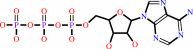 ATP
ATP
|
=
|
O-phospho-L-seryl-[protein]
|
+
|
 ADP
ADP
|
+
|
H(+)
|
|
|
|
|
|
|
L-threonyl-[protein]
|
+
|
ATP
|
=
|
O-phospho-L-threonyl-[protein]
|
+
|
ADP
|
+
|
H(+)
|
|
|
|
|
|
|
|
|
|
Enzyme class 3:
|
|
Chain U:
E.C.2.3.2.23
- E2 ubiquitin-conjugating enzyme.
|
|
|
|
|
|
|
Reaction:
|
|
S-ubiquitinyl-[E1 ubiquitin-activating enzyme]-L-cysteine + [E2 ubiquitin-conjugating enzyme]-L-cysteine = [E1 ubiquitin-activating enzyme]-L-cysteine + S-ubiquitinyl-[E2 ubiquitin-conjugating enzyme]-L- cysteine
|
|
|
|
|
|
Enzyme class 4:
|
|
Chain U:
E.C.2.3.2.24
- (E3-independent) E2 ubiquitin-conjugating enzyme.
|
|
|
|
|
|
|
Reaction:
|
|
S-ubiquitinyl-[E1 ubiquitin-activating enzyme]-L-cysteine + [acceptor protein]-L-lysine = [E1 ubiquitin-activating enzyme]-L-cysteine + N6- monoubiquitinyl-[acceptor protein]-L-lysine
|
|
|
|
|
|
|
|
|
Note, where more than one E.C. class is given (as above), each may
correspond to a different protein domain or, in the case of polyprotein
precursors, to a different mature protein.
|
|
|
|
Molecule diagrams generated from .mol files obtained from the
KEGG ftp site
|
|
|
|
|
|
|
|
|
|
|
|
|
|
 |
|
|
|
|
|
|
| |
|
|
| |
|
DOI no:
|
Cell
165:1440-1453
(2016)
|
|
PubMed id:
|
|
|
|
|
|
| |
|
Dual RING E3 Architectures Regulate Multiubiquitination and Ubiquitin Chain Elongation by APC/C.
|
|
N.G.Brown,
R.VanderLinden,
E.R.Watson,
F.Weissmann,
A.Ordureau,
K.P.Wu,
W.Zhang,
S.Yu,
P.Y.Mercredi,
J.S.Harrison,
I.F.Davidson,
R.Qiao,
Y.Lu,
P.Dube,
M.R.Brunner,
C.R.Grace,
D.J.Miller,
D.Haselbach,
M.A.Jarvis,
M.Yamaguchi,
D.Yanishevski,
G.Petzold,
S.S.Sidhu,
B.Kuhlman,
M.W.Kirschner,
J.W.Harper,
J.M.Peters,
H.Stark,
B.A.Schulman.
|
|
|
|
|
| |
ABSTRACT
|
|
|
|
| |
|
|
Protein ubiquitination involves E1, E2, and E3 trienzyme cascades. E2 and RING
E3 enzymes often collaborate to first prime a substrate with a single ubiquitin
(UB) and then achieve different forms of polyubiquitination: multiubiquitination
of several sites and elongation of linkage-specific UB chains. Here, cryo-EM and
biochemistry show that the human E3 anaphase-promoting complex/cyclosome (APC/C)
and its two partner E2s, UBE2C (aka UBCH10) and UBE2S, adopt specialized
catalytic architectures for these two distinct forms of polyubiquitination. The
APC/C RING constrains UBE2C proximal to a substrate and simultaneously binds a
substrate-linked UB to drive processive multiubiquitination. Alternatively,
during UB chain elongation, the RING does not bind UBE2S but rather lures an
evolving substrate-linked UB to UBE2S positioned through a cullin interaction to
generate a Lys11-linked chain. Our findings define mechanisms of APC/C
regulation, and establish principles by which specialized E3-E2-substrate-UB
architectures control different forms of polyubiquitination.
|
|
|
|
|
|
|
|
|
|
|
|
|
|
|
|
|
|
 |
 |
 |
| | |


 Links
Links


