 |
PDBsum entry 4b4h
|
|

|
|
PDB id:
|
|
|
|
| Name: |
|
Hydrolase
|
|
|
Title:
|
|
Thermobifida fusca cellobiohydrolase cel6b(e3) catalytic domain
|
|
Structure:
|
|
Beta-1,4-exocellulase. Chain: a, b. Fragment: residues 177-596. Synonym: cel6b. Engineered: yes
|
|
Source:
|
|
Thermobifida fusca. Organism_taxid: 2021. Expressed in: streptomyces lividans. Expression_system_taxid: 1916.
|
|
Resolution:
|
|
|
1.50Å
|
R-factor:
|
0.198
|
R-free:
|
0.232
|
|
|
Authors:
|
|
M.Sandgren,M.Wu,J.Stahlberg,S.Karkehabadi,C.Mitchinson,B.R.Kelemen, E.A.Larenas,H.Hansson
|
|
Key ref:
|
|
M.Sandgren
et al.
(2013).
The structure of a bacterial cellobiohydrolase: the catalytic core of the Thermobifida fusca family GH6 cellobiohydrolase Cel6B.
J Mol Biol,
425,
622-635.
PubMed id:
|
|
|
Date:
|
|
|
30-Jul-12
|
Release date:
|
19-Dec-12
|
|
|
|
|
|
|
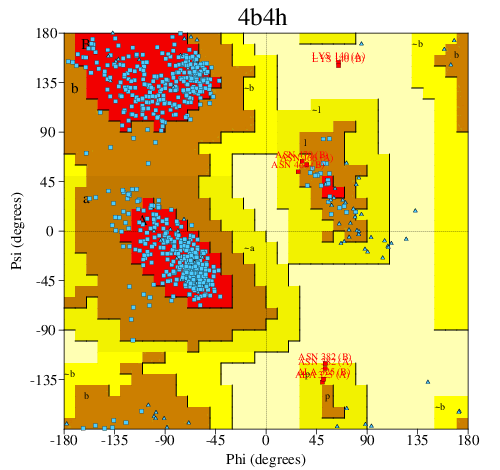
PROCHECK
|
|
|
|
|
|
Headers
|
|
|
|
References
|
|
|
|
|
|

|
|
Q60029
(Q60029_THEFU) -
Glucanase from Thermobifida fusca
|
|
|
|
Seq:
Struc:
|
|
|
|
596 a.a.
413 a.a.
|
|

|

|
|
|
|
|
|
|
|
|
|
|
|
Key: |
 |
PfamA domain |
|
|
 |
Secondary structure |
|
 |
CATH domain |
|
|
|
|
|
|
|
|
|
|
|
|
|
|
|
|
|
 |
|
|
|
|
|
|
| |
|
|
J Mol Biol
425:622-635
(2013)
|
|
PubMed id:
|
|
|
|
|
|
| |
|
The structure of a bacterial cellobiohydrolase: the catalytic core of the Thermobifida fusca family GH6 cellobiohydrolase Cel6B.
|
|
M.Sandgren,
M.Wu,
S.Karkehabadi,
C.Mitchinson,
B.R.Kelemen,
E.A.Larenas,
J.Ståhlberg,
H.Hansson.
|
|
|
|
|
| |
ABSTRACT
|
|
|
|
| |
|
|
Cellulases, glycoside hydrolases that catalyze the degradation of cellulose, are
classified as either endoglucanases or cellobiohydrolases (CBHs) based on their
architecture and mode of action on the cellulose. CBHs bind the cellulose chain
in a more or less closed tunnel and cleave off cellobiose units processively
from one end of the cellulosic polymer, while endoglucanases have their active
sites in a more or less open cleft and show a higher tendency to cut bonds
internally in the polymer. The CBH Cel6A (also called CBH2) from the ascomycete
Hypocrea jecorina has a much shorter substrate-binding tunnel and seems less
processive than the CBH Cel7A (CBH1), from the same fungus. Here, we present the
X-ray crystal structure of the catalytic domain of the CBH Cel6B, also called
E3, from the soil bacterium Thermobifida fusca, both in its apo form and
co-crystallized with cellobiose. The enzyme structure reveals that the Cel6B
enzyme has a much longer substrate-binding site than its fungal GH6
counterparts. The tunnel is comparable in length to that of GH7 CBHs. In the
ligand structure with cellobiose, the tunnel exit is completely closed by a
13-residue loop not present in fungal GH6 enzymes. The loop needs to be
displaced to allow cellobiose product release for a processive action by the
enzyme. When ligand is absent, seven of these residues are not visible in the
electron density and the tunnel exit is open.
|
|
|
|
|
|
|
|
|
|
|
|
|
|
|
|
|
|
 |
 |
 |
|


 Links
Links


